

Canada's Top 5 Pneumatic Conveying Systems for 2026
Published on Saturday, January 24, 2026
Pneumatic conveying systems move powders and granules through pipelines using pressured air or vacuum in dilute or dense phase modes to provide enclosed, high-speed transport and dust control. In Canada these systems are favored across food, pharmaceutical, chemical, mineral, and bulk-handling sectors because they reduce contamination risk, limit dust emissions, preserve product integrity, and simplify plant layout. Current market trends emphasize energy-optimized compressors, intelligent control and monitoring, modular skid designs for faster installation, and engineering focused on minimal maintenance and product gentleness. Buyers in Canada typically choose systems that meet local safety and sanitary standards, offer reliable regional service, and balance lifetime operating cost with uptime and product quality.
Top Picks Summary
Flexicon Pneumati-Con Dilute Phase Conveyor
The Flexicon Pneumati-Con Dilute Phase Conveyor is positioned as a cost-effective, modular solution for free-flowing powders and granules, offering straightforward installation and low upfront capital compared with dense-phase systems. It outperforms many competitors on flexibility and lower maintenance for non-abrasive applications, though it trades off higher pneumatic air volumes and greater product degradation versus the dense-phase and vacuum leaders in this list.

Schenck Process Dense Phase Conveying System
Schenck Process's Dense Phase Conveying System leads for gentle, low-wear transport of fragile, abrasive, or cohesive bulk materials by using high solids-to-air ratios that reduce material degradation and pipeline wear. Technically optimized for long runs and heavy-duty service, it typically requires higher capital than dilute-phase or vacuum options but can deliver lower lifecycle costs in abrasive or large-capacity applications.
Volkmann VS Vacuum Conveyor
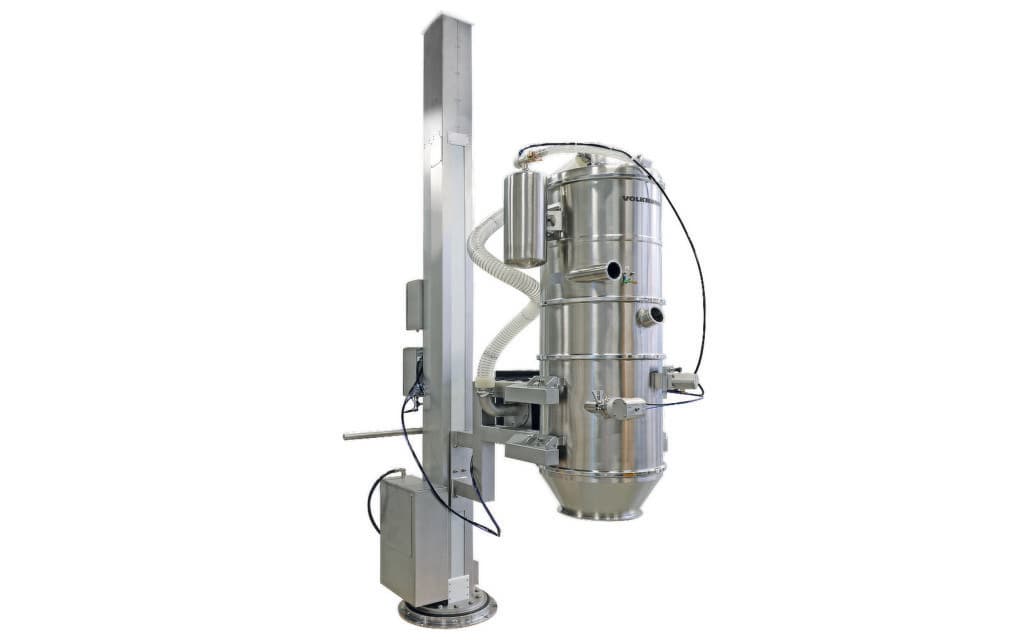
The Volkmann VS Vacuum Conveyor is a compact, hygienic vacuum-based system ideal for small-batch, mobile, or sterile production environments, minimizing product loss and cross-contamination compared with larger pressure-based conveyors. Financially it offers lower initial investment and quick payback for sampling and frequent product changeovers, although its throughput is generally lower than the piFLOW vacuum solutions and dense-phase systems on this list.
Where to buy Volkmann VS Vacuum Conveyor in Canada: the trusted retailers we track in this market, with the best price we have observed at each. Prices are checked regularly and can change, and the retailer confirms the final price at checkout.
We may earn a commission on purchases. It never affects our rankings.
$8,000 – $45,000
Piab piFLOW Vacuum Conveyor
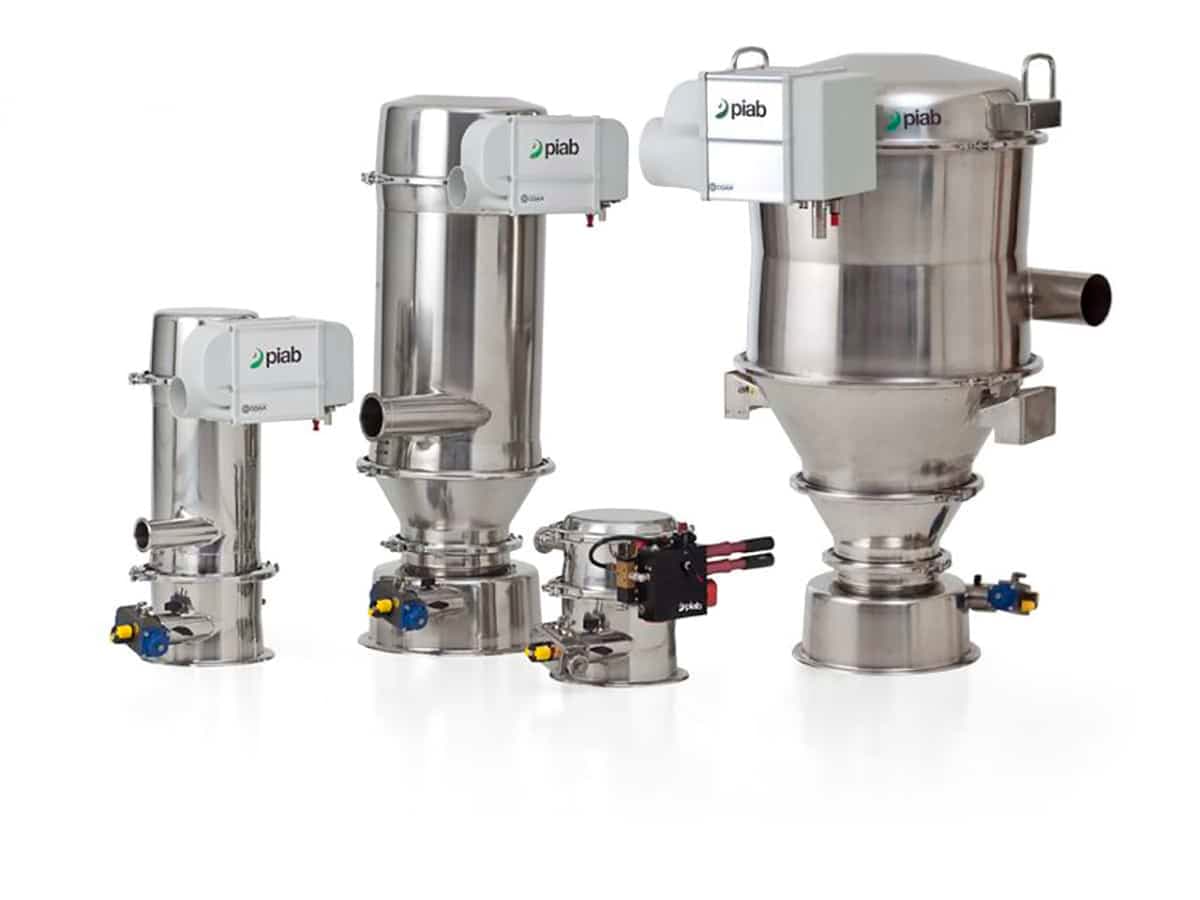
Piab's piFLOW Vacuum Conveyor stands out for scalable, energy-efficient vacuum conveying with strong hygienic design and automation integration suited to food and pharmaceutical sectors, often delivering higher throughput and cleaner operation than many other vacuum conveyors. It balances capital and operating costs by reducing product degradation and downtime, making it attractive when containment and precise dosing are prioritized over the maximal mass flow of dense-phase systems.
Dynamic Air Dense Phase Pneumatic Conveyor
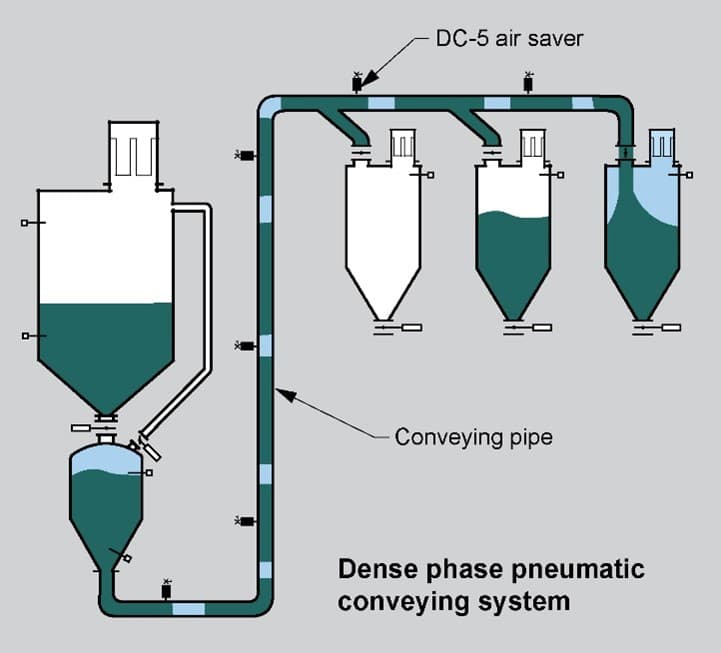
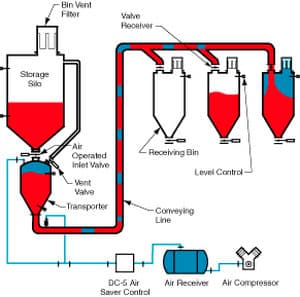
Dynamic Air's Dense Phase Pneumatic Conveyor specializes in economical long-distance and abrasive-material handling by conveying product in slug or plug flow to minimize wear and air consumption, positioning it as a cost-competitive alternative to higher-priced dense-phase suppliers. Technically robust and tailored for heavy-duty services, it can undercut larger vendors on project cost while matching or exceeding lifetime wear performance in demanding applications.
What Research Shows About Pneumatic Conveying Benefits
Scientific and engineering research supports the core benefits of modern pneumatic conveying: properly designed systems reduce dust and fugitive emissions, can protect product quality compared with mechanical transfer for many fragile materials, and permit centralized, enclosed material handling that simplifies compliance with hygiene and safety standards. Recent engineering studies and industry case analyses emphasize the role of system design, phase selection, and controls in delivering energy and lifecycle cost improvements.
Energy and efficiency: System-level assessments and manufacturer performance tests show that matching compressor and pipeline design to application yields measurable energy savings compared with poorly matched systems; optimized controls and variable-speed drives further reduce operating energy.
Dust control and safety: Enclosed conveying and appropriate filtration reduce airborne particulates and exposure risk, a repeated finding in occupational hygiene reports and industry white papers.
Product integrity: Experimental comparisons show dense phase conveying or low-velocity dilute systems lower particle breakage and segregation for fragile or abrasive products versus high-velocity dilute transfer.
Predictive maintenance and controls: Case studies demonstrate that intelligent monitoring and predictive maintenance reduce unplanned downtime and extend component life, improving overall cost of ownership.
Modularity and deployment: Modular skid-mounted systems supported by engineering studies shorten commissioning time and lower installation risk, an advantage for multi-site Canadian deployments.
Frequently Asked Questions
Which system should I choose for fragile powders in Canada?
For fragile, abrasive, or cohesive bulk materials, the Schenck Process Dense Phase Conveying System is designed for dense-phase conveying that targets low-product degradation and low-wear operation, with an average rating of 4.6.
What spec does the Volkmann VS Vacuum Conveyor include?
The Volkmann VS Vacuum Conveyor includes hygienic stainless-steel construction with a quick-change filter and an easy-to-clean product path, and it has an average rating of 4.8.
How does Flexicon Pneumati-Con value compare to others?
Flexicon Pneumati-Con Dilute Phase Conveyor is positioned as a cost-effective, modular solution with low upfront capital versus dense-phase systems, and it’s engineered for dilute-phase transfer of free-flowing powders and granules, with an average rating of 4.5.
Is Volkmann VS Vacuum Conveyor good for small-batch sterile work?
Yes—the Volkmann VS Vacuum Conveyor is a compact, hygienic vacuum-based system ideal for small-batch, mobile, or sterile production environments, supporting sampling, bin feeding, and small-batch transfer, with an average rating of 4.8.
Conclusion
This page highlights five leading pneumatic conveying options available in Canada for 2026: Flexicon Pneumati-Con Dilute Phase Conveyor, Schenck Process Dense Phase Conveying System, Volkmann VS Vacuum Conveyor, Piab piFLOW Vacuum Conveyor, and Dynamic Air Dense Phase Pneumatic Conveyor. Each offers strengths: Flexicon for flexible dilute-phase handling, Volkmann and Piab for compact vacuum solutions, Dynamic Air for engineered dense phase performance, and Schenck Process for heavy-duty dense phase reliability. For many industrial applications that require robust, energy-conscious dense phase movement and strong product protection, the Schenck Process Dense Phase Conveying System is often the best choice. We hope you found what you were looking for; refine or expand your search using the search box to compare specifications, service options, and custom engineering for your site.