

Top 5 Vehicle Restraints in Canada 2026: Smart, Reliable Dock Safety Solutions
Published on Wednesday, July 22, 2026
Vehicle restraints secure trucks to the dock to prevent unexpected movement during loading operations and improve worker safety. Modern systems combine mechanical holding power with automation and connectivity, using features such as automated hooking, LED status indicators, smart interlocks, and IoT connectivity for real-time monitoring and compliance reporting. In the Canadian market, buyers prioritize equipment that performs reliably in cold and wet conditions, resists corrosion from road salt, offers bilingual documentation and support, and integrates with existing dock equipment and warehouse management systems. Facility managers and logistics companies also look for low-maintenance designs, proven safety records, and service networks across provinces. These preferences make smart, rugged, and networked vehicle restraints especially appealing for cold chain distribution, retail distribution centers, manufacturing, and third-party logistics providers across Canada.
Top Picks Summary
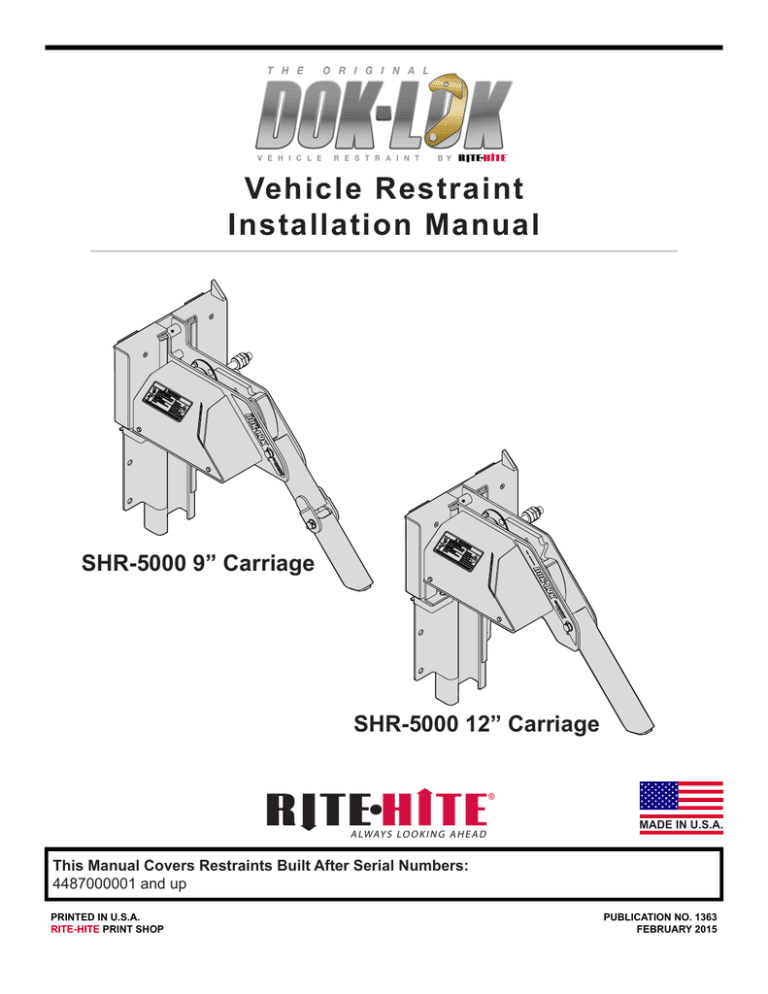
Rite-Hite Dok-Lok Vehicle Restraint
Rite-Hite's DOK-LOK earns market-leader status for vehicle restraints with a proven heavy-duty clamping mechanism, integrated safety interlocks and broad compatibility with diverse trailer types, making it a top choice for high-volume distribution centers. Its long service life and strong OEM support typically translate into lower total cost of ownership versus lower-capacity units like portable wheel-locks, while offering more refined integration and diagnostics than many value-oriented competitors. Compared to the other products on this list, DOK-LOK emphasizes robust durability and centralized fleet management readiness for facilities prioritizing uptime and compliance.
Kelley TrukStop Vehicle Restraint
Kelley TrukStop is positioned as a reliable, cost-efficient restraint that balances solid mechanical performance with straightforward installation and maintenance, making it attractive for facilities that want strong protection without premium integration features. Financially it often offers a lower upfront investment than enterprise-grade systems like Rite-Hite while delivering dependable securement for most facility needs, and it competes well on long-term serviceability compared to more complex electro-mechanical models. When compared to the other listed options, TrukStop represents a middle ground: more robust than simple wheel-locks but more budget-conscious and simpler than fully networked restraints.
Where to buy Kelley TrukStop Vehicle Restraint in Canada: the trusted retailers we track in this market, with the best price we have observed at each. Prices are checked regularly and can change, and the retailer confirms the final price at checkout.
We may earn a commission on purchases. It never affects our rankings.
$3,000 – $6,000
Blue Giant AutoLok Vehicle Restraint
Blue Giant AutoLok stands out for offering a practical mix of performance and value with design features that simplify retrofitting and reduce install time, making it particularly cost-effective for multi-site rollouts. Its technical advantage lies in easy adaptability to varying dock conditions and lower installation disruption compared with some heavy civil-works solutions, and it often undercuts higher-end brands on price while maintaining competitive holding capacity. Versus the other products here, AutoLok is a compelling option for Canadian and international operations seeking an affordable, reliable restraint with sensible installation economics.

Where to buy Blue Giant AutoLok Vehicle Restraint in Canada: the trusted retailers we track in this market, with the best price we have observed at each. Prices are checked regularly and can change, and the retailer confirms the final price at checkout.
We may earn a commission on purchases. It never affects our rankings.
$2,500 – $5,000
Poweramp PowerStop Vehicle Restraint
Poweramp PowerStop delivers a strong electro-mechanical restraint solution focused on quick cycle times and straightforward controls, appealing to operations that prioritize speed and operational rhythm at the dock. It offers a favorable balance of performance and purchase price relative to premium market leaders and typically has lower complexity than fully integrated telematics-enabled systems, which can reduce maintenance-related downtime and costs. Compared with wheel-lock and simpler models in this list, PowerStop is optimized for higher throughput facilities that need dependable, repeatable engagement without excessive capital outlay.
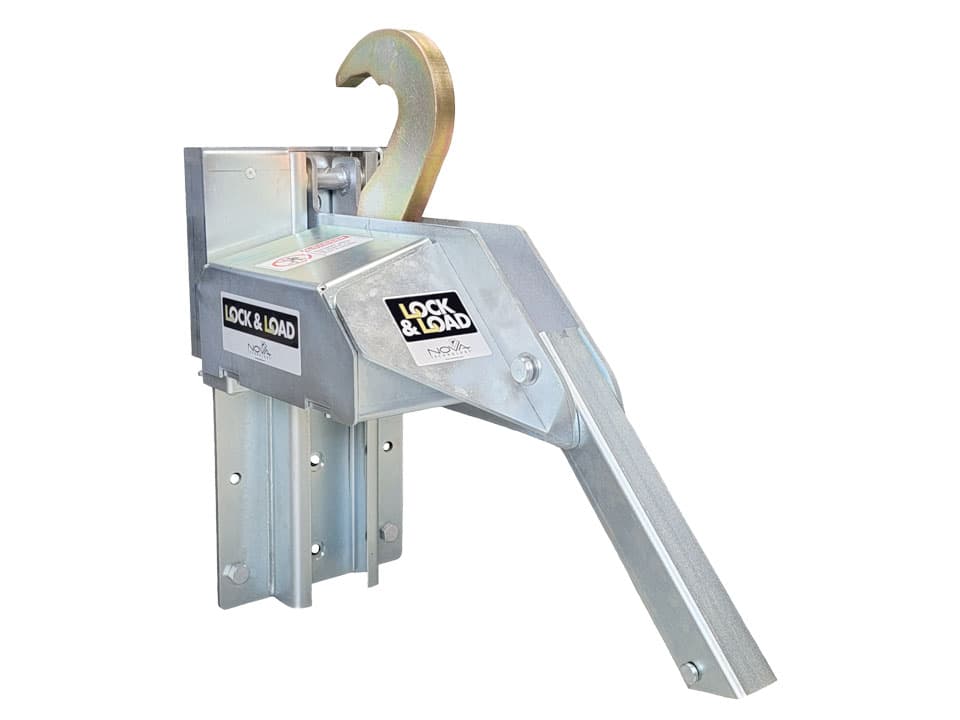
Nova Technology Wheel-Lok Vehicle Restraint
Nova Technology's Wheel-Lok is a focused wheel-engagement restraint that emphasizes portability, a low-profile footprint, and minimal site modification, making it an economical solution for retrofits and facilities with space constraints. Financially it tends to be the most budget-friendly option for smaller sites or seasonal operations, and technically it reduces installation costs compared with in-ground or heavy-wall-mounted systems while still providing effective wheel retention for many common applications. Against the other entries, Wheel-Lok trades advanced integration and the highest duty-cycle durability for ease of deployment and attractive upfront cost savings.
Where to buy Nova Technology Wheel-Lok Vehicle Restraint in Canada: the trusted retailers we track in this market, with the best price we have observed at each. Prices are checked regularly and can change, and the retailer confirms the final price at checkout.
We may earn a commission on purchases. It never affects our rankings.
$2,000 – $4,000
Why vehicle restraints matter and what the research shows
Research, government guidance, and industry reports underscore that properly installed and maintained vehicle restraints reduce the risk of dock accidents, vehicle creep, and damage during loading and unloading. Government agencies and workplace safety organizations recommend mechanical and electronic restraint systems as part of an overall loading dock safety program. Evidence also shows operational benefits beyond safety, including fewer load interruptions, reduced equipment damage, and clearer documentation for compliance and insurance purposes.
Government and safety guidance: Canadian workplace safety agencies and Transport Canada emphasize vehicle securement and safe loading procedures as part of effective risk control, and CCOHS materials highlight the role of restraints in preventing dock incidents.
Industry case studies: Logistics and cold chain operators report improved throughput and fewer accidents after upgrading to automated restraints with interlocks and LED confirmations, leading to measurable return on investment through reduced downtime and damage claims.
Standards and testing: Laboratory testing and manufacturer certification data demonstrate holding capacities and fail-safe behaviours for reputable restraint models, supporting informed selection based on vehicle weights and trailer configurations.
Human factors and ergonomics: Studies on dock operations indicate that clear visual indicators and automated engagement reduce human error and the need for manual intervention, lowering the chance of worker injury during coupling and uncoupling.
Operational analytics: IoT-enabled restraints supply time-stamped event logs and remote alerts that help operations managers verify compliance, investigate incidents, and optimize dock scheduling.
Frequently Asked Questions
Which dock vehicle restraint fits high-volume distribution centers?
Choose the Rite-Hite DOK-LOK Vehicle Restraint; it uses a high-strength hook that engages the trailer ICC bar for robust pull-away restraint, includes integrated safety interlocks, and integrates with dock levelers and door systems, with a 4.7 average rating.
What feature helps the Blue Giant AutoLok dock restraint?
The Blue Giant AutoLok Vehicle Restraint has an automatic self-adjusting hook that accommodates a wide range of trailer heights with minimal user adjustment, and it uses a low-profile flush-mount design; it’s rated 4.4 on average.
How do Rite-Hite DOK-LOK and Kelley TrukStop compare on price?
Kelley TrukStop Vehicle Restraint is described as cost-efficient, while Rite-Hite DOK-LOK focuses on heavy-duty clamping and safety integration, but no exact Canadian prices are provided for either product in the data.
Does Kelley TrukStop support LED interlock compatibility?
Kelley TrukStop Vehicle Restraint offers optional integrated LED communication and interlock compatibility to prevent unsafe dock operations; it’s rated 4.5 on average, and the data does not list any warranty duration.
Conclusion
Vehicle restraints are a foundational safety and efficiency investment for Canadian loading docks in 2026. Whether you need rugged mechanical holdbacks for harsh winters or smart, connected restraints for real-time compliance reporting, the right system reduces risk and improves operations. We hope this page helped you find the solutions you need. Use the site search to refine by feature, region, or compatibility, or expand your search to compare installation support and service networks across Canada.