

Top 8 Industrial Lifting and Hoisting Equipment in Canada for 2026
Industrial lifting and hoisting equipment includes hoists, winches, cranes, jacks, and lift tables designed for vertical movement and precise load positioning across manufacturing floors, warehouses, and construction sites. In Canada the market favors solutions that combine reliability, energy efficiency, and strong safety features to handle heavy loads in varied climates and provincial regulatory environments. Buyers increasingly prefer electric and battery-powered units for lower emissions and operating cost, wireless and remote-control options for safer operation, overload protection and variable speed drives for smoother handling, and integrated telematics for predictive maintenance and uptime management. Local service networks, CSA-aligned compliance, and equipment that reduces manual handling and downtime are major drivers of purchase decisions among contractors, plant managers, and rental companies.
Inception's AI took the time to understand this market in Canada · · How we pickWe may earn a commission on purchases. It never affects our rankings.
Top Picks Summary
The Columbus McKinnon Lodestar VS is positioned as a market-leading American solution that emphasizes broad serviceability, a large North American parts network, and flexible control options for diverse production and overhead crane applications. Financially it often delivers lower total cost of ownership in regional operations because of strong aftermarket support and local service availability, distinguishing it from premium European hoists like the Demag DR‑Pro and compact Asian offerings such as the Kito RY.
Show More Electric Wire Rope Hoists
The Kito CX Series is a best-in-class chain hoist that emphasizes Japanese precision, low-friction gearing and a compact, corrosion-resistant housing for long service life and minimal maintenance. Compared with the other hoists on this list, the CX commands a premium price but delivers lower lifecycle cost and superior smoothness in frequent-use or safety-critical chain hoist applications.
Show More Chain Hoists
We may earn a commission on purchases. It never affects our rankings.
$594.21CAD
The Siemens SIMATIC ET 200SP is best-in-class for modular IO racks on bridge cranes thanks to its very high channel density, compact footprint and integrated diagnostics that reduce cabinet space and cabling costs. Compared with the other products listed, ET 200SP balances upfront cost with lifecycle savings through extensive module variety and proven industrial/hazard ratings, making it a strong choice where minimizing weight, space and long-term service intervals matters.
Show More Overhead Bridge Cranes
The Titan Attachments Adjustable Steel Gantry Crane is aimed at users who need robust, adjustable lifting capacity and compatibility with a range of attachments, making it a market leader for heavy-duty or multi-role shop environments. Its higher upfront cost versus basic aluminum cranes is offset by the technical advantage of bolted adjustability and heavy-gauge steel construction, which can eliminate the need for multiple specialty cranes and reduce total fleet costs.
Show More Gantry Cranes
Kito's JIB Series brings precision engineering and seamless integration with high-performance hoists, targeted at applications where control, safety features and repeatable positioning matter most. While it is often the most expensive option on the list, its technical advantages—such as superior hoist compatibility, tighter deflection tolerances and extensive global support—can reduce risk and operating costs in highly regulated or precision lifting environments.
Show More Jib Cranes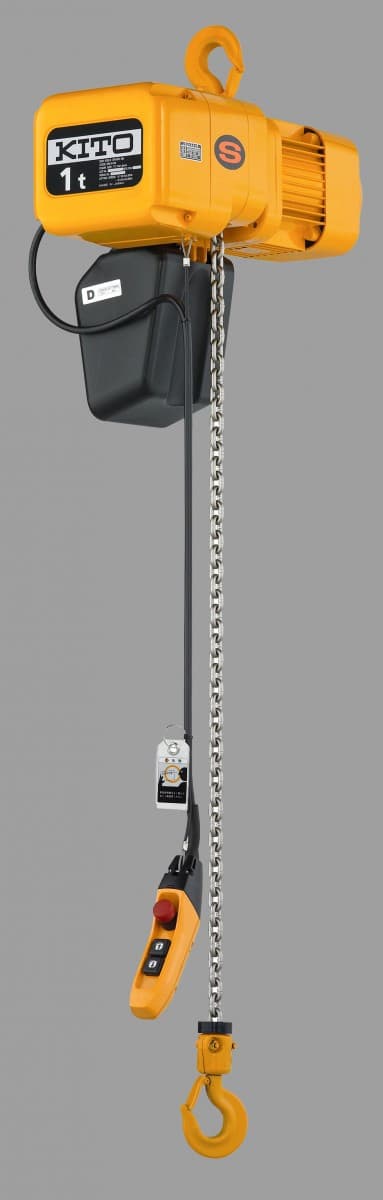
Estimated$4,000 – $15,000
Bishamon's EZ Loader self-leveling pallet positioner is a specialized solution that optimizes pallet handling ergonomics by maintaining a consistent working height during loading and unloading. Its technical advantage is in productivity and injury reduction for repetitive palletizing tasks, which can yield fast payback in labor-intensive operations despite a higher unit cost than simple tables. In contrast to general-purpose scissor lifts and carts, the EZ Loader is the best choice when precise, continuous leveling and operator ergonomics are the primary drivers of equipment ROI.
Show More Lift Tables and Scissor Lifts
Estimated$6,000 – $12,000
The Strongarm 12-ton bottle jack claims a value-focused spot for shops needing a compact, rugged jack at a budget-conscious price point; its straightforward design and lower upfront cost make it ideal for occasional heavy lifting tasks and fleet tool kits. It lacks the precision and serviceability of cylinder systems like Enerpac or BVA but undercuts those products on purchase price and is more portable than larger-capacity options such as the Power Fist 50-ton unit, making it a pragmatic choice for light industrial and mobile applications.
Show More Industrial Jacks
We may earn a commission on purchases. It never affects our rankings.
$138.99CAD
Research and Evidence Behind Lifting Equipment Benefits
Industry research and ergonomics studies support the safety and productivity benefits of modern lifting and hoisting equipment. Controlled lifting systems reduce manual handling injuries, variable speed and advanced control systems lower load swing and mechanical stress, and overload protection reduces the risk of catastrophic failures. Emerging evidence from industry pilots and case studies shows that electrification and IoT-enabled monitoring cut energy use and unplanned downtime by enabling predictive maintenance. These findings are accessible to beginners and help explain why manufacturers and operators adopt these features to meet safety standards and improve total cost of ownership.
Ergonomics research links mechanical lifting aids to lower incidence of musculoskeletal injury among workers.
Case studies show variable speed drives and precise controls reduce load sway and component wear.
Industry reports indicate predictive maintenance and telematics reduce unplanned downtime and maintenance costs.
Electrification and efficient drive systems deliver measurable energy savings compared with older hydraulic or purely mechanical units.
Overload protection and redundant safety systems are consistently cited in safety audits as key to preventing accidents.
Frequently Asked Questions
Which hoist should I choose for heavy duty cycles?
Choose the Demag DR‑Pro Wire Rope Hoist, rated 4.7, because it’s designed for high duty cycles with a heavy-duty drum and rope management, plus a safety suite with redundant braking and electronic load monitoring.
What safety and diagnostics does the Demag DR‑Pro include?
The Demag DR‑Pro Wire Rope Hoist includes redundant braking and electronic load monitoring, with service-friendly modular components and on-board diagnostics using CANbus.
How does Kito CX Series hand chain hoist price compare?
The Kito CX Series Hand Chain Hoist is $594.21 CADand is rated 4.8, with precision-machined gearing for smooth lifting, a high-grade alloy load chain for wear resistance, and sealed brakes plus overload protection.
Is the Tandemloc Modular Spreader Bar for bridge cranes?
Yes—the Tandemloc Modular Spreader Bar is designed for complex bridge crane lifting beam applications, with a modular sectional design for scalable capacities and variable spans, and ASME/CSA-compliant load ratings with traceable documentation.
Conclusion
Whether you are specifying equipment for a manufacturing cell, a construction fleet, or a rental inventory in Canada, the right hoist, winch, crane, jack, or lift table will balance safety, efficiency, and serviceability. We hope this guide helped you find the features to focus on for 2026. Use the site search to refine by capacity, power type, control features, or provincial compliance requirements if you want to expand or narrow your results.