

RFID and IoT-Enabled Pallets and Containers: Top 5 in Canada for 2026
Published on Saturday, January 24, 2026
Smart pallets and containers integrated with RFID, sensors, and IoT connectivity provide real-time tracking, condition monitoring, and inventory automation for Canadian supply chains. This category covers reusable and pooled pallets and containers that combine passive or active RFID tags, temperature and shock sensors, and cloud connectivity to deliver shipment visibility, cold chain assurance, and predictive maintenance. Canadian warehouses, food and beverage distributors, pharmaceutical shippers, and third-party logistics providers favor these solutions because they reduce loss and spoilage, lower labor costs by automating counts, improve regulatory and audit readiness, and support sustainability goals through extended asset life and reusable packaging. The combination of e-commerce growth, cross-border trade with the United States, remote regional distribution, and a rising focus on environmental performance has driven Canadian demand for connected pallets and containers that deliver measurable efficiency and compliance gains.
Top Picks Summary
CHEP Smart Pallet
CHEP Smart Pallet leads as a global pooling and service platform that combines embedded RFID/IoT tracking with an unmatched repair and redistribution network, delivering predictable total-cost-of-ownership savings for large, multi-region supply chains. Its strength is scale and operational expertise, making it ideal where networked asset visibility and reused pooled inventory reduce freight and capital costs more effectively than smaller, single-product vendors in this list.

Tosca SmartCrate
Tosca SmartCrate is a lightweight, collapsible crate with integrated IoT sensors and real-time telemetry designed for high-density, returnable packaging scenarios; its low weight and foldability cut transport and storage expenses for mixed-product distribution. Compared with larger pallet-pooling platforms like CHEP or iGPS, Tosca focuses on crate-level traceability and agility, delivering tighter SKU-level visibility and lower per-shipment handling costs versus full pallet systems.

ORBIS Reusable Plastic Pallets with RFID
ORBIS offers durable reusable plastic pallets with factory-integrated RFID that emphasize hygiene, long service life, and consistent RFID read rates—advantages for food, beverage and pharmaceutical handling where washdown and contamination control matter. Financially, ORBIS’s emphasis on lifecycle durability lowers replacement and cleaning costs relative to wooden solutions, while technically it competes with CHEP and iGPS by providing a lower-maintenance, asset-durable alternative focused on plastic pallet economics.
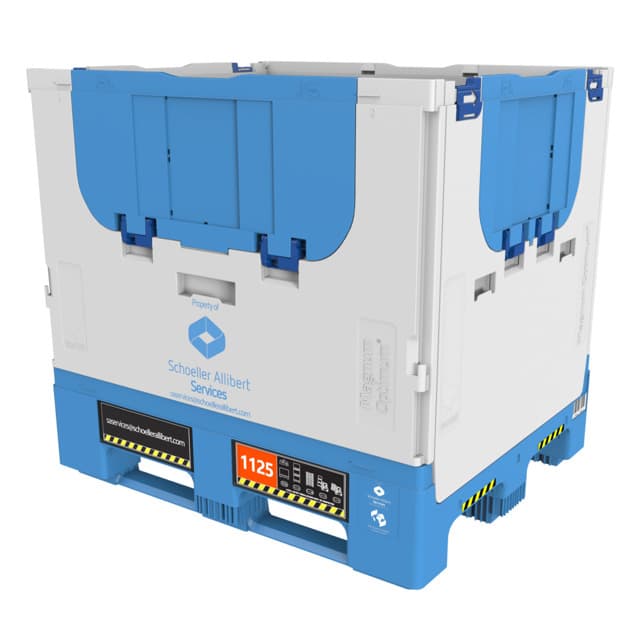
Schoeller Allibert SmartLink Container
Schoeller Allibert SmartLink Container combines collapsible bulk containers with embedded SmartLink telematics to provide route-level telemetry, container condition monitoring, and volumetric optimization that reduce empty-miles and improve return logistics. It stands out for large-container handling and foldable transport efficiency, offering better container-level analytics and space-savings than pallet-first vendors like ORBIS or iGPS and tighter container management than crate-focused providers such as Tosca.
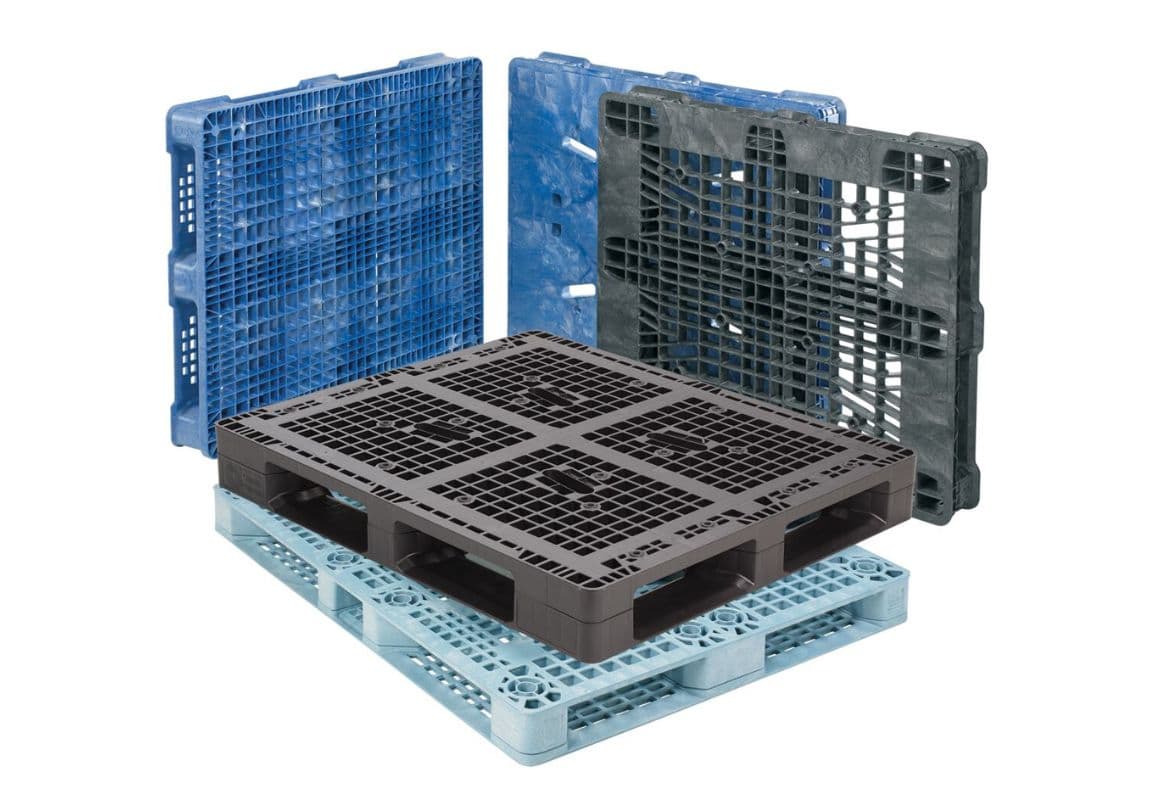
iGPS Intelligent Pallet System
iGPS Intelligent Pallet System pairs lightweight hybrid plastic pallets with RFID and cloud-based IoT analytics to enable real-time location tracking, damage detection, and redeployment optimization that drive measurable savings in freight and asset churn. Positioned between CHEP’s global pooling scale and ORBIS’s plastic-durability focus, iGPS delivers a digitized pooling model that emphasizes telematics-driven utilization improvements and faster ROI for customers aiming to modernize pallet fleets.

What Research Says About RFID and IoT in Material Handling
Multiple industry reports, peer-reviewed studies, and real-world case studies show that RFID and IoT-enabled handling assets improve operational accuracy, reduce waste in cold chains, and enable predictive maintenance. Research from logistics consultancies and engineering groups indicates that visibility provided by RFID and sensor telemetry shortens inventory cycles, lowers shrinkage, and supports faster recalls and quality investigations. Cold chain monitoring trials demonstrate reduced spoilage when temperature excursions are detected and acted on in real time. Studies also show that condition-based maintenance driven by vibration and usage sensors reduces unplanned downtime and extends asset lifespan. For beginners: IoT sensors collect data, RFID provides reliable identity and location, and cloud platforms turn those data streams into alerts, dashboards, and automated actions that replace manual checks and paper records.
Inventory accuracy and cycle count times improve substantially after RFID adoption; many case studies report double-digit to high-percentage reductions in counting time and errors.
Cold chain sensor deployments reduce spoilage and product loss by enabling timely intervention when temperature or humidity thresholds are breached, as reported in food and pharmaceutical pilots.
Predictive and condition-based maintenance using sensor data reduces unscheduled asset downtime and total maintenance costs versus calendar-based schedules.
Total cost of ownership (TCO) and return on investment (ROI) for smart pallets and containers typically improve within 12 to 36 months, depending on shipment volumes and reuse rates.
Environmental benefits include lower waste from single-use packaging and reduced emissions through better routing, higher pallet reuse rates, and optimized asset utilization.
Frequently Asked Questions
Which RFID smart pallet should I choose for pooling?
Choose the CHEP Smart Pallet if you want pooled service with integrated RFID/optional IoT tracking across CHEP’s network; it targets large, multi-region supply chains and aims to reduce customer capital expenditure via a rental/return model. Rating: 4.6.
Does ORBIS reusable plastic pallet include RFID integration?
Yes—ORBIS Reusable Plastic Pallets with RFID are factory-fitted with RFID tag pockets for reliable long-term tracking, built for sanitary washdown environments and consistent RFID read rates. Rating: 4.5.
What’s the price and value of Tosca SmartCrate?
The provided product data for Tosca SmartCrate doesn’t include a price, so I can’t compare exact value by cost. It does list a collapsible reusable crate with embedded RFID and optional IoT sensors for real-time telemetry. Rating: 4.3.
Is Tosca SmartCrate better for closed-loop return shipping?
Tosca SmartCrate is optimized for closed-loop logistics, using a collapsible, reusable design with embedded RFID and optional IoT sensors to support high-density return shipping and reduced empty transport costs. Rating: 4.3.
Conclusion
In Canada, RFID and IoT-enabled pallets and containers are driving better visibility, lower waste, and safer temperature-controlled logistics. The top options featured here each match common needs: CHEP Smart Pallet for broad pooled-pallet coverage and network advantage, Tosca SmartCrate for smart reusable crates and retail fulfillment, ORBIS Reusable Plastic Pallets with RFID for durable, traceable plastic pallet solutions, Schoeller Allibert SmartLink Container for connected bulk and transit containers, and iGPS Intelligent Pallet System for lightweight, trackable pallet pools. For most Canadian shippers looking for the best balance of scale, reliability, and partner network, the CHEP Smart Pallet is a strong default choice, while the other products excel by use case. I hope you found what you were looking for — you can refine or expand your search using the site search to focus on applications like cold chain, pharma compliance, or returnable pool services.