

Top 6 Shackles, Hooks and Couplers for Rigging in Canada: 2026 Guide
Published on Saturday, January 24, 2026
Critical connection hardware including bow and D shackles, swivel and grab hooks, and couplers form the backbone of safe rigging assemblies across Canada. These components are commonly available in forged, high strength steels and alloy materials with rated working load limits, traceable safety certifications, and corrosion resistant finishes such as hot dip galvanizing, zinc plating, or stainless options. Canadian buyers from construction, marine, forestry, utilities and oil and gas choose these products for predictable load performance, long service life in harsh climates, and compliance documentation for inspections and audits. Current market preferences emphasize certified working load limits, material traceability, easy on-site inspection features, compatibility with synthetic slings and alloy chain, and finishes that resist winter deicing salts and marine spray. Online procurement, fast local distribution, and clear technical datasheets are also high priorities for Canadian customers specifying rigging hardware in 2026.
Top Picks Summary
The Crosby G-209 is positioned as the market-leading bow shackle for critical lifting and marine use because of Crosby's long-standing reputation for consistent metallurgy, strict QA, and wide industry certifications. It commands a premium price but delivers proven durability, traceability, and conservative working load limits that professionals trust over cheaper alternatives like the Peek or some CM alloy options. Compared with Van Beest and Yoke Grade 80 offerings, the G-209 emphasizes predictable service life and global support rather than the absolute light-weight capacity-per-weight advantage of some high-grade shackles.
Show More Bow Shackles
The CM Rigging Alloy Screw Pin Shackle is a dependable, widely available dee shackle that balances robust alloy construction with competitive pricing for general-purpose rigging. It typically undercuts the premium brands on cost and is easy to source through industrial distributors, though it ranks below Crosby and Green Pin on fatigue-rated applications and depth of certification.
Show More Dee Shackles
The CM Columbus McKinnon Prodigy Swivel Hook is a market leader for users who prioritize engineered features and ergonomic design, offering optimized geometry and modern latch systems that improve handling and rigging speed for Swivel Hook applications. It competes on technical refinement rather than raw premium price, delivering a balance between performance and cost that undercuts some premium Crosby configurations while offering more advanced features than basic Pewag units. Against Gunnebo and Yoke, CM often wins where modular accessories and service network are important to operators.
Show More Swivel Hooks
Where to buy CM Columbus McKinnon Prodigy Swivel Hook in Canada: the trusted retailers we track in this market, with the best price we have observed at each. Prices are checked regularly and can change, and the retailer confirms the final price at checkout.
We may earn a commission on purchases. It never affects our rankings.
$100 – $550
B/A Products' G70 Twist Lock Grab Hook combines full G70 rated strength with an integrated twist-lock mechanism that prevents accidental unhooking, delivering a technical safety advantage over standard clevis and slip hooks. Though it carries a premium versus non-locking models, the reduced risk of load loss and related liability can make it the more economical choice over time for operators who prioritize on-road safety and damage prevention.
Show More Grab and Slip Hooks
The Peerless Grade 100 Self-Locking Hook combines high-strength Grade 100 steel with a robust self-locking mechanism to deliver a balance of capacity and value for heavy lifting applications. It earns its position by offering broad availability and competitive unit pricing versus premium European and specialty brands, making it a cost-effective choice where G100 performance is required without the highest premium spend. Compared to the swivel and specialty hooks in this list, Peerless emphasizes straightforward, durable construction and lower total acquisition cost for fleet-wide deployments.
Show More Self Locking and Safety Hooks
Where to buy Peerless Grade 100 Self-Locking Hook in Canada: the trusted retailers we track in this market, with the best price we have observed at each. Prices are checked regularly and can change, and the retailer confirms the final price at checkout.
We may earn a commission on purchases. It never affects our rankings.
$60 – $120
The CM Hammerlock coupling link is valued for its simple, robust locking method and rapid installation, providing dependable field performance with minimal training. While it may not carry the premium branding of Crosby or the modular quick-connect focus of Gunnebo, CM’s practical design and wide service network give it a cost-effective advantage in operations that favor low maintenance and fast turnaround.
Show More Coupling Links and Connectors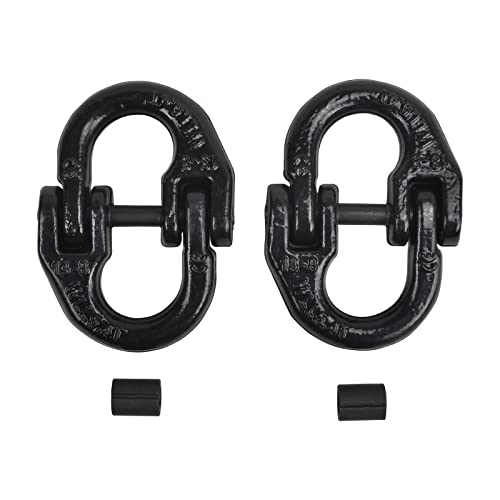
What research and safety guidance say about shackles, hooks and couplers
Materials science and industry safety literature consistently show that properly manufactured and inspected rigging hardware dramatically reduces lifting incidents. Forged components without critical welds offer higher toughness and better fatigue resistance, while certified heat treatments and alloy specifications control tensile strength and ductility. Corrosion and surface damage reduce capacity and increase crack risk, so protective coatings and routine inspection extend safe service life. Safety standards and industry guidance recommend using hardware within its rated working load limits, applying appropriate safety factors, and keeping traceability records and periodic proof testing for critical lifting components.
Forged steel parts have better impact resistance and fewer stress concentrators than cast or poorly welded parts, improving fatigue life.
Corrosion significantly lowers fatigue strength; hot dip galvanizing, stainless alloys, or specialty coatings extend service life in Canadian climates.
Industry guidance supports keeping working load limits within recommended safety factors and performing regular visual inspections and periodic proof tests.
Traceability and certification paperwork reduce human error and speed compliance with workplace safety inspections and audits.
Compatibility testing with synthetic slings and modern alloy chain is important because contact geometry can change load distribution and wear patterns.
Frequently Asked Questions
Which shackle should I buy for marine lifting use?
Choose the Crosby G-209 Screw Pin Anchor Shackle for marine and critical lifting, with a 4.8 average rating and hot-forged steel plus a screw-pin design for fast assembly and temporary connections.
What exact feature does the Crosby G-209 shackle include?
The Crosby G-209 Screw Pin Anchor Shackle is hot-forged steel with a screw-pin design and is proof-tested and stamped with a Working Load Limit for traceability.
Is the Crosby G-209 worth paying more than the CM shackle?
The Crosby G-209 is $165.88 CADwhile the CM Rigging Alloy Screw Pin Shackle is $165.88 CAD; Crosby includes proof-tested WLL stamping, while CM highlights alloy steel for lighter handling and quick-screw assembly.
Does the CM Columbus McKinnon Prodigy swivel prevent twisting?
Yes—the CM Columbus McKinnon Prodigy Swivel Hook has a full-rotation swivel to minimize rope or sling twist under load, and it has an average rating of 4.7.
Conclusion
Shackles, hooks and couplers are essential for safe rigging in Canada, and selecting forged, certified, and corrosion resistant options helps protect people, equipment and schedules. We hope this guide helped you find the right hardware. Use the search or filters to refine by WLL, material, finish, certification, or industry to expand or narrow your results.