

Top 5 Low Viscosity Fuel Economy Engine Oils in Canada (2026)
Low viscosity fuel economy oils, such as 0W-20 and 0W-16, are engineered to reduce internal engine friction and improve fuel economy while maintaining adequate film strength at operating temperatures. These modern full synthetic formulations combine low dynamic viscosity with advanced additive packages and shear-stable base stocks to protect bearings, pistons, and turbochargers even under high loads. In Canada, buyers value these oils for real-world benefits: lower fuel costs, reliable cold-start performance in harsh winters, compatibility with hybrid and turbocharged engines, and compliance with automaker specifications that preserve warranties. Consumers also consider oil certifications, manufacturer approvals, and the balance between fuel savings and long-term engine protection when choosing a low viscosity oil.
Inception's AI took the time to understand this market in Canada · · How we pickWe may earn a commission on purchases. It never affects our rankings.
Top Picks Summary
Mobil 1 0W-20 Advanced Fuel Economy
Mobil 1 0W-20 Advanced Fuel Economy is positioned as a top-tier low-viscosity synthetic engineered for maximum fuel economy without sacrificing wear protection; its long track record of OEM compatibility and advanced additive balance give it an edge in technical validation over many competitors. While typically priced at a premium versus value brands in this list, Mobil 1's proven shear stability and broad vehicle approvals justify the cost for buyers prioritizing long-term engine protection and consistent MPG gains compared with lower-cost alternatives.

Castrol EDGE Advanced Full Synthetic Motor Oil
Castrol EDGE 0W-20 leverages Castrol's high-pressure performance formulation (branded Fluid TITANIUM Technology) to deliver exceptional shear resistance and film strength at low viscosity, making it a market leader for drivers who demand peak mechanical protection under stress. It often sits at a similar premium tier to Mobil 1 but differentiates on extreme-load and high-temperature stability, offering a technical advantage for turbocharged or high-output engines compared to some budget-focused 0W-20 options on this list.

Estimated$30 – $50
Pennzoil Platinum 0W-20 Full Synthetic
Pennzoil Platinum 0W-20 uses a gas-to-liquid base oil technology (PurePlus) to deliver excellent low-temperature flow and fuel economy while keeping engine deposits low, positioning it as a technically efficient and often cost-competitive choice in the low-viscosity segment. Compared with Mobil and Castrol, Pennzoil typically offers comparable fuel-economy benefits at a slightly more attractive price point, making it a strong value proposition for buyers seeking premium synthetic performance without the highest premium.

Estimated$30 – $48
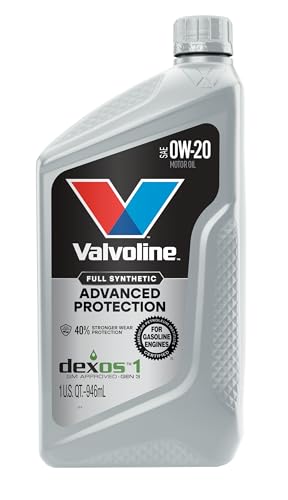
Valvoline Advanced Full Synthetic 0W-20
Valvoline Advanced Full Synthetic 0W-20 is formulated for balanced fuel-economy gains and robust wear protection with an emphasis on quick cold-start protection and detergency, making it a practical mid-market choice for everyday drivers. It tends to be priced below the top-tier premium brands while delivering many of the same protective benefits, so it appeals to consumers who want near-premium technical performance with better immediate cost savings than the most expensive options on this list.
Estimated$28 – $45
How Low Viscosity Oils Deliver Fuel Economy and Protection
The fuel economy advantage of low viscosity oils comes from reduced viscous friction during engine operation, especially at lower temperatures and during start-up. Synthetic base stocks and modern friction modifiers allow these oils to flow quickly at cold temperatures without sacrificing film strength at operating temperature. Independent laboratory and fleet studies show measurable fuel economy improvements when properly matched to the vehicle and driving conditions, while OEM-led testing and industry standards ensure wear protection and compatibility with emission control systems.
Mechanism: Lower dynamic viscosity reduces mechanical friction losses in rotating and reciprocating engine parts, translating into small but consistent fuel savings.
Cold performance: Grades like 0W-16 and 0W-20 flow rapidly at low temperatures, cutting warm-up time and protecting bearings during Canadian winters.
Evidence: Laboratory tests and real-world fleet data report typical fuel economy gains in the range of about 0.5 to 2.0 percent, with larger relative gains in city and stop-start driving.
Formulation safeguards: Synthetic base oils, robust additive chemistries, and improved shear stability maintain film strength and control oil consumption concerns reported with early low-viscosity blends.
Standards and approvals: Look for API SP or later, ILSAC GF-6B where applicable, and explicit OEM approvals to ensure compatibility with emission systems and warranty requirements.
Practical tip: Always follow the vehicle manufacturer viscosity and specification recommendations; fuel economy gains depend on correct grade, driving pattern, and engine condition.
Frequently Asked Questions
Which low-viscosity oil should I buy for fuel economy?
Mobil 1 0W-20 Advanced Fuel Economy is a strong pick because it’s formulated specifically to improve fuel economy while providing strong wear protection at thin film thicknesses; it has a 4.7 average rating.
Does Pennzoil Platinum 0W-20 mention shear stability or fuel economy?
Pennzoil Platinum 0W-20 is made from PurePlus synthetic base and includes high shear stability to preserve the 0W-20 viscosity grade under severe conditions, while helping maintain fuel economy and controlling deposits; it’s rated 4.65.
Is Mobil 1 0W-20 cheaper than Pennzoil Platinum 0W-20?
Yes—Mobil 1 0W-20 Advanced Fuel Economy is listed at $30.98 CADversus Pennzoil Platinum 0W-20 Full Synthetic at $38.99, and Mobil 1 is rated 4.6.
What makes Castrol EDGE 0W-20 different for turbo engines?
Castrol EDGE 0W-20 Advanced Full Synthetic uses Titanium-strengthened Fluid TITANIUM Technology to maintain film integrity under high loads and is described as turbo-friendly with resistance to breakdown in turbocharged engines; it’s rated 4.6 and costs $66.99.
Conclusion
In Canada, low viscosity fuel economy engine oils offer a practical way to save fuel without sacrificing protection, especially for modern light-duty, hybrid, and turbocharged vehicles. The five top picks featured here are Mobil 1 0W-20 Advanced Fuel Economy, Castrol EDGE 0W-20 Advanced Full Synthetic, Pennzoil Platinum 0W-20 Full Synthetic, Valvoline Advanced Full Synthetic 0W-20, and Quaker State Full Synthetic 0W-20. For an overall balance of tested fuel economy gains, cold-weather flow, and broad OEM approvals, Mobil 1 0W-20 Advanced Fuel Economy stands out as the best choice for many Canadian drivers, while Castrol EDGE, Pennzoil Platinum, Valvoline Advanced, and Quaker State are strong alternatives depending on price, local availability, and specific manufacturer requirements. I hope you found the information you were looking for; use the search to refine by engine type, viscosity (0W-16 or 0W-20), OEM approvals, or to expand to extended-drain and performance formulations.