

Top 5 Diesel Anti-Gel Treatments, Oils and Fluids in Canada for 2026
Cold-flow improvers and anti-gel additives prevent diesel fuel waxing and gelling in low temperatures to maintain fuel flow and engine reliability. In Canada, where winter temperatures frequently drop below freezing across the Prairies, Atlantic provinces and the North, these products are essential for passenger trucks, commercial fleets, off-road equipment and standby generators. Consumers choose anti-gel treatments for reliable cold starts, fewer filter substitutions, reduced downtime and extended fuel system life. Preference trends in Canada emphasize multi-functional formulas that combine anti-gel protection with cetane boost, injector cleaning and lubricity benefits, plus compatibility with biodiesel blends and long storage stability for seasonal vehicles.
Inception's AI took the time to understand this market in Canada · · How we pickWe may earn a commission on purchases. It never affects our rankings.
Top Picks Summary
Howes Diesel Treat
Howes Diesel Treat Anti-Gel is a long-standing cold-weather specialist prized for its concentrated formulation and flexible dosing that keeps diesel flowing at low temperatures; its cost-per-treatment and ease of use make it a favorite for owners looking for an economical, reliable anti-gel option. Compared with the other products on this list, Howes emphasizes straightforward pour-point depression and affordability rather than dual-function additives like cetane boosters or heavy-duty lubricity enhancers, making it a strong choice for budget-conscious users who need proven winter protection.

Power Service Diesel Fuel Supplement + Cetane Boost
Power Service Diesel Fuel Supplement + Cetane Boost combines anti-gel protection with a cetane-enhancing chemistry that improves cold-start ignition and combustion efficiency, giving it a technical advantage for vehicles that need both winter operability and smoother running. While typically priced a bit higher than single-purpose anti-gel treatments, its dual-action formulation can reduce downstream fuel-system issues and fuel consumption versus standalone cleaners or winter-only products on this list.

Estimated$12 – $22
Hot Shot's Secret Diesel Winter Anti-Gel
Hot Shot's Secret Diesel Winter Anti-Gel is formulated specifically for extreme cold and biodiesel blends, offering aggressive pour-point depression and polymer-based cold-flow improvers that keep filters and lines clear in severe winter conditions. It stands out from the pack for users who prioritize maximum low-temperature protection over broad-spectrum treatments, and while it may carry a premium, the technical performance in very low temperatures often offsets replacement or downtime costs associated with gelling.

Lucas Oil Cold Weather Fuel Additive
Lucas Oil Fuel Treatment Anti-Gel blends anti-gel chemistry with lubricity and stabilizers, delivering multi-function value that suits fleet operators and regular users looking to simplify maintenance with one product. Compared to niche anti-gel or cetane-boost formulas, Lucas offers a balanced technical package and competitive per-tank pricing that can lower total maintenance spend by protecting injectors and pumps as well as preventing gelling.

Estimated$14 – $26
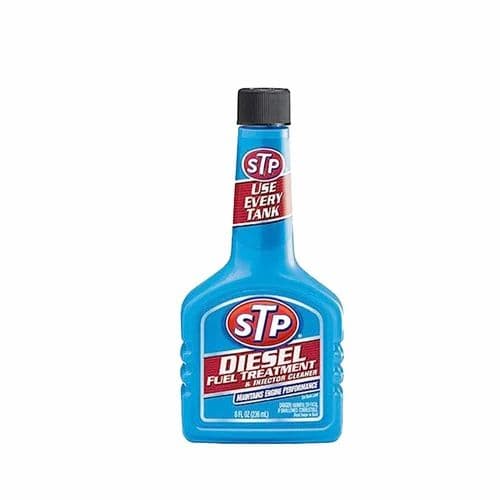
STP Diesel Fuel Treatment and Injector Cleaner
STP Diesel Fuel Treatment and Injector Cleaner focuses on keeping injectors and fuel systems clean while providing moderate anti-gel benefit, making it an attractive budget-oriented preventive product for routine maintenance. It is generally more affordable than premium winter-specific anti-gels and unique in this group for emphasizing deposit control, so buyers who want improved injector performance plus light cold-weather protection will find it a cost-effective complement to more aggressive anti-gel treatments.
How anti-gel additives work and what research shows
Anti-gel and cold-flow improver products work by modifying how paraffin wax crystals form as diesel cools. Instead of large, interlocking crystals that block fuel filters and lines, treated fuel forms smaller, non-blocking crystals or delays crystal formation, lowering operational temperatures where fuel starts to cloud, gel or plug filters. Independent laboratory methods and industry standards such as cloud point, pour point and cold filter plugging point help quantify cold-weather performance. Research and lab testing consistently show that properly dosed additives can lower cold filter plugging point and improve pumpability, while combination formulas that include detergents and cetane improvers can also help combustion efficiency and injector cleanliness.
Mechanism: Cold-flow improvers alter wax crystal shape and size to prevent filter blockage and maintain flow.
Key metrics: Cloud point, pour point and cold filter plugging point (CFPP) are used to evaluate effectiveness in lab tests.
Biodiesel impact: Biodiesel blends (B5, B20) are more prone to gelling; many anti-gel formulas are tested for biodiesel compatibility.
Combined benefits: Formulas that add cetane boost or detergents may improve cold starting and reduce smoke while treating gelling.
Real-world results: Field and lab studies show properly dosed additives can extend the lowest usable temperature by several degrees Celsius, reducing in-service failures.
Conclusion
Choosing the right winter diesel treatment in Canada comes down to climate, fuel type and how you use the vehicle or equipment. The five top options on this page — Howes Diesel Treat Anti-Gel, Power Service Diesel Fuel Supplement + Cetane Boost, Hot Shot's Secret Diesel Winter Anti-Gel, Lucas Oil Fuel Treatment Anti-Gel, and STP Diesel Fuel Treatment and Injector Cleaner — cover a range of needs from pure anti-gel protection to multi-function engine and injector care. For most Canadian owners looking for proven cold-weather reliability and wide temperature coverage, Howes Diesel Treat Anti-Gel is a standout pick. I hope you found the information you were looking for; you can refine or expand your search using the site search to compare doses, product sizes and retailer availability across Canada.