

Top 5 Industrial Circulating Oils in Canada for 2026
Industrial circulating oil refers to general-purpose lubricants designed for centralized circulation systems, plain and rolling element bearings, and some gear applications that require excellent filterability, oxidation resistance, and additive compatibility. In Canada the category is shaped by needs for cleaner-running oils that reduce deposits, support longer change intervals, and perform reliably across wide seasonal temperature ranges. Buyers prioritize oils with strong oxidative stability, low varnish and sludge tendency, good cold-start behavior, and compatibility with modern filtration and additive packages. Supply chain factors, local technical support, regulatory compliance, and sustainability credentials also influence purchasing decisions across manufacturing, pulp and paper, food processing, and mining operations.
Inception's AI took the time to understand this market in Canada · · How we pickWe may earn a commission on purchases. It never affects our rankings.
Top Picks Summary
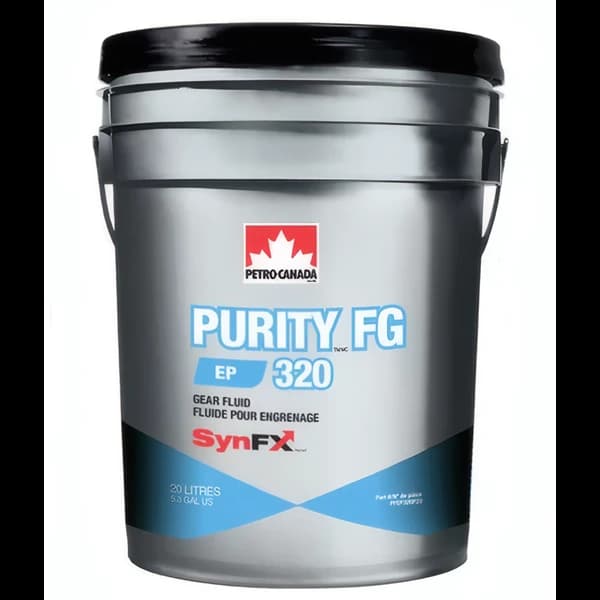
Petro-Canada Purity FG Circulating Fluid
Purity FG is positioned as the best-in-class choice for food-processing and hygiene-sensitive industrial circulating systems because its food‑grade formulation meets common H1 specifications and minimizes contamination risk. Compared with the other industrial circulating oils on this list, it commands a premium only where regulatory compliance and reduced product‑loss liability matter, and its specialty use often lowers total cost of ownership in hygienic plants by avoiding costly product recalls and cleaning downtime.
Estimated$150 – $1,100
Imperial Oil Teresstic N
Teresstic N is presented as a regional value leader, offering strong low-temperature startability and solid oxidative stability that make it economical for continuous circulating systems in cold climates. Versus premium global brands it typically undercuts on purchase price while delivering reliable wear protection and seal compatibility, making it attractive where supply cost and Canadian availability are primary procurement drivers.

We may earn a commission on purchases. It never affects our rankings.
Estimated$130 – $900
Shell Morlina S2 B
Shell Morlina S2 B is a market-leading industrial circulating and bearing oil prized for robust film strength, demulsibility and long drain intervals that reduce maintenance frequency on large systems. Compared with the other products listed, Morlina trades a higher upfront cost for proven global service support and extended oil-life performance, which often yields lower lifecycle expense for high-hour, heavy-duty installations.

Chevron Rando HD
Chevron Rando HD targets heavy-duty circulating applications where shear stability and anti-wear performance are critical, giving plants reliable protection under high load and contamination risk. It competes on a balance of technical protection and competitive pricing—offering many of the durability benefits of premium turbine oils like Mobil and Shell but frequently at a lower acquisition cost and with strong North American distribution.

We may earn a commission on purchases. It never affects our rankings.
Estimated$160 – $950
Mobil DTE Oil Named Series
The Mobil DTE series is a global market leader for industrial circulating and turbine applications due to exceptional oxidation resistance, deposit control and filterability that extend element and oil life in high-temperature circuits. While typically positioned at a premium price point, Mobil DTE often lowers operating expense through reduced downtime and longer service intervals relative to commodity circulating oils, making it the preferred choice where maximizing uptime and minimizing maintenance labor are priorities.

Estimated$220 – $1,400
Why the Science Backs Circulating Oil Performance
Performance claims for circulating oils are supported by industry-standard laboratory tests and field trials that measure oxidation resistance, deposit formation, viscosity stability, and cleanliness. Tests such as RPVOT or PDSC for oxidation, ASTM viscosity and pour point tests, and ISO cleanliness codes help predict long-term behavior in circulation systems. Independent laboratory assessments and controlled plant trials consistently show that oils formulated for high filterability and additive compatibility produce fewer varnish deposits, maintain heat transfer efficiency, and allow extended drain intervals when matched to system conditions.
Oxidation control: antioxidants slow additive depletion and reduce sludge and varnish, proven by common oxidation tests.
Filterability: base oil selection and additive solubility support sustained flow through fine filters, reducing particle and varnish buildup.
Extended drain intervals: improved stability and lower contamination growth translate to longer, validated service windows in field trials.
Energy and efficiency: cleaner oil films and reduced deposit layers maintain heat transfer and lower pump and bearing loads over time.
Compliance and safety: many modern formulations meet food-grade, biodegradability, or low-VOC requirements needed by Canadian operators.
Practical testing: routine oil analysis (viscosity, acid number, particle counts, insolubles) provides actionable data to extend oil life safely.
Frequently Asked Questions
Which circulating oil should food processing use Purity FG?
Choose Petro-Canada Purity FG Circulating Fluid for food-processing and hygiene-sensitive systems because it’s certified food-grade (H1) for incidental contact in food and beverage plants; it’s rated 4.6.
What spec does Petro-Canada Purity FG meet exactly?
Petro-Canada Purity FG Circulating Fluid is certified food-grade (H1) suitable for incidental contact in food and beverage plants, and it provides rust and oxidation inhibitors to protect bearings and circulation loops; rating 4.6.
Is Shell Morlina S2 B cheaper than Imperial Teresstic N?
The provided details don’t list prices for Shell Morlina S2 B or Imperial Oil Teresstic N, so you can’t compare cost per bottle from this data; ratings are 4.5 and 4.5 respectively.
Is Imperial Oil Teresstic N compatible with standard filtration?
Yes—Imperial Oil Teresstic N is described as compatible with common seal materials and standard filtration equipment for general industrial bearing and system protection; it’s rated 4.5.
Conclusion
This selection highlights five widely used circulating oils in Canada: Petro-Canada Purity FG Circulating Fluid, Imperial Oil Teresstic N, Shell Morlina S2 B, Chevron Rando HD, and Mobil DTE Oil Named Series. For most Canadian facilities looking for a balance of regulatory compliance, local technical support, and long drain performance, Petro-Canada Purity FG Circulating Fluid stands out as the best overall choice on this page. We hope you found what you were looking for; you can refine or expand your search using the search to compare viscosity grades, food-grade approvals, biodegradability, or supplier availability.