

Top 5 Industrial Heat Transfer Oils in Canada for 2026
Published on Saturday, January 24, 2026
Industrial heat transfer oil provides thermally stable fluids for closed-loop heat transfer systems across Canadian industries, from food processing and chemical plants to manufacturing and district heating. These fluids are engineered for high flash points, strong resistance to thermal degradation, and long service life under elevated temperatures. In Canada the market favors long-life synthetic formulations and enhanced-stability oils that support higher operating temperatures, reduce maintenance frequency, and limit system downtime. Buyers also prioritize low volatility, regulatory compliance, local technical support, and, for food and pharmaceutical applications, food-grade certification. Rising demand for energy efficiency and predictable lifecycle costs has moved many Canadian operations toward premium synthetic and blend heat transfer oils that balance safety, performance, and total cost of ownership.
Top Picks Summary
Petro-Canada Purity FG Heat Transfer Fluid
Petro-Canada Purity FG is positioned as the go-to food-grade heat transfer oil for industrial processes where contamination risk and regulatory compliance matter; its formulation reduces liability and cleaning costs compared with conventional thermal oils. While its unit cost can be higher than general-purpose fluids in this list, the reduced downtime, lower contaminant risk and longer safe-service intervals deliver total-cost advantages for food, beverage and pharmaceutical plants.

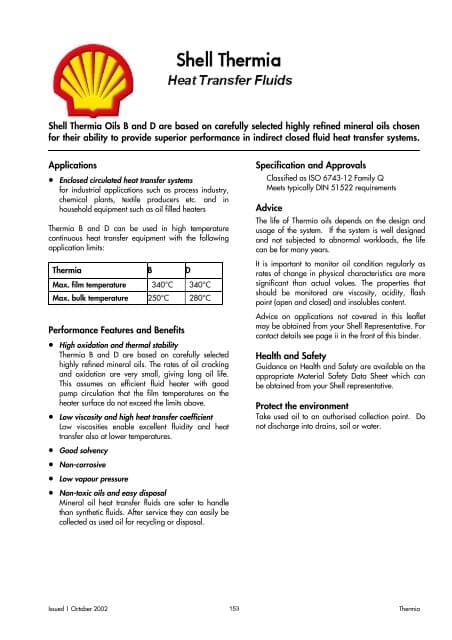
Shell Thermia B
Shell Thermia B is a long-established market leader known for broad temperature capability and excellent oxidative stability, making it a top choice for demanding continuous high-temperature industrial heat transfer systems. Its track record and global support network typically translate into predictable lifecycle costs and fewer unscheduled maintenance events compared with lower-tier alternatives, giving Thermia B a strong balance of technical performance and financial predictability.
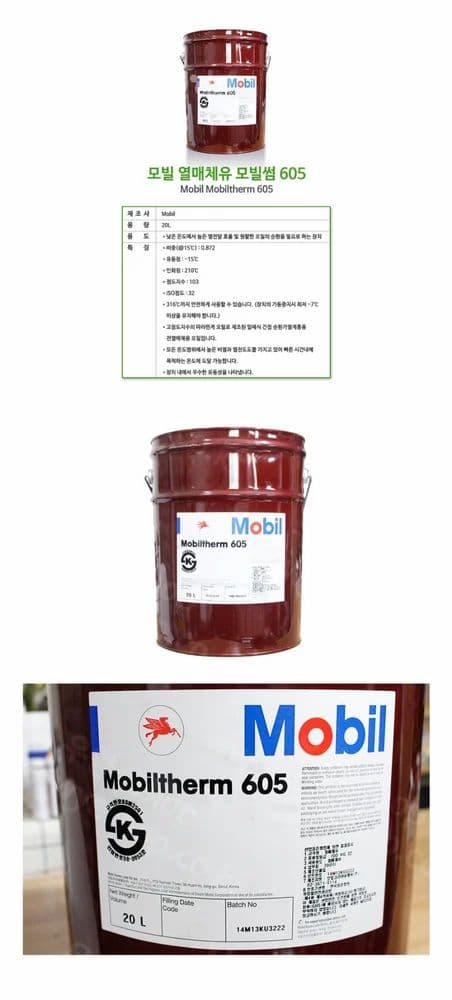
Mobil Therm 605
Mobil Therm 605 offers exceptional thermal and oxidative stability with low volatility, delivering extended drain intervals and reduced top-up frequency that lower operating expenses in long-run industrial applications. Backed by ExxonMobil's supply and technical service, it competes closely with other premium oils here by emphasizing long-term reliability and minimized total cost of ownership for plants operating at sustained elevated temperatures.
Castrol Perfecto HT 5
Castrol Perfecto HT 5 is a premium high-temperature transfer fluid engineered to resist deposits and sludge formation in severe-service systems, which improves heat-transfer efficiency and reduces cleaning cycles compared with general-purpose fluids. Its technical strengths for very high-temperature applications and Castrol's aftermarket support make it attractive where maximizing uptime and thermal performance outweighs the slightly higher upfront fluid cost.
Clearlube HTF-32
Clearlube HTF-32 is a value-oriented heat transfer oil designed for moderate-temperature industrial systems that need reliable performance at a lower purchase price than specialty fluids. Although it typically offers shorter drain intervals and less extreme-temperature margin than the premium products listed above, its lower upfront cost and adequate thermal properties make it a practical choice for budget-sensitive installations or secondary heating loops.
What Research and Standards Say About Heat Transfer Oil Performance
Scientific studies, ASTM testing protocols, and industry field trials consistently show that modern synthetic heat transfer fluids outperform conventional mineral oils in thermal stability, oxidative resistance, and deposit control. Laboratory methods such as thermogravimetric analysis (TGA), differential scanning calorimetry (DSC), and standardized oxidation and aging tests measure degradation onset, volatility, and deposit formation. These metrics translate directly into longer fluid life, fewer changeouts, and more stable heat transfer efficiency in real-world systems when fluids are selected and maintained correctly.
Thermal stability: TGA and long-term high temperature aging tests demonstrate synthetics and certain aromatic blends resist breakdown at higher continuous operating temperatures compared with conventional mineral oils.
Oxidative resistance: Oxidation testing and accelerated aging show improved resistance to sludge and deposit formation for fluids formulated with antioxidants and high-purity base stocks.
Flash point and safety: ASTM flash point testing confirms that high flash point fluids reduce fire and vapor risk in industrial environments, an important safety criterion for Canadian facilities.
Viscosity and heat transfer: Viscosity index and kinematic viscosity tests (ASTM D445) indicate better heat transfer performance and pumpability across operating temperature ranges for modern formulations.
Field studies: Manufacturer field trials and independent case studies show that long-life synthetics lower lifecycle costs by extending fluid replacement intervals and reducing maintenance-related downtime.
Frequently Asked Questions
Which heat transfer oil should I choose for food plants?
Petro-Canada Purity FG Heat Transfer Fluid is the go-to option for food- and beverage-contact applications, with an average rating of 4.6 and features like low odour and low residue formation to reduce contamination risk in processing environments.
Does Mobil Therm 605 have low sludge and oxidative stability?
Mobil Therm 605 is designed for sustained high-temperature service with excellent resistance to thermal degradation, and it includes low deposit and sludge formation for extended equipment life; it has an average rating of 4.6.
How does Shell Thermia B value compare to Mobil Therm 605?
The provided data lists only average ratings (Shell Thermia B: 4.5; Mobil Therm 605: 4.6) and key features, but no exact prices for either product, so a value comparison by cost isn’t possible here.
Is Shell Thermia B compatible with many industrial closed-loop systems?
Yes—Shell Thermia B is described as a proven mineral-based fluid with broad compatibility for many industrial closed-loop systems, and it’s aimed at medium- to high-temperature operation; average rating is 4.5, but warranty duration isn’t provided.
Conclusion
In Canada, selecting the right industrial heat transfer oil depends on the application, operating temperature, safety priorities, and local support. The top five options profiled here are Petro-Canada Purity FG Heat Transfer Fluid, Shell Thermia B, Mobil Therm 605, Castrol Perfecto HT 5, and Clearlube HTF-32. For most Canadian buyers looking for a blend of strong thermal stability, food-grade availability where required, and robust local technical support, Petro-Canada Purity FG Heat Transfer Fluid stands out as the best overall choice. We hope this page helped you find the right heat transfer fluid; you can refine or expand your search using the site search to compare temperature ranges, lifecycle data, and supplier services.