

Top 5 Replacement Tire Pressure Monitoring Sensors in Canada for 2026
Replacement Tire Pressure Monitoring Sensors (TPMS) in Canada cover a growing market for direct and programmable sensors, service kits, and replacement batteries compatible with modern vehicle systems. These products include sensor cloning and aftermarket programmable solutions that ensure accurate pressure and temperature monitoring across passenger cars, light trucks, and many electric vehicles. Canadian consumers favor programmable and multi-frequency sensors because they reduce workshop time, avoid unnecessary sensor swaps after wheel or rim changes, and provide reliable performance in cold-weather conditions common across Canada. Buyers also look for OEM-compatible profiles, simple programming or cloning, long battery life, and clear documentation to match sensors to a wide range of vehicle makes and models.
Inception's AI took the time to understand this market in Canada · · How we pickWe may earn a commission on purchases. It never affects our rankings.
Top Picks Summary
Autel MX-Sensor 433MHz Programmable TPMS Sensor
The Autel MX-Sensor 433MHz is a programmable replacement TPMS sensor known for broad vehicle coverage and seamless integration with Autel diagnostic tools, making it a cost-effective choice for shops that already use Autel scanners. It balances affordability and advanced programmability compared with OE-focused options like Schrader and premium multi-application sensors like Continental, offering strong technical value for technicians needing reliable 433 MHz replacements.

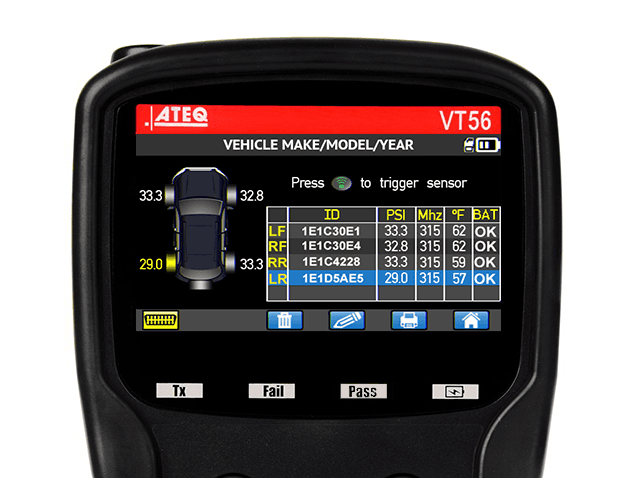
ATEQ VT56 Programmable TPMS Sensor
The ATEQ VT56 programmable TPMS sensor pairs tightly with ATEQ's industry-leading service tools and is engineered for professional-level durability and calibration accuracy, which justifies its mid-to-upper-tier price. For replacement TPMS needs it offers superior service integration and diagnostics versus budget universal sensors like Orange, while competing on functionality with Autel and offering an alternative to OE-style solutions from Schrader and Continental.
Estimated$70 – $120
Schrader EZ-Sensor 33700 Programmable TPMS Sensor
The Schrader EZ-Sensor is an OEM-grade programmable replacement sensor with excellent vehicle fitment, proven reliability, and widespread OEM approvals, making it the benchmark for direct-fit replacements. While typically priced higher than universal aftermarket units, it delivers stronger warranty support and fit/finish compared with Orange and often greater OEM compatibility than multi-application offerings, providing technicians confidence when matching exact original specifications.

We may earn a commission on purchases. It never affects our rankings.
$52.98CAD
Continental VDO REDI-Sensor Multi-Application TPMS Sensor
The Continental VDO REDI-Sensor is a premium, multi-application replacement TPMS sensor designed to reduce inventory needs by covering many vehicle makes and models via pre-programming options. It trades a higher upfront cost for greater flexibility and precision, outperforming single-frequency budget sensors in coverage and quality while directly competing with Schrader on OE-level performance and with Autel/ATEQ on programmability and professional usage.

Estimated$70 – $130
Orange Electronic Universal TPMS Sensor
The Orange Electronic Universal TPMS Sensor is a budget-friendly, easy-to-program replacement aimed at DIYers and cost-conscious repair shops, offering rapid coverage for many late-model vehicles at lower price points. Although it lacks the long-standing OE pedigree and some of the advanced diagnostic tool integrations of Schrader, Continental, Autel, or ATEQ, it delivers strong financial value for straightforward replacement scenarios where full OEM parity is not required.

Why TPMS Matters: Research-Backed Benefits
Scientific research and vehicle safety agencies show that correct tire pressure improves braking stability, handling, fuel efficiency, and tire life. TPMS technology provides continuous monitoring and early alerts for underinflation or slow leaks, which is useful for safety and for managing operating costs over time. In colder climates such as Canada, ambient temperature drops cause tire pressure to fall, so real-time monitoring helps drivers respond before performance or safety is affected.
Safety and crash risk: Studies and road safety agencies link proper tire maintenance to improved vehicle control and reduced risk of certain types of crashes; TPMS helps drivers detect unsafe underinflation sooner than manual checks alone.
Fuel economy and emissions: Maintaining correct tire pressure lowers rolling resistance, which leads to modest improvements in fuel efficiency and reduced emissions over the life of the tire.
Tire lifespan and cost savings: Consistent pressure reduces uneven wear and extends tire life, lowering replacement frequency and total ownership cost.
Cold-weather performance: Research shows tire pressure drops as temperature falls; TPMS provides timely alerts so drivers in Canadian winter conditions can compensate quickly.
Aftermarket sensor accuracy: Laboratory and field tests indicate that programmable and cloned direct sensors, when correctly initialized, deliver accuracy comparable to many OEM sensors while often reducing replacement cost and downtime.
Frequently Asked Questions
Which replacement TPMS sensor should a shop buy?
For shops using Autel scan tools, the Autel MX-Sensor 433MHz Programmable TPMS Sensor is a cost-effective pick because it supports cloning OEM IDs and direct programming with Autel TPMS tools, rated 4.6.
Does the ATEQ VT56 support multiple TPMS frequencies?
Yes—the ATEQ VT56 Programmable TPMS Sensor is a programmable sensor with broad coverage and multi-protocol support, commonly 315/433 MHz, and it’s rated 4.6.
How does Schrader EZ-Sensor pricing compare for fitment?
The Schrader EZ-Sensor Programmable TPMS Sensor lists at CAD 51.47, and you get an OEM-grade direct-fit, programmable design with integrated temperature sensing and a rated 4.7.
What warranty duration applies to the Autel MX-Sensor?
The Autel MX-Sensor 433MHz Programmable TPMS Sensor data specifies a sealed battery designed for typical 5–10 year service life, rated 4.6 (no warranty duration is provided).
Conclusion
This page highlights five trusted replacement TPMS options for Canada: Autel MX-Sensor 433MHz Programmable TPMS Sensor, ATEQ VT56 Programmable TPMS Sensor, Schrader EZ-Sensor Programmable TPMS Sensor, Continental VDO REDI-Sensor Multi-Application TPMS Sensor, and Orange Electronic Universal TPMS Sensor. For most Canadian drivers seeking the best balance of compatibility, ease of programming, and broad vehicle support, the Autel MX-Sensor 433MHz Programmable TPMS Sensor stands out as the top choice. We hope you found the right sensor or service kit for your needs; you can refine or expand your search using the search box to filter by frequency, vehicle make and model, or sensor type.