

1-Way Car Alarm Systems in Canada (2026): 4 One-Way Picks + a 2-Way Option
A 1-way car alarm only transmits in one direction: the remote sends arm, disarm and panic commands to the vehicle, and the siren does the talking. It sends nothing back. There is no LCD or LED confirmation on the fob that the car actually armed, no shock-sensor alert at a distance, and no remote-start status — that feedback channel is what you pay extra for in a 2-way system. In exchange you get a lower price, a simpler remote and a smaller battery drain, and in practice a shorter usable range, because a one-way fob has to be loud enough on its own to reach the car with no handshake. That trade-off is the whole decision. If you park within sight of your door and mostly want an audible deterrent and keyless entry, one-way is enough. If you park in an underground garage or several floors up and need to know the car heard you, buy two-way instead. Below are four one-way systems sold in Canada, plus one two-way bundle included as the step-up comparison, with the Canadian regulatory and installation facts most listings leave out.
Inception's AI took the time to understand this market in Canada · · How we pickWe may earn a commission on purchases. It never affects our rankings.
Top Picks Summary
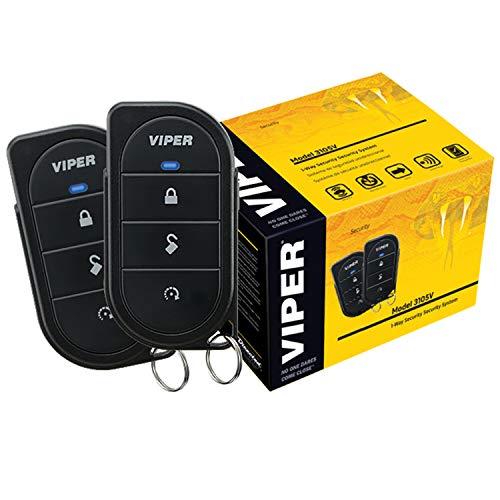
Viper 350 Plus 3105V 1-Way Car Alarm
The Viper 3105V is an entry-level 1-way security system that pairs keyless entry with a 1-way LED remote (no LCD confirmation) and a 1/4-mile operating range. It is built on Directed's ESP2 platform and includes the Stinger DoubleGuard shock sensor, the Revenger six-tone siren and a Failsafe Starter Kill for anti-theft protection. Its wide vehicle compatibility and simple operation make it a dependable, no-frills choice for drivers who want effective deterrence without the complexity of a two-way system.
Compustar CS7900-AS All-in-One 2-Way Remote Start + Alarm
The Compustar CS7900-AS All-in-One 2-Way Remote Start and Alarm Bundle combines convenience and security seamlessly. With its long-range remote starter, you can warm up or cool down your vehicle before you even step outside. The system also includes a next-gen alarm that provides peace of mind with its advanced sensors. Its sleek design and user-friendly interface set it apart from competitors in the market.

We may earn a commission on purchases. It never affects our rankings.
$307.51CAD
Python 5105P 1-Way Security & Remote-Start System
The Python 1-Way Security System offers reliable performance with robust vehicle protection features. It is designed to deter unauthorized access through a sensitive impact sensor that reacts to any disturbances. The system's one-way remote provides a simple and effective way to secure your vehicle without complex setups. Its streamlined installation process makes it a favorite among both installers and users.

Avital 3100LX 3-Channel Keyless Entry Car Alarm
The Avital 3100LX 3-Channel Keyless Entry Car Alarm is a standout in its category due to its affordability and comprehensive features. This system not only offers keyless entry but also includes an alarm that activates with clearly defined triggers for enhanced security. With a user-friendly interface and an easy installation process, it appeals to a broad range of customers looking for reliable security solutions. Its value proposition makes it an attractive option in the market.

Prestige APS25Z One-Way Security System
The Prestige APS25Z One-Way Security System excels in delivering dependable security features at an accessible price point. It includes essential functions like a shock sensor and instant notification upon activation. Its simple yet effective design ensures users can easily operate and maintain the system with minimal hassle. This reliability and ease-of-use set it apart as a strong contender in the automotive security landscape.

The useful differences between these systems are range, sensor quality and whether remote start is included — not the marketing language. A one-way remote's rated range (1/4 mile on the Viper and Python, roughly 244 m on the Prestige) is a best-case line-of-sight figure and drops sharply in concrete garages, and because nothing comes back you cannot tell from the fob whether the command landed. Shock-sensor design is the other real differentiator: a dual-stage sensor that chirps a warning before going to full siren cuts false alarms, which is the single most common reason owners stop arming an alarm at all.
What a 1-Way Car Alarm Does and Does Not Do in Canada
The regulatory, security and installation facts that decide whether a one-way alarm is the right buy for a Canadian vehicle.
One-way means transmit-only: the fob sends commands to the car and receives nothing back, so there is no arm/disarm confirmation and no remote-start status on the remote. A 2-way system's LCD or LED remote is exactly that missing return channel.
An aftermarket alarm is not an immobilizer. Transport Canada's CMVSS 114 has required an electronic engine immobilizer on essentially all new light vehicles (under 4,536 kg GVWR) sold in Canada since September 1, 2007, so a 2007-or-newer car already has one. A one-way alarm adds an audible deterrent and keyless entry on top of it; it does not replace it.
The key-fob transmitter is regulated radio equipment. Licence-exempt remotes sold in Canada fall under ISED's RSS-210 Category I rules and must carry an IC certification number; most consumer alarm fobs sit in the 433.5-434.5 MHz band, and some grey-market units are built for the 315 MHz US band instead. Check for an IC number before you buy.
A car alarm does nothing against a relay attack. If your vehicle uses proximity keyless entry, thieves can amplify the factory key's signal from inside your house and drive off with the alarm disarmed by legitimate-looking credentials. A Faraday pouch or a separate immobilizer-style device addresses that threat; a siren does not.
These are not realistic DIY installs. A modern alarm needs a vehicle-specific wiring harness and, for any remote-start feature, a data bypass module to work with the factory immobilizer. Cutting into the factory harness incorrectly can cause warranty disputes and intermittent electrical faults.
Confirm coverage with your insurer before assuming a discount. Aftermarket alarm discounts vary by provincial insurer and policy and are often small or unavailable; treat theft deterrence, not premium savings, as the reason to buy.
Frequently Asked Questions
What is the difference between a 1-way and a 2-way car alarm?
A 1-way car alarm only transmits: the remote sends arm, disarm, trunk and panic commands to the vehicle, and the vehicle sends nothing back. You get no confirmation on the fob that the car armed, no alert when the shock sensor trips while you are away, and no remote-start status. A 2-way alarm adds a return channel and an LCD or LED remote that displays that status. One-way costs less and uses a simpler remote; two-way is worth the extra money when you park out of earshot, such as in an underground garage or several floors up.
Which one-way system here should I buy for simple protection?
The Python 5105P 1-Way Security & Remote-Start System is the value pick at roughly $169.00 CAD: a 1-way 4-button remote with no LCD confirmation, .25-mile rated range, an impact sensor and remote-start support, rated 4.5. If you want the stronger sensor package and do not need remote start, the Viper 350 Plus 3105V (about $169.00 CADrated 4.5) adds the Stinger DoubleGuard shock sensor, the Revenger six-tone siren and a Failsafe Starter Kill. For the lowest entry price, the Avital 3100LX is around $169.00 CADin the commonly stocked no-siren configuration.
Does the Viper 3105V have two-way confirmation or an LCD screen?
No. The Viper 350 Plus 3105V is a 1-way system: its LED remote sends commands to the car but cannot display status back, so you never see arm or disarm confirmation on the fob. The LCD two-way remote belongs to the separate Viper 3305V/responder models. The 3105V still delivers a 1/4-mile rated range, the Stinger DoubleGuard shock sensor, the Revenger six-tone siren and a Failsafe Starter Kill on Directed's ESP2 platform, and is listed here at about CA$224 with a 4.5 rating.
Why is the Compustar CS7900-AS on a 1-way page?
It is the deliberate step-up comparison, and it is the only 2-way product on this page. The Compustar CS7900-AS All-in-One bundle ships with a 2-way LCD remote rated up to 3,000 feet and supports optional smartphone control through a DroneMobile add-on, so unlike every one-way system here it confirms arm, disarm and remote-start status back to the remote. It is listed at about CA$307 with a 4.5 rating. If that confirmation matters to you, buy this rather than a one-way alarm.
Conclusion
Of the one-way systems here, the Viper 350 Plus 3105V is the most complete: ESP2 platform, Stinger DoubleGuard shock sensor, six-tone siren and a Failsafe Starter Kill, with a 1/4-mile LED remote that gives no status confirmation. The Python 5105P is the value pick if you also want remote start, the Avital 3100LX is the cheapest way into keyless entry plus a basic alarm (the commonly stocked variant ships without a siren), and the Prestige APS25Z is the simplest short-range option. The Compustar CS7900-AS is the only 2-way product on this page — it is listed here deliberately, as the upgrade you should compare against, because its LCD remote confirms arm, disarm and remote-start status that none of the one-way systems can report back. Whichever you choose, budget for professional installation: these need a vehicle-specific harness and, for remote start, a bypass module, and a bad install can create warranty and electrical problems.