

Best Studio Condenser Microphones in Canada 2026: Top 5 Picks
Studio condenser microphones are perfect for high-fidelity audio recording in controlled environments. They are known for their sensitivity and wide frequency range, making them ideal for capturing vocal nuance, acoustic instruments, and detailed soundscapes. In Canada, demand for condenser microphones continues to grow with the expansion of home studios, podcasting, streaming, and professional project studios. Canadian buyers typically prioritize low self-noise, consistent frequency response, reliable build quality that stands up to seasonal climate changes, and strong local warranty or dealer support. Price-to-performance and versatility for both vocal and instrument work are also top considerations, so the market favors large diaphragm condensers for warmth and detail as well as compact models that deliver high headroom and low noise for critical source capture.
Inception's AI took the time to understand this market in Canada · · How we pickWe may earn a commission on purchases. It never affects our rankings.
Top Picks Summary
Audio-Technica AT2020
The Audio-Technica AT2020 is a budget-friendly studio condenser that delivers clear, balanced sound and solid transient response, making it a top choice for entry-level home studios. It earns its place on this list as the best-in-class value because it offers professional-sounding performance at a fraction of the cost of the Neumann and undercuts mid-range options like the Rode NT1 and AKG C214. Technically it trades the extreme low-noise floor and premium refinement of the Rode and Neumann for affordability and reliable performance in straightforward recording scenarios.

Rode NT1
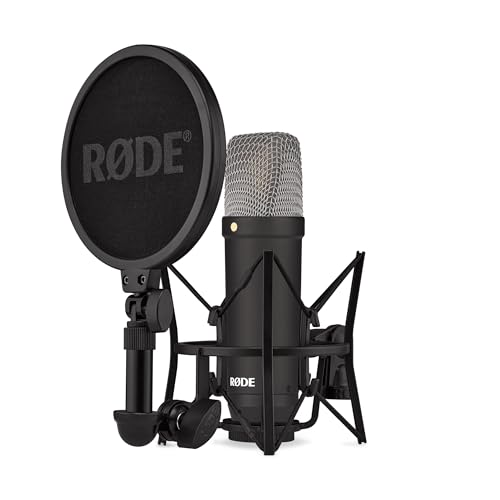
The Rode NT1 is renowned for an exceptionally low self-noise and a warm, detailed tonal character, making it ideal for quiet, transparent studio captures. It stands out in this studio condenser lineup by offering near-professional noise performance and a value-packed package that undercuts the Neumann TLM 102 while outperforming the AT2020 in noise floor and detail. Its technical advantage is the very low noise floor and consistent, smooth top end, which gives it strong mid-range appeal for engineers seeking high clarity without premium pricing.
Shure SM27
The Shure SM27 is a studio-focused condenser known for a natural, neutral response and robust construction, positioning it as a versatile workhorse for vocals and instruments. It sits between the budget AT2020 and the premium Neumann in both performance and cost, offering more refined tonality and better handling of demanding sources than the AT2020 while typically being more affordable than the Neumann and comparable to the AKG C214. Technically it’s prized for dependable, honest reproduction and durability, making it attractive for engineers who need a consistent, all-purpose studio mic.

We may earn a commission on purchases. It never affects our rankings.
$479.00CAD
AKG C214
The AKG C214 brings large-diaphragm detail and high-SPL capability derived from AKG's flagship designs, delivering professional-grade performance at a sensible mid-range price. It competes with the Rode NT1 by offering a slightly more forward top end and with the Shure SM27 by providing greater presence and transient clarity, while remaining far less costly than the Neumann TLM 102. Financially it’s often viewed as a smart trade-off—near‑pro sound and rugged build without the premium Neumann price tag.

Neumann TLM 102
The Neumann TLM 102 is the market leader on this list due to its classic Neumann voicing, precise transient capture, and premium build quality, making it a go-to for professional vocal and instrument tracking. Although it commands a higher price than the AT2020, Rode NT1, Shure SM27, and AKG C214, it delivers superior clarity, lower noise, and a musically flattering presence that many studios consider worth the investment. Technically it outperforms on detail and refinement, which is why it is often chosen for critical studio condenser applications.

Why condenser microphones work: research and practical benefits
Scientific and industry research explains why condenser microphones are preferred for high-fidelity studio work. Studies and technical white papers from audio engineering bodies and manufacturers show how diaphragm design, low self-noise, and frequency response characteristics translate into measurable improvements in clarity, transient response, and dynamic range. For beginners, the key points are straightforward: a well-designed condenser captures more detail and produces recordings that need less corrective processing, saving time during mixing and improving overall audio quality.
Low self-noise increases usable dynamic range: research and AES papers demonstrate that lower equivalent noise levels give clearer captures of quiet sources without raising gain or adding noise.
Diaphragm size and stiffness affect tone and transient detail: larger diaphragms typically provide a warmer, fuller low end while small diaphragms can offer quicker transient response and greater accuracy for instruments.
Polar patterns and directionality reduce room interference: cardioid and multi-pattern designs help isolate the source and reduce room reflections and ambient noise, supported by practical measurement standards such as IEC guidelines.
High sensitivity and wide frequency response capture nuance: condenser capsules translate subtle harmonic content and overtones into the recorded signal, which is why they are preferred for vocals and acoustic instruments.
Preamp and gain staging matter: studies and manufacturer test data show that pairing condensers with quality preamps and using proper gain staging preserves the benefits of low noise and wide frequency response.
Frequently Asked Questions
Which mic should I buy for entry-level home vocals?
Choose the Audio-Technica AT2020 at $119.60 CAD, rated 4.4, for clear balanced cardioid vocal capture with solid transient response suited to home and project studios.
What recording advantage does the Rode NT1 offer?
The Rode NT1 is prized for exceptionally low self-noise for quiet, detailed recordings, using a large-diaphragm cardioid condenser that delivers smooth, transparent vocals.
How does the Rode NT1 price compare here?
The Rode NT1 costs $223.00 CAD and is rated 4.7, while the Audio-Technica AT2020 is $119.60 CAD and rated 4.4, and both offer cardioid large-diaphragm condenser vocal capture.
Are the Shure SM27 and AT2020 good for instruments too?
Yes—the Shure SM27 is a large-diaphragm cardioid condenser for vocals and a wide range of instruments, and the AT2020 also supports vocals and acoustic instruments with good SPL handling.
Conclusion
In Canada, these five studio condenser microphones stand out for 2026: Audio-Technica AT2020, Rode NT1, Shure SM27, AKG C214, and Neumann TLM 102. Each model serves a particular need: the Audio-Technica AT2020 for budget-conscious beginners, the Rode NT1 for exceptional low self-noise and overall value, the Shure SM27 for balanced studio performance, the AKG C214 for rugged large-diaphragm clarity, and the Neumann TLM 102 for a compact, professional studio sound. For most Canadian home and project studios, the Rode NT1 is the best overall choice because it combines ultra-low noise, musical tone, and strong value. We hope you found what you were looking for; you can refine or expand your search using the site search to compare features, price ranges, and availability from Canadian retailers.