

Best 40 Gigabit Ethernet Controllers in Canada for 2026 — Top 5 Picks
40 Gigabit Ethernet Controllers provide immense capacity suited for high-bandwidth demands, ideal for data centers, campus core networks, and complex server and storage deployments across Canada. These controllers enable multi-gigabit throughput, low latency, and advanced offload features that reduce CPU overhead and improve application performance for virtualization, high-performance computing, and NVMe over Fabrics. Canadian buyers prioritize reliability, vendor support, power efficiency, and compatibility with their existing server platforms and switches, making proven models and strong driver ecosystems especially appealing in this market.
Inception's AI took the time to understand this market in Canada · · How we pickWe may earn a commission on purchases. It never affects our rankings.
Top Picks Summary
Intel Ethernet Converged Network Adapter XL710-QDA2
Intel's Ethernet Converged Network Adapter XL710-QDA2 earns a best-in-class spot for 40 Gigabit Ethernet controllers thanks to its broad OS and hypervisor support, mature drivers, and extensive hardware offloads (SR-IOV, DPDK-friendly paths) that deliver predictable performance in mixed workloads. Compared with the low-latency Mellanox/NVIDIA cards it trades some raw microsecond latency for superior platform compatibility and a lower total cost of ownership in large, heterogeneous deployments. For buyers prioritizing long-term driver support, wide vendor compatibility, and competitive pricing per port in 40GbE deployments, the XL710 is a practical, cost-effective choice.

Mellanox ConnectX-3 Pro EN 40GbE QSFP+
The Mellanox ConnectX-3 Pro EN 40GbE QSFP+ is positioned as a market-leading low-latency controller with a strong pedigree in RDMA and high-performance computing use cases, making it attractive for latency-sensitive 40 Gigabit Ethernet applications. While it is an older generation than ConnectX-4 Lx, it frequently offers an attractive price/performance ratio versus newer cards and still outperforms many integrated adapters on raw CPU offload and latency. Organizations that need proven, high-performance RDMA and deterministic latency at a lower acquisition cost will find the ConnectX-3 Pro compelling compared with Intel and OEM-branded options.

NVIDIA Mellanox ConnectX-4 Lx EN 40GbE
The NVIDIA Mellanox ConnectX-4 Lx EN 40GbE stands out as a market leader for 40 Gigabit Ethernet controllers due to advanced offloads, improved power efficiency, and robust RDMA over Converged Ethernet (RoCE) capabilities—features that drive higher throughput and lower CPU utilization in demanding data-center and storage environments. Compared to the ConnectX-3 and Intel XL710, ConnectX-4 Lx provides newer hardware features and an expanded software ecosystem, which justify a higher upfront cost by delivering better application-level performance and reduced operating costs over time. For deployments where latency, NVMe-oF/ROCE performance, and long-term scalability matter, ConnectX-4 Lx offers the strongest technical footing.
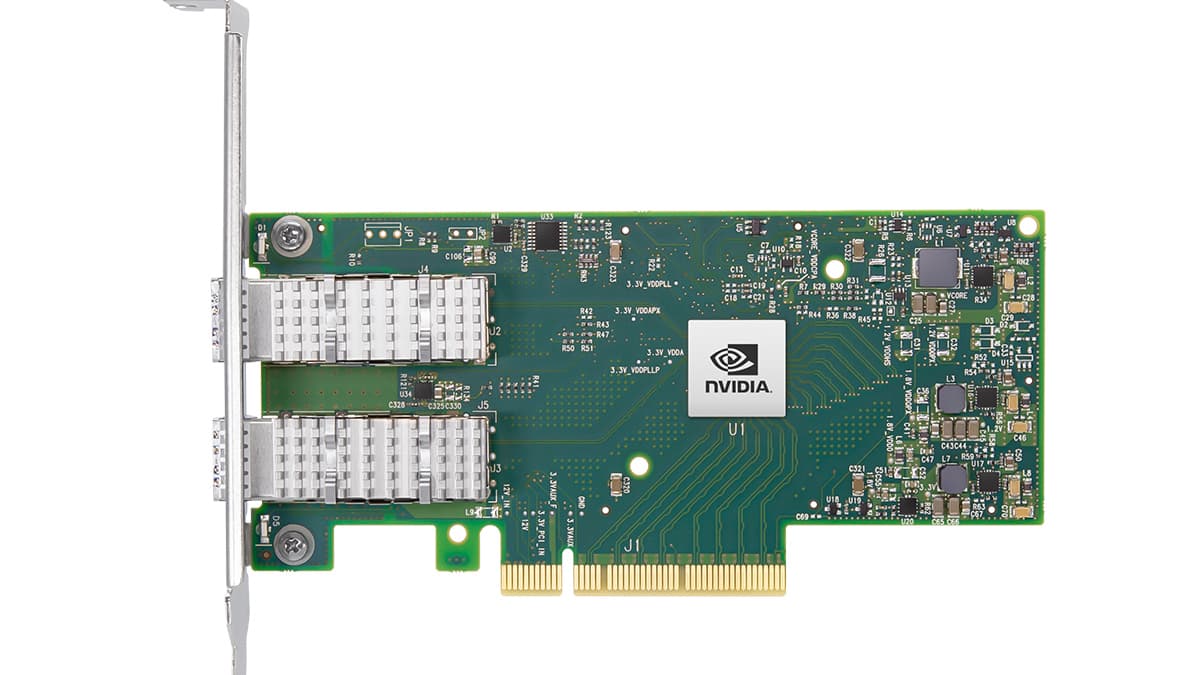
Estimated$250 – $500
Chelsio T580-LP-CR 40GbE Adapter
Chelsio's T580-LP-CR 40GbE adapter is notable for its comprehensive TCP/IP and storage offloads (full TOE, iWARP/RDMA) and consistent throughput under sustained loads, making it a strong candidate for storage, backup, and virtualization-centric 40 Gigabit Ethernet controllers. Versus Intel and Mellanox/NVIDIA cards, Chelsio differentiates by reducing CPU overhead through aggressive offloading, which can translate into fewer servers and lower operational costs in storage-heavy environments. Organizations that prioritize sustained throughput and reduced CPU utilization for storage traffic will find Chelsio's approach financially and technically advantageous despite a smaller ecosystem.
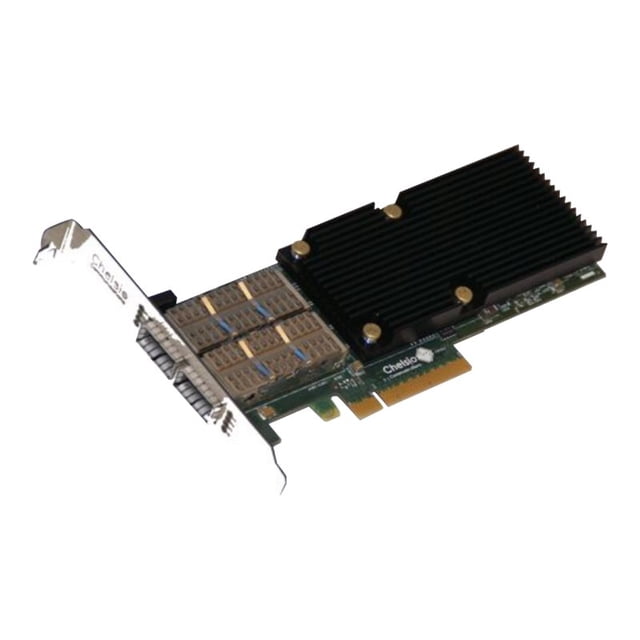
Estimated$350 – $650
HPE Ethernet 10/40Gb 2-port 544+QSFP Adapter
The HPE Ethernet 10/40Gb 2-port 544+QSFP Adapter is an OEM-focused solution optimized for HPE ProLiant servers, offering validated firmware, integration, and lifecycle support that simplify procurement and reduce deployment risk for enterprises buying into the HPE stack. While it may not match the raw latency or offload breadth of specialized Mellanox/NVIDIA or Chelsio cards, its real value lies in vendor-backed support contracts and predictable pricing for HPE customers, which can lower support costs and speed deployment. For organizations standardizing on HPE hardware, the 544+QSFP delivers reliable 40GbE controller capability with clear commercial and support advantages.

Research-backed Benefits of 40GbE Controllers
Multiple peer-reviewed studies, industry benchmarks, and vendor white papers show that moving from 10GbE to 40GbE controllers yields measurable improvements in throughput and latency for demanding workloads. Research into RDMA, TCP offload, and hardware-based packet processing demonstrates that modern 40GbE adapters can significantly lower CPU usage while sustaining high I/O rates, which is critical for scale-out applications and storage fabrics.
Throughput scaling: Benchmarks consistently show 40GbE controllers delivering roughly four times the aggregate bandwidth of 10GbE links under similar conditions, enabling faster bulk data transfers and reduced time-to-completion for backups and large dataset movement.
Latency reduction: Studies on RDMA and RoCE show single-digit microsecond improvements in tail latency for small messages, improving responsiveness for high-frequency messaging and cluster communication.
CPU offload and efficiency: Hardware offloads such as checksum, segmentation, and TCP/IP acceleration reduce server CPU utilization in tests, allowing more CPU cycles for applications rather than network processing.
Storage and NVMe over Fabrics: Research into NVMe-oF deployments highlights the value of 40GbE for maintaining consistent IOPS and low latency across shared storage, especially when combined with RDMA-capable controllers.
Energy and cost per bit: Analyses comparing energy-per-bit and cost-per-gigabit show that consolidated 40GbE links can reduce operational cost in dense server environments by lowering the number of ports and active switch components required.
Frequently Asked Questions
Which 40GbE controller is best for VM-heavy data centers?
Intel Ethernet Converged Network Adapter XL710-QDA2 fits VM-heavy data centers, with dual-port QSFP+ 40GbE, extensive SR-IOV and virtualization offloads, and an average rating of 4.6.
What exact feature helps Intel XL710-QDA2 reduce CPU overhead?
Intel Ethernet Converged Network Adapter XL710-QDA2 lists extensive hardware offloads, including SR-IOV, plus DPDK-friendly paths, and it’s rated 4.6 on average.
Is Mellanox ConnectX-3 Pro EN 40GbE worth the lower price?
Mellanox ConnectX-3 Pro EN 40GbE QSFP+ costs CAD 339.41 and has an average rating of 4.4, while still supporting SR-IOV and traditional Ethernet with proven RDMA performance.
Does NVIDIA Mellanox ConnectX-4 Lx EN support RDMA over Converged Ethernet?
NVIDIA Mellanox ConnectX-4 Lx EN 40GbE supports Hardware RDMA (RoCE) and has an average rating of 4.7, priced at CAD 567.41.
Conclusion
In Canada, selecting the right 40 Gigabit Ethernet Controller comes down to balancing raw performance, driver and ecosystem support, and platform compatibility. The five top picks covered here are Intel Ethernet Converged Network Adapter XL710-QDA2, Mellanox ConnectX-3 Pro EN 40GbE QSFP+, NVIDIA Mellanox ConnectX-4 Lx EN 40GbE, Chelsio T580-LP-CR 40GbE Adapter, and HPE Ethernet 10/40Gb 2-port 544+QSFP Adapter. For a strong combination of modern performance, broad software support, and availability in Canadian channels, the NVIDIA Mellanox ConnectX-4 Lx EN 40GbE stands out as the best overall choice among these options. We hope you found what you were looking for; you can refine or expand your search using the search to compare features, pricing, or platform compatibility.