

Top Picks: 5 Best 5G LTE Wireless Routers in Canada, 2026
Before speed or price, check the band list. A 4G LTE router only works in Canada if its modem covers the spectrum Rogers, Bell and TELUS actually use: band 4 (AWS-1) and band 66 (AWS-3) above all, plus band 2, 5 and 7, and band 12/13/17 at 700 MHz for rural and in-building reach. Many LTE routers sold online are European or global SKUs built for B1/B3/B20/B28, and they will show no service on a Canadian SIM no matter how fast the modem is rated. That caveat matters most in the rural and remote areas where these routers earn their keep, replacing fixed broadband or backing it up during an outage. The picks below are assessed on Canadian band coverage first, then speed, capacity and price.
Inception's AI took the time to understand this market in Canada · · How we pickWe may earn a commission on purchases. It never affects our rankings.
Top Picks Summary
Netgear Nighthawk LAX20
The Netgear Nighthawk LAX20 is an exceptional dual-band 4G LTE router that delivers lightning-fast internet speeds and expansive coverage. Its remarkable performance makes it ideal for streaming, gaming, and video conferencing without disruption. With advanced security features and easy setup, it stands out as a user-friendly solution that can cater to demanding online households. Its versatility allows for seamless transitions between WiFi and cellular networks, making it perfect for both home and travel use.

Estimated$300 – $400
TP-Link Archer MR600 V2
The TP-Link Archer MR600 V2 is a high-performance 4G LTE router that offers incredible speed and reliability for all your internet needs. It features dual-band WiFi and supports a wide range of devices, making it suitable for both small homes and larger spaces. What sets it apart is its extraordinary 4G LTE connectivity, allowing for easy internet access in areas with limited broadband options. With its sleek design and user-friendly interface, the MR600 V2 is an excellent choice for anyone seeking consistent performance.

Estimated$300 – $400
Huawei B535-232
The Huawei B535-232 is a powerful 4G LTE WiFi router that provides excellent speed and extensive coverage, perfect for various online activities. Its standout features include user-friendly setup and the ability to connect up to 64 devices simultaneously, making it a top choice for both home and small office use. The B535-232 boasts a modern design and robust build quality, ensuring it can handle the demands of daily internet usage effortlessly. Additionally, its support for multiple network bands maximizes versatility and connectivity options.

Estimated$200 – $300
ZTE MF288 Turbo Hub
The ZTE MF288 Turbo Hub is a reliable 4G LTE home router that emphasizes ease of use and high-speed connectivity. It stands out with its ability to connect multiple devices while delivering stable internet performance, catering well to families or small workplaces. Users appreciate the MF288's simple setup process, and it offers a strong signal range, ensuring coverage throughout your home. Its sleek design and practicality make it a popular choice for those seeking a hassle-free internet solution.
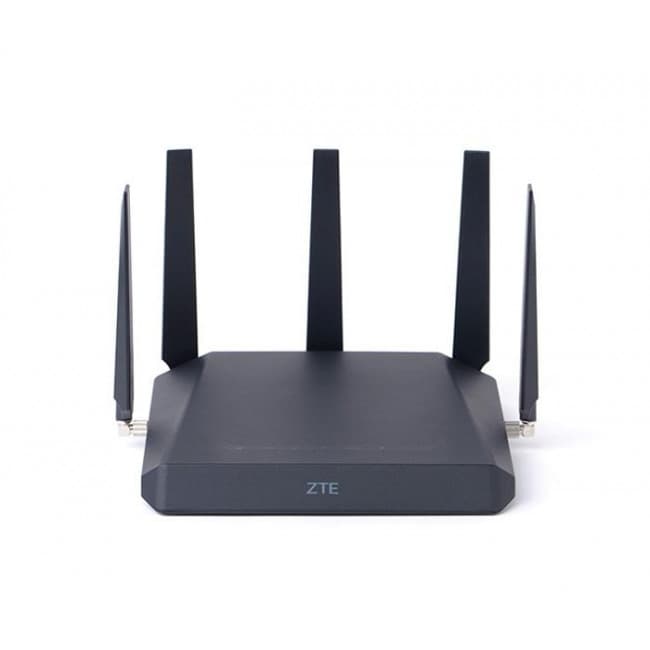
We may earn a commission on purchases. It never affects our rankings.
$400.00CAD
Asus 4G-AC86U
The Asus 4G-AC86U is a dual-band wireless router that combines advanced 4G LTE technology with exceptional WiFi performance. What sets this router apart is its seamless integration of mobile data into home networks, delivering high-speed internet even in rural areas. Its robust features, including built-in security and powerful processing, ensure that connectivity remains stable and secure. With support for multiple devices and impressive coverage, the 4G-AC86U is a top choice for tech-savvy users looking for superior performance.

The routers that work here pair a Canadian-band LTE modem with gigabit Ethernet and enough WiFi capacity for a full household, so a single SIM can serve a rural home or take over the moment a fixed line drops.
Understanding 4G LTE Wireless Routers
What actually determines whether an LTE router works in Canada, and how to read band lists, LTE categories and carrier locks before you buy.
The band list matters more than the speed rating. A router advertised at 300 Mbps is useless in Canada if it lacks LTE band 4 and band 66.
Rogers, Bell and TELUS run LTE mainly on band 4 (AWS-1) and band 66 (AWS-3), with band 2, 5 and 7 adding capacity and band 12/13/17 at 700 MHz carrying rural and in-building coverage.
European and global router SKUs typically cover B1/B3/B7/B8/B20/B28. That set overlaps Canadian networks only on band 7, which carriers deploy in urban cores rather than the countryside.
LTE category sets the ceiling, not the floor: Cat 4 tops out near 150 Mbps, Cat 6 near 300 Mbps and Cat 12 near 600 Mbps, and real rural throughput usually lands far below the rating.
Check whether the unit is carrier-locked. Hubs sold by Bell or TELUS match Canadian bands by design but may refuse a SIM from another carrier.
An LTE router is not a mobile hotspot. It needs mains power and fixed placement, trading battery portability for gigabit Ethernet, better antennas and more simultaneous clients.
Frequently Asked Questions
Which routers on this list work on Rogers, Bell and TELUS?
The Netgear Nighthawk LAX20 (LAX20-100NAS) is the safest pick: its North American modem covers LTE B2/4/5/7/12/13/25/26/29/30/66, including band 4 and band 66. The ZTE MF288 Turbo Hub was sold by Bell and TELUS in Canada, so its radio matches Canadian networks by design, though units are often carrier-locked. The TP-Link Archer MR600 V2 and the Huawei B535-232 are European SKUs and are not suitable for Canadian carriers.
What LTE bands does a router need to work in Canada?
Band 4 (AWS-1, 1700/2100 MHz) and band 66 (AWS-3) are the essentials, because Rogers, Bell and TELUS carry most LTE traffic on that spectrum. Band 2 (1900 MHz) and band 5 (850 MHz) add coverage, band 7 (2600 MHz) adds urban capacity, and band 12, 13 or 17 at 700 MHz provides rural reach and in-building penetration. A router without band 4 will not give usable service in Canada.
Which router should I buy for rural streaming and gaming?
The Netgear Nighthawk LAX20. It is the pick here with confirmed Canadian band coverage including band 4, band 66 and 700 MHz band 12/13 for rural reach, it runs a 4G LTE Cat 6 modem rated to 300 Mbps, it adds WiFi 6 (AX1800), and it supports up to 32 devices with a 4.7 average rating.
Why will a European 4G LTE router not work in Canada?
European and global SKUs are built for B1/B3/B7/B8/B20/B28, which is the spectrum European carriers use. Canadian carriers run on band 4 and band 66, which those routers do not include. The only common band is band 7 at 2600 MHz, and Canadian carriers deploy band 7 as urban capacity spectrum rather than for wide-area or rural coverage, so a European router typically shows no service outside a city core.
Conclusion
With the rise of 4G LTE wireless routers, Canadians can enjoy the benefits of high-speed internet access, no matter where they are. Confirm the band list against your carrier before you order, and check whether the unit is locked. For more specific inquiries or products, feel free to use the search bar.