Top 5 Arm Band Heart Rate Monitors in Canada
Published on Friday, January 2, 2026
An arm band heart rate monitor reads your pulse optically from the upper arm or forearm, so you get live heart rate during a workout without a chest strap. For most Canadian buyers the decision comes down to four specs: battery life, whether the band transmits on ANT+ as well as Bluetooth (ANT+ is what most bike computers and GPS watches expect), the water rating if you swim, and whether it records to internal memory when no phone or watch is in range. The Polar Verity Sense leads on all four — up to 30 hours per charge, ANT+ plus dual Bluetooth, waterproof to 50 metres, and 16 MB of storage for roughly 600 hours of offline sessions. The Scosche Rhythm+ 2.0 is the value pick at $89.99 with 24 hours of battery, IP68 and dual-band transmission. The Wahoo TICKR FIT sits between them at 30 hours and IPX7. Optical arm bands track steady-state effort well and are far more comfortable than a chest strap for most people, though a chest strap still reacts faster during hard intervals.
Top Picks Summary
Polar Verity Sense with Sports Shirt
The Polar Verity Sense is an optical heart rate sensor worn on the upper arm or forearm, with an optional clip that mounts it to a swimming-goggle strap at the temple. It delivers accurate, real-time heart rate without a chest strap, connects over ANT+ and dual-channel Bluetooth LE, and is waterproof to 50 metres for pool and open-water swimming. It carries 16 MB of internal memory for roughly 600 hours of offline recording, and battery life runs up to 30 hours of continuous training per charge.

Wahoo TICKR X
The Wahoo TICKR FIT is an optical heart rate armband worn on the forearm, providing heart rate and calorie data without a chest strap. Its adjustable band stays secure through running, cycling and fitness classes, and it transmits over both ANT+ and Bluetooth to phones, GPS watches and bike computers. The rechargeable battery lasts up to 30 hours and the unit is rated IPX7 water-resistant. It has no internal memory, so it needs a paired device recording alongside it, and IPX7 covers splashes and rain rather than swimming.

Scosche Rhythm+ 2.0
The Scosche Rhythm+ 2.0 is an optical heart rate armband built around a Valencell PerformTek sensor that reads accurately across skin tones. It pairs over both Bluetooth and ANT+ with phones, watches, bike computers and gym equipment, and its soft, washable band keeps it comfortable for long sessions. The rechargeable battery lasts up to 24 hours and the device is rated IP68 waterproof.

Garmin HRM-Pro Plus
The Garmin HRM-Pro Plus is a chest strap rather than an arm band, included here as the accuracy benchmark this category is measured against. An electrode chest strap reads the heart's electrical signal directly, so it reacts faster than an optical arm band during hard intervals. It transmits over ANT+ and Bluetooth simultaneously, stores heart rate on the strap when no device is connected and forwards it afterwards, and adds running dynamics and swim compatibility for multisport use.

Miiego AL3 Freedom
The Miiego AL3+ Freedom is a wireless on-ear sports headset built to stay put during running and training. It does not contain a heart rate sensor and does not measure heart rate — pair it with one of the arm bands above if you want music and heart rate together.
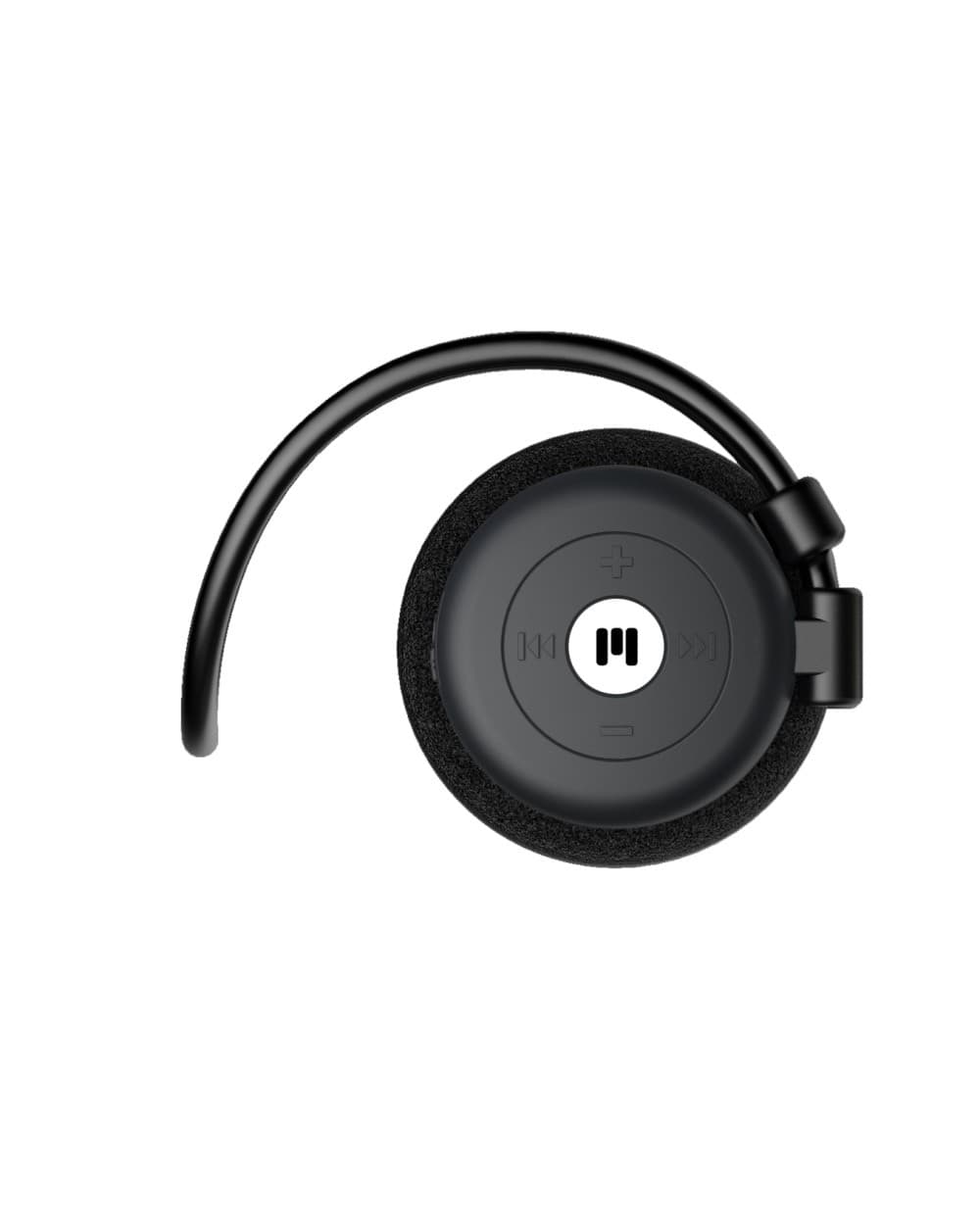
$150 – $170
Arm band heart rate monitors put an optical sensor on the upper arm or forearm, which is more comfortable than a chest strap and more accurate than a wrist sensor. The models here run 24 to 30 hours per charge, transmit on both ANT+ and Bluetooth so they pair with watches, bike computers and fitness apps, and range from IPX7 splash resistance up to the Polar Verity Sense's 50-metre rating for swimming.
Understanding Arm Band Heart Rate Monitors
Arm band heart rate monitors use an optical sensor against the skin of the arm, trading a little responsiveness for a lot of comfort compared with a chest strap.
The sensor is optical (photoplethysmography): LEDs shine into the skin and a photodiode reads the pulse in blood flow. A chest strap instead reads the heart's electrical signal, which is why it reacts faster to sudden changes in effort.
Optical arm bands track steady-state efforts — easy runs, long rides, classes — closely enough for zone training. During short, hard intervals they can lag or briefly lock onto cadence, so a chest strap is still the reference for interval work.
The arm is a better optical site than the wrist: less bone, more stable contact, and less movement artefact, which is why arm bands are consistently more accurate than a wrist-worn watch sensor.
Comfort is the practical reason most people switch. A band you will actually wear beats a chest strap that stays in the drawer.
ANT+ matters more than it looks. Bluetooth generally pairs to one device at a time, while ANT+ broadcasts to many — a bike computer, a watch and a gym machine at once. All three optical bands here do both.
Water ratings are not interchangeable. IPX7 and IP68 cover sweat, rain and brief immersion; only a WR50 rating like the Polar Verity Sense is meant for actual swimming.
Internal memory decides whether the band works alone. The Verity Sense records around 600 hours to 16 MB and syncs later; the TICKR FIT and Rhythm+ 2.0 need a phone or watch recording alongside them.
Frequently Asked Questions
Which armband heart rate monitor should I buy?
The Polar Verity Sense at $89.99 CADis the best overall: up to 30 hours of battery, ANT+ plus dual Bluetooth, waterproof to 50 metres, and 16 MB of onboard memory for around 600 hours of offline recording. If you want to spend less, the Scosche Rhythm+ 2.0 at $89.99 CADis rated 4.7 and still gives you dual Bluetooth and ANT+ with IP68 and a 24-hour battery.
Does the Polar Verity Sense support ANT+?
Yes. The Polar Verity Sense transmits on ANT+ and on dual-channel Bluetooth LE at the same time, so it can feed a bike computer and a phone app together. It is rated 4.2 here at a listing price of $158.98.
Is the Wahoo TICKR FIT cheaper than Scosche Rhythm+ 2.0?
No. The Wahoo TICKR FIT is $89.99 CADand the Scosche Rhythm+ 2.0 is $89.99 CADso the Scosche is $89.99 CADcheaper while still offering dual-band Bluetooth and ANT+. The Wahoo's advantage is battery life: 30 hours against the Scosche's 24.
Are these armband monitors strap-free options?
Yes. The Polar Verity Sense, Wahoo TICKR FIT and Scosche Rhythm+ 2.0 all use an optical sensor held against the arm by a fabric band, with no chest strap. The Wahoo TICKR FIT is rated 4.7 and listed at $89.99 CADThe Garmin HRM-Pro Plus on this page is the exception — it is a chest strap, included as an accuracy reference.
Conclusion
For most people the Polar Verity Sense is the pick: 30 hours of battery, ANT+ and dual Bluetooth, waterproof to 50 metres, and enough onboard memory to record without a phone. If you want to spend less, the Scosche Rhythm+ 2.0 at $89.99 keeps dual-band transmission and IP68 with a shorter 24-hour battery. The Wahoo TICKR FIT matches the Polar on battery but is IPX7 and has no memory. The Garmin HRM-Pro Plus is listed as the accuracy benchmark — it is a chest strap, so pick it only if you need a strap's faster response during intervals. All of these are fitness devices for training, not medical equipment.