Ceramic Crowns in Canada — Top 5 Options for 2026
Published on Monday, January 26, 2026
Ceramic crowns are tooth-shaped caps made from advanced ceramics, used to restore strength, shape, and appearance to damaged or decayed teeth. In Canada the category has grown as patients prioritize metal-free, natural-looking restorations that balance aesthetics, durability, and biocompatibility. Popular ceramic materials include zirconia and lithium disilicate; zirconia is prized for strength and long-term wear resistance, while lithium disilicate is favored for superior translucency and lifelike appearance in front teeth. Canadian consumers are choosing ceramics because of increasing availability of CAD/CAM and same-day milling services, rising standards in cosmetic dentistry, and a preference for restorations that minimize allergic and metal-sensitivity concerns. Cost, provincial insurance limits, and the reputation of local dental labs also shape choice across provinces, with metropolitan areas like Toronto, Vancouver, and Montreal showing high adoption of digital workflows and premium ceramic options.
Top Picks Summary
IPS e.max CAD
IPS e.max CAD is a lithium disilicate glass-ceramic prized for best-in-class esthetics and excellent bondability, making it a top choice for anterior and esthetic posterior ceramic crowns. Compared with the higher-strength zirconias like BruxZir and Lava Plus, it offers superior translucency and lifelike opacity graduation at a modestly higher technique sensitivity. For practices balancing visual outcomes and predictable adhesive performance, IPS e.max CAD often delivers the best esthetic-to-cost ratio among the listed crown materials.
BruxZir Solid Zirconia
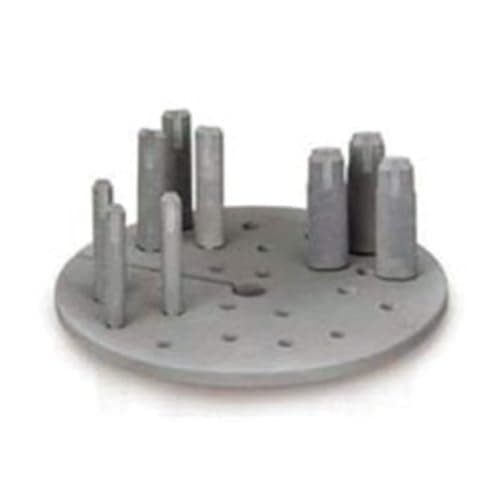
BruxZir Solid Zirconia is a full-contour zirconia engineered for maximum strength and long-term durability, making it ideal for bruxers and high-load posterior crowns. It is materially more fracture-resistant and typically more economical for large-span or heavy-duty restorations than translucent zirconias and glass-ceramics like IPS e.max CAD or Celtra Duo, though it trades off some translucency and fine esthetic detail. For clinicians prioritizing toughness and low long-term maintenance costs, BruxZir remains a market-leading practical option.
CEREC Tessera
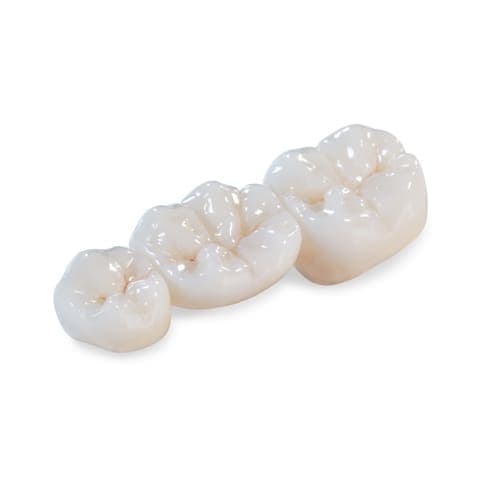
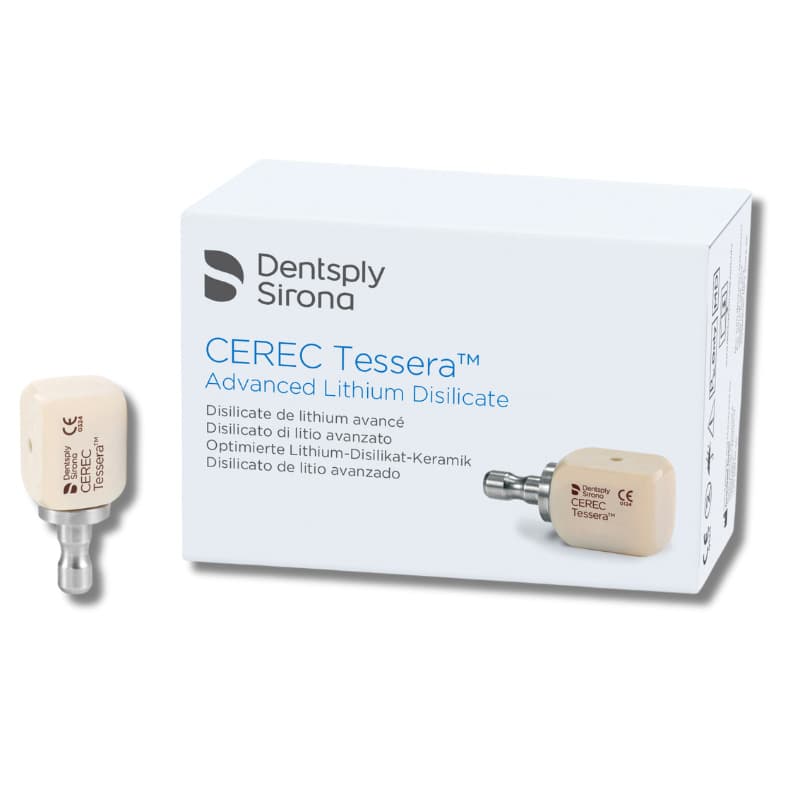
CEREC Tessera is a fast-milling, glass-ceramic block optimized for same-day CAD/CAM workflows, offering a strong balance of esthetics, flexural strength, and polishability designed for in-office single-visit ceramic crowns. Versus lab-oriented materials such as IPS e.max CAD or Celtra Duo, Tessera’s financial advantage lies in reduced turnaround time and lower lab fees by enabling chairside delivery without sacrificing competitive strength or shade matching. Practices investing in efficient restorative workflows will find Tessera attractive for improving throughput and patient satisfaction while keeping per-unit costs controllable.
Lava Plus High Translucency Zirconia
Lava Plus High Translucency Zirconia provides enhanced translucency among zirconias to closely approach the esthetics of glass-ceramics while retaining the inherent strength and chip resistance of zirconia. Compared with more opaque solutions like BruxZir, Lava Plus offers a clear technical advantage for anterior and premolar crowns where light transmission is critical, though it is often positioned at a premium price point relative to entry-level solid zirconias. Labs and clinicians seeking a balance of zirconia toughness with improved optical properties will value Lava Plus for esthetically demanding ceramic crown cases.

Celtra Duo
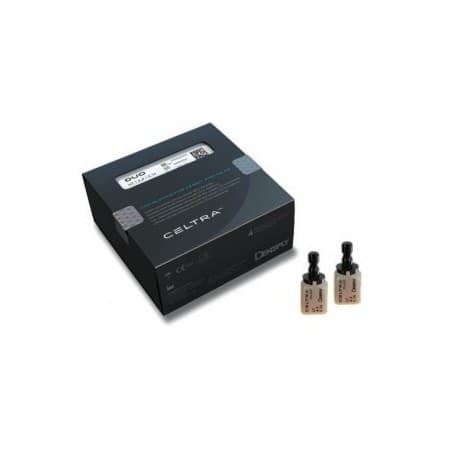
Celtra Duo is a zirconia-reinforced lithium silicate (ZLS) block that blends the esthetic qualities of glass-ceramics with boosted strength from zirconia reinforcement, making it versatile for single crowns, inlays, and onlays. It often sits between IPS e.max CAD and pure zirconia in both performance and cost—offering higher strength than traditional glass-ceramics while typically delivering better translucency than many full-contour zirconias. For practices and labs that need one material to cover multiple indications with predictable milling and adhesive workflows, Celtra Duo presents an efficient technical and financial compromise.
Evidence and Research Supporting Ceramic Crowns
Clinical research and systematic reviews show that contemporary ceramic crowns provide reliable long-term performance when selected and placed correctly. Studies that follow restorations for five to ten years report high survival and patient-satisfaction rates for both monolithic zirconia and glass-ceramic (lithium disilicate) crowns. Research highlights differences in strength, esthetics, and wear behavior that help dentists match materials to clinical needs, while digital impression and CAD/CAM workflows are shown to improve fit and reduce appointment time.
Survival rates: Multiple clinical studies and reviews report 5-year survival rates commonly above 90% for modern ceramic crowns when used with appropriate cases and cementation protocols.
Material trade-offs: Zirconia offers high fracture resistance and is suitable for posterior teeth and implant-supported crowns; lithium disilicate provides superior translucency and is often preferred for anterior esthetics.
Wear and opposing teeth: Properly finished and polished zirconia has acceptable wear characteristics against natural enamel; adjustments and glazing influence long-term outcomes.
Biocompatibility: Ceramics are inert and have a low risk of allergic reaction compared with some metal-based restorations.
Digital workflows: Clinical evidence supports that CAD/CAM scanning and milling improve marginal fit and can reduce chair time, which supports same-day or faster crown delivery.
Frequently Asked Questions
Which ceramic crown should I choose for front teeth?
Choose IPS e.max CAD: it’s a lithium disilicate glass-ceramic with excellent bondability and high translucency for anterior crowns, with an average rating of 4.7.
Does CEREC Tessera support chairside same-day milling?
Yes—CEREC Tessera is optimized for chairside CEREC systems with fast millability for in-office, single-visit ceramic crowns, and it has an average rating of 4.6.
How does IPS e.max CAD price compare to others?
IPS e.max CAD lists at $216.88 CADand the other provided options don’t show prices here, so you can’t directly compare cost from this data.
Is BruxZir Solid Zirconia better for bruxers?
Yes—BruxZir Solid Zirconia is a full-contour zirconia engineered for maximum strength and long-term durability, specifically described as ideal for bruxers, with an average rating of 4.5.
Conclusion
Ceramic crowns have become a leading choice in Canada for patients seeking metal-free, lasting, and attractive dental restorations. We hope this overview helped you understand the benefits and trends for 2026. If you did not find exactly what you needed, use the search to refine or expand your results by material type, province, or treatment option.