

Knee Scooter Canada 2026 — Top 7 Picks and Buying Guide
A knee scooter, also called a knee walker, is a hands-free mobility aid that supports the injured leg while the user propels themselves with the uninjured leg. In Canada, knee scooters are popular for foot, ankle and lower-leg recovery because they offer greater comfort, stability and speed than crutches for many users. Canadian buyers tend to prioritize foldable frames for transit, adjustable and padded knee platforms for longer use, all-season or puncture-resistant wheels for winter sidewalks, and clear return and warranty policies from domestic or national retailers. E-commerce growth, rental options through clinics and stronger interest in ergonomic recovery gear have shaped the market: consumers now look for quality, durability and local service when choosing a knee scooter.
Inception's AI took the time to understand this market in Canada · · How we pickWe may earn a commission on purchases. It never affects our rankings.
Top Picks Summary
KneeRover Economy Knee Scooter
The KneeRover Economy is the budget-focused entry in this lineup, offering a no-frills knee scooter that prioritizes low upfront cost and basic portability for short-term use. Compared with heavier-duty or specialty models (like the Drive DV8 or the KneeRover Pro All Terrain), it sacrifices advanced steering, high weight capacity and off-road capability for affordability and simple foldability, making it a solid value pick for price-conscious users.

We may earn a commission on purchases. It never affects our rankings.
$179.99CAD
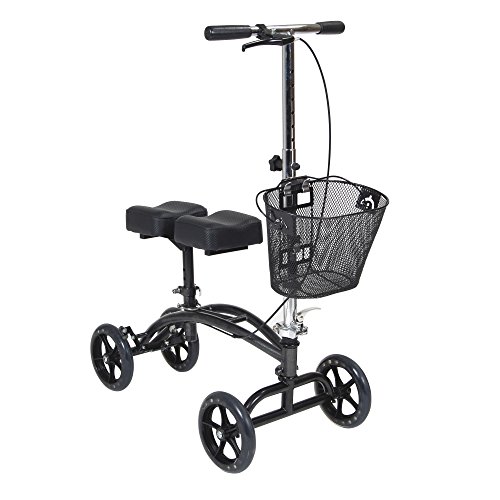
Drive Medical DV8 Aluminum Steerable Knee Walker
The Drive Medical DV8 Aluminum Steerable Knee Walker is a market-leading, widely available model that pairs lightweight aluminum construction with dependable steerable handling, which is why clinics and rental services favor it. Versus economy scooters and consumer-focused brands in this list, the DV8 strikes a balance between professional-grade durability and cost, offering better long-term value for users who need a reliable, clinic-ready machine without paying premium for all-terrain capability.
We may earn a commission on purchases. It never affects our rankings.
$335.00CAD
Roscoe Medical ROS-KS2 Knee Scooter
The Roscoe ROS-KS2 sits in the midrange segment as a sturdy, user-friendly knee scooter with a comfortable knee platform and straightforward adjustability, delivering dependable day-to-day performance. It typically undercuts some of the higher-priced clinical models while offering better comfort and build quality than the cheapest economy options, making it a smart compromise for users who want clinical reliability without premium specialty features.

KneeRover Pro All Terrain Knee Scooter
The KneeRover Pro All Terrain is the best-in-class pick for outdoor mobility, equipped with large pneumatic tires, reinforced framing and aggressive steering to handle gravel, grass and uneven sidewalks. Unlike the Economy KneeRover or compact consumer models, it trades a bit of portability and a higher price for exceptional off-road stability and user confidence in rough conditions, appealing to those who need more than indoor maneuverability.

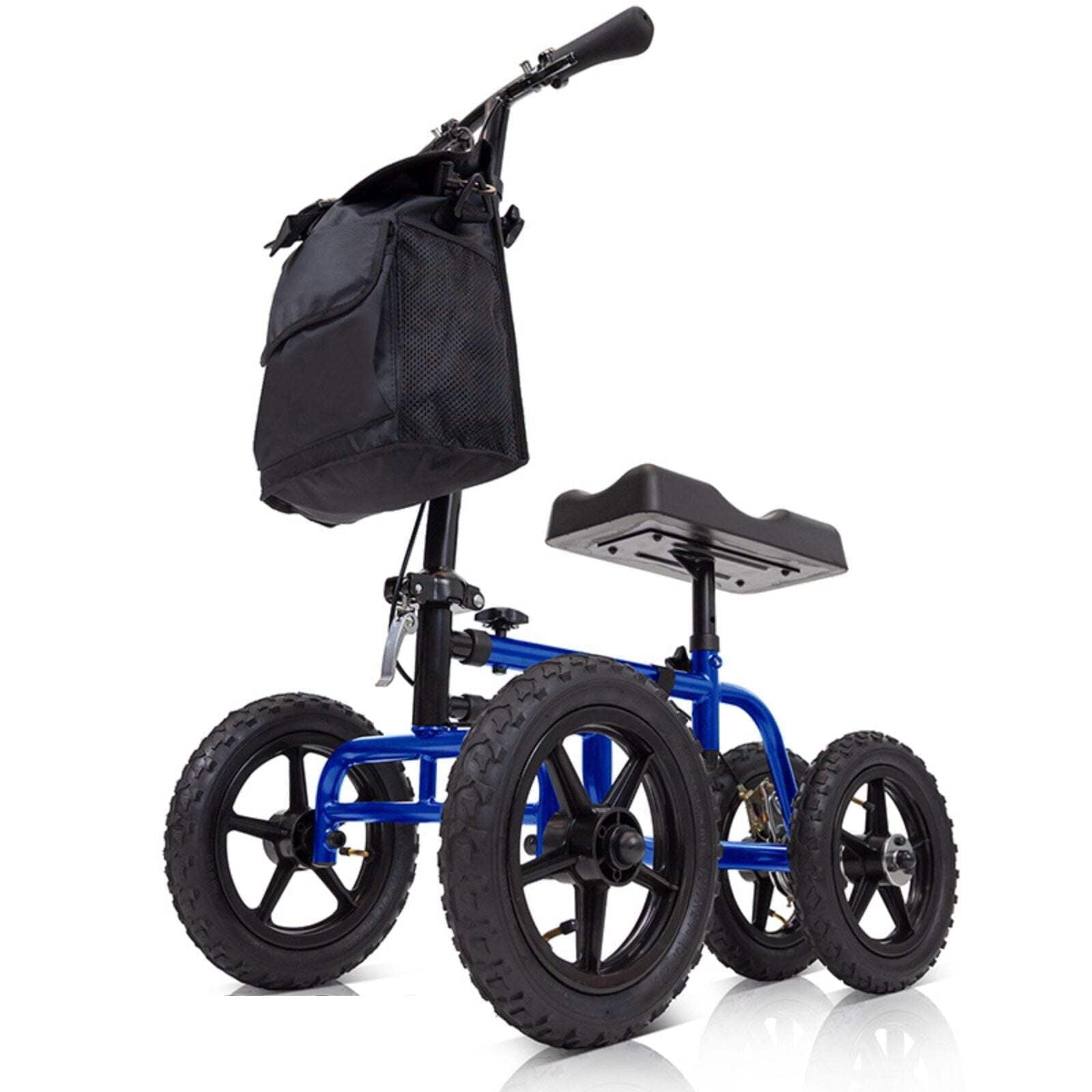
Vive Mobility Knee Walker
The Vive Mobility Knee Walker targets value-minded buyers who still want comfort features and user-friendly adjustments, often including extras like storage and quick-fold mechanisms that competitors at the same price point omit. Compared with midrange medical models such as the Roscoe or higher-end Drive and Medline units, Vive emphasizes easy home storage and approachable warranties, offering a strong all-around package for typical daily use.
Estimated$200 – $320
Medline Steerable Knee Walker
The Medline Steerable Knee Walker is a medical-supply leader known for heavy-duty construction, higher weight capacity and hospital-style safety features, making it a top choice in clinical and long-term patient scenarios. Against lighter consumer scooters like Vive or ELENKER, Medline trades compactness and lower price for ruggedness and clinician-trusted performance, and it benefits from broad distribution and established after-sales support.

ELENKER Economy Knee Scooter
The ELENKER Economy Knee Scooter is an ultra-budget option focused on minimal cost and light weight for short-term or infrequent use, appealing to shoppers whose primary requirement is the lowest possible price. It lacks the robust steering, larger wheels and durability of Drive, Medline or KneeRover Pro models, but its very low price and straightforward design make it a practical choice for temporary needs or occasional indoor use.

Estimated$150 – $240
What research says about knee scooters
Clinical and rehabilitation literature and applied studies generally find that knee scooters can improve mobility, increase walking speed, and raise user satisfaction compared with axillary or forearm crutches for suitable injuries. Research highlights benefits as well as safety and selection considerations; healthcare providers recommend matching device features to the user's height, weight, activity level and home environment.
Mobility and speed: Multiple studies report that many patients travel faster and with less perceived effort on knee scooters than on crutches.
Energy and comfort: Research indicates lower upper-body exertion and reduced fatigue for many users, because weight is supported on the knee platform rather than the arms.
Safety and injuries: Clinical reports show fewer upper-limb overuse injuries compared with crutch use, though users must take care on uneven or icy surfaces; proper sizing and training lower fall risk.
Patient satisfaction: Surveys and small trials commonly find higher satisfaction and easier daily activity performance with knee scooters for eligible injuries.
Precautions: Studies emphasize contraindications and scenarios where crutches or wheelchairs remain safer, such as when weight bearing on the injured limb is required or when terrain is unstable.
Frequently Asked Questions
Which knee scooter should I choose for short-term recovery?
Choose the KneeRover Economy Knee Scooter for short-term recovery because it’s budget-focused at $179.99 CADwith a 4.7 average rating, featuring a padded knee platform with height adjustment plus a compact, lightweight frame.
What capability does the Drive DV8 aluminum steerable model offer?
The Drive Medical DV8 Aluminum Steerable Knee Walker offers a steerable front wheel for precise maneuvering, with an aluminum frame, comfortable knee pad, and adjustable handlebars; it’s rated 4.6.
How does the KneeRover Economy knee scooter compare in price?
The KneeRover Economy Knee Scooter costs $179.99 CADwhile the Drive Medical DV8 Aluminum Steerable Knee Walker costs $335.00 CADand the Roscoe Medical ROS-KS2 costs $335.00 CAD—so you pay more for steerable handling or a wider platform.
Does the Roscoe ROS-KS2 fold for transport or storage?
Yes—Roscoe Medical ROS-KS2 Knee Scooter includes “Folds or compacts for storage and travel,” and it has a listing price of $450.44 CADwith a 4.5 average rating.
Conclusion
This page provides a practical overview of knee scooters in the Canadian market for 2026 and notes that no ranked top picks are listed here at this time. We hope you found the guidance useful; if you need product recommendations, local retailers, rental options or custom fittings, refine or expand your search using the site search to see current models, pricing and availability.