

Concrete Blocks in Canada 2026: Top 6 CMUs for Strength, Durability and Value
Quick answer: for most Canadian load-bearing and foundation work in 2026, the Basalite 8-inch Standard Concrete Block is the best all-around pick for its consistent dimensional tolerances and freeze-thaw durability, while the Permacon Standard Grey 8x8x16 is the value choice where broad retailer availability and competitive per-unit pricing matter most. One thing to settle before you order: Canadian block is metric. The unit everyone calls an 8x8x16 actually measures 190 x 190 x 390 mm and is laid with a 10 mm mortar joint so it courses out to a 200 x 200 x 400 mm module, and it is manufactured to CSA A165.1 rather than the American ASTM C90 - so US spec sheets quoting 7-5/8 inches do not describe the block a Canadian yard will deliver. Concrete Blocks, also known as concrete masonry units (CMUs), are versatile building materials used for structural walls, foundations, and a wide range of home improvement projects. In Canada they are popular because they provide dependable compressive strength, excellent fire resistance, and thermal mass that can help moderate indoor temperatures in cold climates. Buyers tend to favor blocks that balance durability, local availability, and cost per unit, while also considering block type (hollow versus solid), nominal sizes such as 6-inch and 8-inch options, and the potential for decorative finishes or veneer. Regional factors that influence Canadian consumer preferences include freeze-thaw durability, compliance with provincial and municipal building codes, energy performance, and the availability of sustainable mixes that incorporate recycled content or supplementary cementitious materials. For homeowners, contractors, and specifiers in Canada, the best CMU choice is usually the one that meets structural needs, resists local weather extremes, and is supported by nearby supply and technical guidance.
Inception's AI took the time to understand this market in Canada · · How we pickWe may earn a commission on purchases. It never affects our rankings.
Top Picks Summary
Basalite 8-inch Standard Concrete Block
Basalite's 8-inch standard block earns a best-in-class spot for its consistent dimensional tolerances and reliable compressive strength, which make it a strong choice for structural and retaining wall work in the Concrete Blocks category. Compared with the lighter hollow options on this list, Basalite trades slightly higher unit weight for improved durability and a smoother face finish, and its regional manufacturing footprint often delivers cost predictability and lower lead times for contractors.

We may earn a commission on purchases. It never affects our rankings.
Estimated$3 – $6
Shaw Brick 6-inch Hollow Concrete Block
Shaw Brick's 6-inch hollow block stands out as a market leader for projects that prioritize reduced weight, easier handling, and improved thermal performance without sacrificing basic structural capacity. Against the solid and heavier blocks here, Shaw's hollow design can lower installation labor and freight costs and simplifies reinforcing and utilities placement, making it a practical, economy-minded alternative for partition walls and non-heavy load applications.
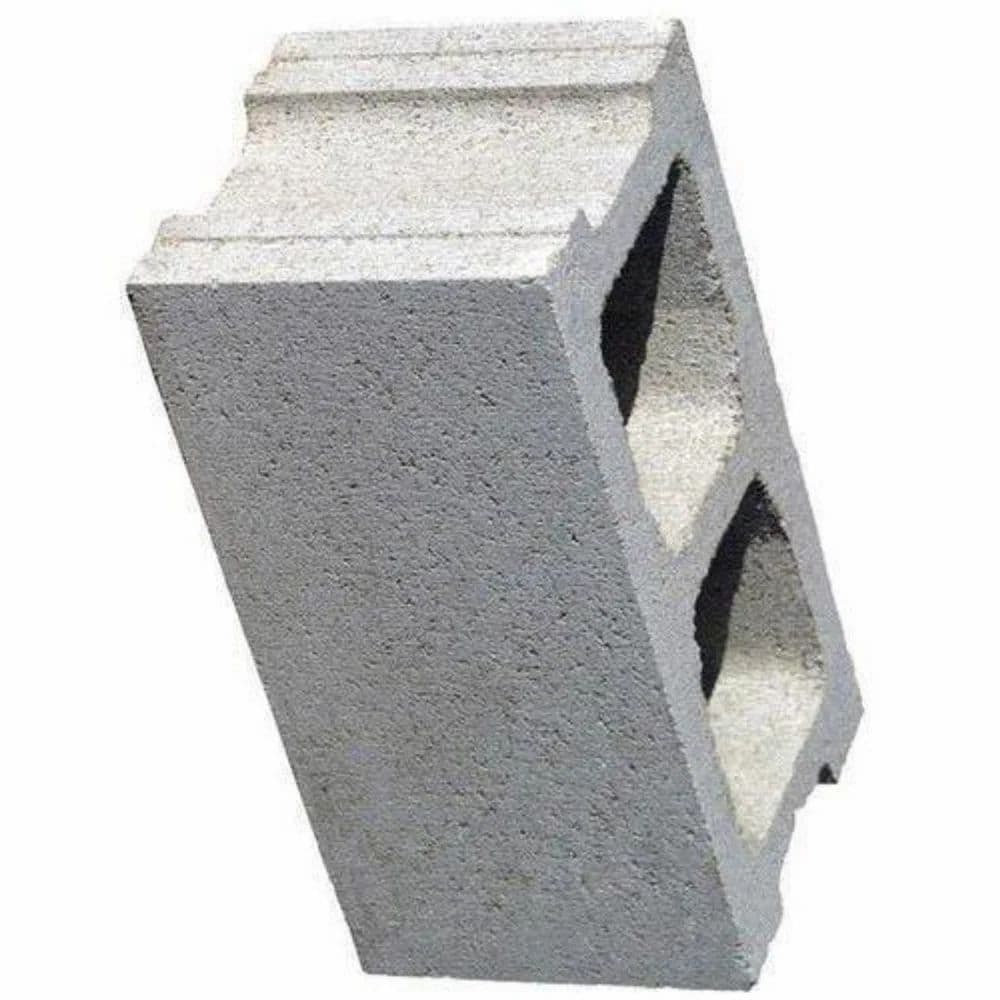
Estimated$3 – $6
Permacon Standard Grey 8x8x16 Concrete Block
Permacon's Standard Grey 8x8x16 holds a best-in-class position for general-purpose concrete blocks by combining consistent dimensional accuracy, broad distribution and competitive pricing that reduce waste and labor costs on typical masonry projects. Compared with Expocrete's finish-oriented split-face units or Brampton Brick's heavier structural blocks, Permacon offers a pragmatic, widely stocked standard that simplifies procurement and shortens lead times for common retaining walls and load-bearing applications.

We may earn a commission on purchases. It never affects our rankings.
Estimated$3 – $6
Expocrete Split-Face Concrete Block
Expocrete's Split-Face block is the market leader for architectural and exposed-masonry applications because its textured face minimizes the need for additional cladding or finishes, often lowering total project cost despite higher per-unit pricing. Versus Permacon and Brampton Brick, Expocrete trades some structural simplicity for superior aesthetics, delivering a finish-grade concrete block that can eliminate veneer costs while still fitting standard modular layouts.

Estimated$5 – $10
Brampton Brick Standard 8-inch Masonry Block
Brampton Brick's Standard 8-inch masonry block is a market leader for load-bearing and commercial construction due to its high compressive strength and proven quality control from an established manufacturer, providing predictable performance and lower lifecycle risk. While heavier and sometimes more costly to handle than Superlite's lightweight option, Brampton Brick outperforms for structural durability and long-term cost predictability compared with the finish-focused Expocrete and the general-purpose Permacon.

Superlite Block 4-inch Solid Concrete Block
Superlite Block's 4-inch solid concrete block stands out for its lightweight profile and rapid installation, delivering tangible savings in labor and transport for non-load-bearing partitions and retrofit work. It does not match Brampton's structural capacity or Expocrete's finish grade, but Superlite provides a clear technical and financial advantage where reduced dead load, easier handling and speed of install are primary project priorities.

Estimated$5 – $9
What Research and Standards Say About CMU Benefits
A range of industry standards and peer reviewed studies support the core benefits of concrete masonry units. Research from organizations such as the National Research Council of Canada, Natural Resources Canada, and international masonry associations, together with building code guidance and laboratory testing, help explain why CMUs perform well in cold climates, offer predictable fire resistance, and can contribute to energy efficiency through thermal mass and air-tight detailing. The evidence is practical and accessible: compressive strength and fire ratings are measured and specified, durability in freeze-thaw cycles can be improved by material choice and mix design, and lifecycle assessments show opportunities to reduce embodied carbon through recycled aggregates and supplementary cementitious materials.
Canadian sizing is metric under CSA A165.1: the standard unit is 190 x 190 x 390 mm, laid to a 200 mm module with 10 mm joints, and units are specified in whole-MPa grades (10, 15, 20 and higher) measured on net area.
CSA A165.1 defines a block with four facets - solid content, specified compressive strength, concrete density and moisture control - so a common load-bearing unit is written H/15/A/O: hollow, 15 MPa, normal density above 2000 kg/m3, no moisture-control limit.
Compressive strength and structural performance are well documented: properly specified CMUs meet required load capacities for foundations and load-bearing walls.
Fire resistance is established through standardized testing; mass masonry typically achieves multi-hour ratings without added cladding.
Thermal mass from CMUs can reduce peak heating demand in some building types by storing and slowly releasing heat, particularly helpful in cold Canadian climates with significant daily temperature swing.
Freeze-thaw durability is improved by using appropriate aggregates, air entrainment, and good drainage detailing; laboratory tests and field studies track long-term performance in northern climates.
Sustainability gains are possible: using fly ash, slag, or recycled aggregate in mixes can lower embodied carbon while maintaining strength and durability when mixes are properly designed and tested.
Local manufacturing and compliance with CSA and provincial codes increase reliability and reduce transport-related emissions, which is an important consideration for Canadian buyers.
Frequently Asked Questions
What does a standard 8x8x16 concrete block actually measure, and which standard governs it in Canada?
In Canada the block sold as an 8x8x16 is a metric unit: it actually measures 190 x 190 x 390 mm (roughly 7-1/2 x 7-1/2 x 15-3/8 in) and is laid with a 10 mm mortar joint so it courses out to a 200 x 200 x 400 mm module. It is manufactured to CSA A165.1, which classifies units by four facets - solid content, specified compressive strength, concrete density and moisture control - so a typical load-bearing unit is written H/15/A/O: hollow, 15 MPa specified strength on net area, normal density above 2000 kg/m3, and no moisture-control limit. A normal-weight 190 mm hollow unit weighs roughly 17 to 19 kg (about 36 to 42 lb). The American equivalent, ASTM C90, uses 7-5/8 x 7-5/8 x 15-5/8 in and a 13.8 MPa (2,000 psi) minimum, so US spec sheets do not describe the block you will receive from a Canadian yard.
How many concrete blocks do I need per square metre of wall?
A standard Canadian block presents a 400 x 200 mm face once its 10 mm mortar joints are counted, which is 0.08 m2 of wall per block. That works out to 12.5 blocks per square metre, or about 1.16 blocks per square foot, for a single-wythe wall. A wall 10 m long and 2.4 m high (24 m2) therefore needs 300 blocks before waste, and masons typically add 5 to 10 percent for cuts, breakage, and corner or bond-beam units. Half blocks measuring 190 x 190 x 190 mm are sold separately so you can end a course without cutting.
What is the difference between a concrete block and a cinder block?
The terms are often used interchangeably in Canada, but they describe different aggregates. A modern concrete masonry unit (CMU) is made with sand and crushed-stone (or gravel) aggregate and Portland cement, giving higher compressive strength and density. A traditional 'cinder block' used cinders (coal-combustion ash) as a lightweight aggregate; these are lighter and weaker and are largely obsolete in current Canadian production. Today's grey 8x8x16 units sold at Home Depot, Rona, and Kent are concrete blocks specified to CSA A165.1, even when shoppers still call them cinder blocks.
Where can I buy concrete blocks in Canada and what do they cost?
Standard grey 8x8x16 concrete blocks are stocked at major Canadian retailers including Home Depot, Rona, Lowe's, Kent (Atlantic Canada), and regional masonry suppliers, as well as directly from manufacturers such as Permacon, Expocrete (Echelon), Basalite, Shaw Brick, and Brampton Brick. Typical per-unit pricing for a standard 8-inch grey block runs roughly $3 to $6 CAD, with split-face and decorative units costing more; bulk pallet pricing lowers the effective per-block cost. Prices vary by region, freight, and availability.
Conclusion
In Canada, concrete blocks remain a reliable, code-ready choice for foundations, structural walls, landscaping walls, and decorative veneers. Among the top picks listed here, the Basalite 8-inch Standard Concrete Block stands out for its balance of availability, structural performance, and freeze-thaw durability. Other strong options include the Shaw Brick 6-inch Hollow Concrete Block for lighter, cavity-friendly builds; Permacon Standard Grey 8x8x16 Concrete Block for consistent sizing and finish; Expocrete Split-Face Concrete Block for a decorative, textured look; Brampton Brick Standard 8-inch Masonry Block for local supply and masonry trade support; and the Superlite Block 4-inch Solid Concrete Block where a thinner, high-density solid unit is needed. We hope you found what you were looking for. If you want to narrow results by size, finish, thermal performance, or recycled content, refine or expand your search to compare technical datasheets, local availability, and pricing.