

Control Cable Canada 2025 — Top 5 CSA-Rated and Field-Tested Options for Automation and Harsh Climates (What Engineers Need to Know)
Control cables are specialized wiring designed for transmitting signals and controlling equipment in electrical systems, ensuring reliable operation of machinery and devices. They typically feature multiple conductors encased in protective insulation, suitable for various applications in automation, telecommunications, and industrial settings. In the Canadian market, buyers prioritize reliability in extreme temperatures, verified safety certifications (CSA, UL, IEC), mechanical protection for industrial or outdoor use, and signal integrity for modern automation and Industry 4.0 systems. Procurement decisions also reflect trends toward halogen-free or low-smoke materials for occupied spaces, traceability and manufacturer support for critical installations, and local availability to meet tight project schedules. As a result, engineers, contractors, and facility managers tend to choose control cables that balance durability, compliance, ease of installation, and predictable long-term performance.
Inception's AI took the time to understand this market in Canada · · How we pickWe may earn a commission on purchases. It never affects our rankings.
Top Picks Summary
Southwire Tray Cable 14 AWG
A best-in-class choice for tray-mounted and general-purpose control circuits, Southwire's 14 AWG tray cable delivers NEC-compliant construction and flexible conductors for easy pulling and termination. It stands out for its cost-effective pricing and wide availability, making it the economical option compared with premium shielded or armored products in this list. While less mechanically robust than Nexans Teck90 or as signal-focused as Belden 9451, it offers the lowest installed-cost path for routine control wiring.

Nexans Canada Teck90 Control Cable
Nexans Canada Teck90 is the market-leading choice for harsh and outdoor industrial applications thanks to its armored, flame- and moisture-resistant construction suitable for direct burial and conduit runs. Although it carries a higher upfront price, the mechanical protection and long service life reduce lifecycle replacement and downtime costs compared with unarmored options like Southwire or General Cable. It provides physical durability that Belden 9451 and Alpha Wire 5470C typically lack, making it the premium selection where environment and safety are paramount.
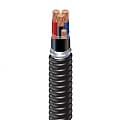
Estimated$300 – $800
General Cable Carol C2414A
General Cable Carol C2414A is a reliable, cost-conscious control cable with proven materials and broad availability for fixed instrumentation and factory control circuits. It delivers balanced performance at a lower purchase price than premium shielded or specialty cables, which makes it attractive for budget-sensitive projects where extreme environmental protection or advanced EMC performance are not required. Compared to Belden 9451 it offers less sophisticated shielding, and compared to Nexans Teck90 it is a lighter-duty, more economical alternative.
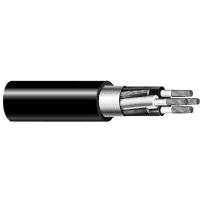
Estimated$200 – $500
Belden 9451 Multi-Conductor Cable
Belden 9451 is the market leader for signal integrity in control and automation systems, offering superior shielding, low capacitance and consistent conductor geometry that minimize noise and communication errors. Its technical advantages justify a premium price by reducing interference-related downtime and preserving signal quality where precise control or long runs are needed. While it is not armored like Teck90, Belden 9451 outperforms Southwire, General Cable and many Alpha Wire variants on EMC immunity and data-critical installations.

Alpha Wire 5470C Control Cable
Alpha Wire 5470C is a specialist control cable that emphasizes flexibility and robust conductor construction, making it well suited for dynamic machinery and confined raceways. It occupies a middle ground between economy and performance products by offering better flexibility and installation ease than General Cable or Southwire while remaining more cost-competitive than high-end shielded solutions like Belden 9451. Although it lacks the armor of Nexans Teck90, its bendability and routing advantages often lower labor costs in machine-level wiring.
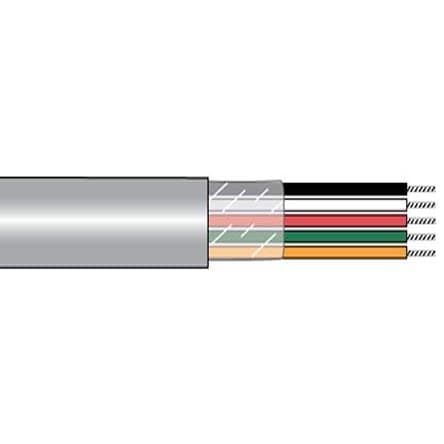
Estimated$250 – $600
What Research and Standards Say About Control Cable Performance
Performance claims for control cables are grounded in standardized tests and industry research that measure electrical continuity, insulation aging, electromagnetic compatibility, flame spread, and mechanical durability. Relevant standards and laboratory testing provide clear guidance so buyers can match cable construction to application risk: armored designs for mechanical abuse, shielded pairs for EMI-sensitive signals, and XLPE or cross-linked insulations for higher temperature and aging resistance. For non-experts, these findings translate into practical benefits: fewer downtime events, longer service life, and safer installations when the correct cable type and certification are selected.
Standards such as CSA C22.2, IEC test methods, and UL listings set consistent benchmarks for insulation, conductor properties, and flame resistance; choosing certified cables reduces compliance risk on Canadian projects.
Laboratory and field tests show that shielded multi-conductor cables significantly reduce electromagnetic interference and improve signal reliability in industrial automation environments.
Comparative aging studies indicate that cross-linked polyethylene (XLPE) and other advanced insulating materials retain dielectric strength longer than basic PVC in high-heat or chemically aggressive settings.
Mechanical protection from armor or tray-rated constructions lowers the incidence of physical damage in heavy industrial, mining, and outdoor installations — a common requirement in many Canadian sectors.
Research on combustion byproducts supports preference for halogen-free and low-smoke cable compounds in enclosed public or occupied spaces to reduce toxic gas exposure during fires.
Frequently Asked Questions
Which control cable should I pick for tray wiring?
Southwire Tray Cable 14 AWG (rated 4.5) is a strong choice for tray-mounted and general-purpose control circuits, using 14 AWG stranded copper conductors with a PVC jacket and insulation for flame-retardant and oil-resistant performance.
Does the Nexans Teck90 control cable support harsh outdoor use?
Nexans Canada Teck90 Control Cable (rated 4.4) uses steel-armoured TECK90 construction for mechanical protection, plus a robust PVC outer jacket and thermoset insulation for harsh sites, including CSA-approved industrial control, power, and mining where armour is required.
Is General Cable Carol C2414A cheaper than tray and Teck90 options?
The provided data does not include any prices for Southwire Tray Cable 14 AWG, Nexans Canada Teck90 Control Cable, or General Cable Carol C2414A, so I can’t compare cost or value without missing price details.
What warranty comes with these control cables in Canada?
The provided product data does not list a warranty duration for Southwire Tray Cable 14 AWG, Nexans Canada Teck90 Control Cable, or General Cable Carol C2414A, so I can’t confirm any warranty coverage.
Conclusion
In the Canadian context, selecting the right control cable means matching installation conditions, regulatory requirements, and long-term reliability needs. The five options profiled here — Southwire Tray Cable 14 AWG, Nexans Canada Teck90 Control Cable, General Cable Carol C2414A, Belden 9451 Multi-Conductor Cable, and Alpha Wire 5470C Control Cable — cover common project needs from tray and panel wiring to armored runs for harsh outdoor environments. For projects that demand rugged, weather- and impact-resistant performance in Canadian climates, Nexans Canada Teck90 Control Cable stands out as our top pick for versatility and mechanical protection. I hope you found what you were looking for; you can refine or expand your search by adjusting filters like conductor count, voltage rating, insulation type, CSA listings, or intended application using the site search.