

Top 7 Fire Sprinkler Heads in Canada — 2026 Guide
Quick answer: everything on this page is an individual fire sprinkler head, not a complete system. In Canada a building sprinkler system is engineered work. It is designed to NFPA 13D for one- and two-family homes, or to NFPA 13R / NFPA 13 for larger buildings, permitted under the National Building Code of Canada and the applicable provincial and municipal codes, and installed, hydrostatically tested and commissioned by a licensed fire protection contractor. The head model, K-factor, temperature rating, spacing and maximum coverage area all fall out of that hydraulic design — they are not a shopping decision a homeowner makes. Buying heads does not produce a compliant system, and substituting a different head into a completed design voids its listing. What this page is useful for is understanding what a contractor is specifying, sourcing exact-model replacements for heads that have been painted, damaged or reached the end of their service life, and comparing what the major manufacturers supply into the Canadian market. Two attributes separate the heads below. The first is the listing: a residential-listed sprinkler is tested against the residential spray pattern and response criteria that NFPA 13D requires, while a standard spray sprinkler is listed for light, ordinary or extra hazard occupancies under NFPA 13 and cannot be swapped into a 13D design. A third class turns up here too — specific application sprinklers, such as attic heads, which are listed only for one geometry and one hazard class. The second attribute is response type: quick-response elements operate sooner than standard-response elements, which matters for occupant escape time. Cold climate is the third Canadian variable: unheated attics, garages and crawl spaces generally need dry-pipe, preaction or antifreeze arrangements rather than wet pipe, and that decision belongs to the designer as well.
Inception's AI took the time to understand this market in Canada · · How we pickWe may earn a commission on purchases. It never affects our rankings.
Top Picks Summary
Viking VK102 Residential Pendent Sprinkler
The Viking VK102 is a Micromatic standard spray pendent sprinkler with a 5.6 K-factor and a 1/2 inch NPT connection, widely stocked and widely specified across North America. Despite how it is often listed by retailers, it is a standard-response, standard-coverage head listed for light, ordinary and extra hazard occupancies under NFPA 13 — not a residential-listed sprinkler for NFPA 13D house systems. Where it earns its place is breadth of approval and availability: cULus, FM, VdS, LPCB and CE listings, a long list of finishes and temperature ratings, and stock at most fire protection distributors.
We may earn a commission on purchases. It never affects our rankings.
$66.00CAD
Tyco RFII Concealed Pendent Sprinkler
The Tyco RFII concealed pendent sprinkler prioritizes aesthetics by hiding the sprinkler with a low-profile cover plate while delivering fast thermal response; this makes it attractive for high-end residential and finished commercial interiors where appearance matters. It typically carries a premium over exposed residential models but offsets that with superior visual integration and comparable protection performance versus exposed alternatives like the Viking and Reliable units.

Estimated$45 – $85
Victaulic V2704 FireLock Residential Sprinkler
The Victaulic V2704 is a quick-response, standard-coverage upright sprinkler in the FireLock FL-QR family, with a 5.6 K-factor and a 1/2 inch NPT threaded connection. It is a standard spray sprinkler rather than a residential-listed one, so its natural home is NFPA 13 and 13R work — commonly in Victaulic-piped systems, though the threaded connection means it is not restricted to them. Its practical advantage is fit within a single-vendor Victaulic package, where couplings, valves and heads all come with matched documentation and support.

Estimated$20 – $45
Reliable Model G Residential Pendent Sprinkler
Reliable's Model G is a long-running standard-response, standard spray sprinkler line available in pendent, upright, horizontal and vertical sidewall and intermediate-level configurations, with K-factors from 2.8 to 8.0. It is a control-mode density/area sprinkler listed for light and ordinary hazard occupancies under NFPA 13 — not a residential listing, which in Reliable's range is the separate F1Res family. For NFPA 13 and 13R work it is a value pick: cheap to source in volume, easy to service, and backed by decades of field history.

Estimated$12 – $28
Globe GL5620 Residential Pendent Sprinkler
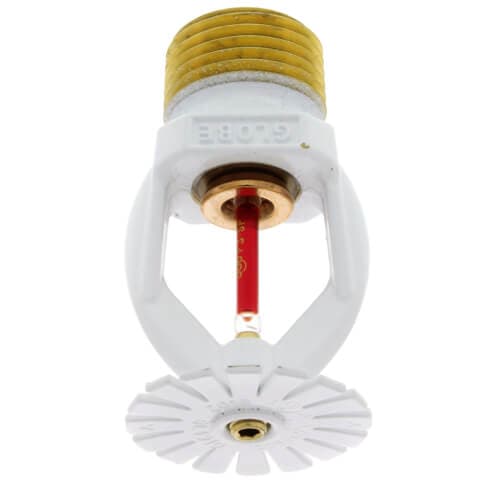
Model GL5620 is Globe's GL-SS/RE ridge and hip area sprinkler, part of the company's specific application attic range. Despite how it is often listed by retailers, it is not a decorative residential pendent: it is a quick-response head with a 5.6 K-factor, a 1/2 inch NPT connection and a 3 mm glass bulb rated 200F, listed under NFPA 13 for light hazard concealed attic spaces with roof slopes from 3:12 up to and including 6:12. Globe's residential pendent line is the separate GL-RES series. Within its own application it is a well-priced, well-supported head, and its -40F minimum ambient rating suits unheated Canadian attics; outside that application it is the wrong product.
Estimated$30 – $50
Senju SS-QR Sidewall Sprinkler
Senju SS‑QR is a quick‑response sidewall sprinkler optimized for corridors, small rooms, and retrofit residential layouts where pendent or upright heads are impractical. Its fast actuation and directional coverage can reduce water use and downstream damage compared with standard pendent heads such as Reliable and Globe, and while unit price can be higher, it reduces total risk and repair costs in constrained installations.

Estimated$40 – $60
Tyco TY-FRB Quick Response Upright Sprinkler
Tyco TY‑FRB quick‑response upright sprinkler is engineered for rapid thermal response and robust discharge capacity, favored in commercial and multi‑family residential risers and higher‑ceiling spaces. Compared to the pendent and sidewall residential options on this list it provides superior hydraulic performance for larger areas and floor‑control scenarios, typically at a higher unit cost but with savings from reduced design complexity and broader engineering support.

We may earn a commission on purchases. It never affects our rankings.
$35.00CAD
Listing class (residential-listed, standard spray or specific application), K-factor, response type and temperature rating are the four specs that decide whether a head belongs in a given design.
What research and standards say about sprinklers
Scientific research, industry reporting, and building codes consistently show that properly designed and maintained automatic sprinkler systems are one of the most effective measures for controlling building fires, reducing life risk, and limiting property damage. Canadian and North American standards, test data, and laboratory studies from organizations such as the National Fire Protection Association (NFPA), the National Research Council of Canada, and the National Institute of Standards and Technology (NIST) provide evidence-based guidance on sprinkler performance, system types, and response times. For beginners, key findings emphasize that automatic activation, quick-response designs, and systems tailored to local climate and occupancy type produce the best outcomes when paired with regular inspection and maintenance.
Sprinkler activation and control: Industry reports and laboratory tests show that sprinklers typically activate early in the fire growth phase and often control or limit fires before they spread.
Life safety improvements: Multiple studies referenced by NFPA and other bodies indicate that well-designed sprinkler systems reduce occupant exposure to fire and smoke, improving escape and survivability.
Property and content protection: Research and insurance loss data support that automatic sprinklers substantially limit heat and smoke damage, reducing total property loss when fires occur.
Quick-response vs standard sprinklers: Tests from research institutions demonstrate that quick-response sprinklers limit occupant exposure and can reduce required evacuation time in residential and light commercial settings.
Residential listing is not a marketing word: NFPA 13D systems require sprinklers specifically listed as residential. Standard spray sprinklers listed for light or ordinary hazard occupancies are a different product class and are not interchangeable with them.
Specific application heads are narrower still: attic sprinklers are full-scale fire tested and listed only for a defined roof geometry and hazard class, so they are interchangeable with neither residential nor general standard spray heads.
Cold-climate considerations: Engineering guidance and field studies highlight the importance of dry-pipe, preaction, or properly frost-protected piping and fittings in Canadian climates to avoid freeze damage.
Code and standards alignment: Compliance with the National Building Code of Canada, CAN/ULC and applicable NFPA standards ensures designs meet tested performance criteria and simplify regulatory approvals.
Maintenance and inspection matter: Studies and industry experience emphasize that sprinklers are highly effective when systems receive regular inspection, testing, and prompt repairs by certified technicians.
Frequently Asked Questions
Can I install a fire sprinkler system myself in Canada?
No. A sprinkler system is engineered work, not a DIY project. It has to be designed to NFPA 13D (one- and two-family homes), NFPA 13R or NFPA 13, permitted under the National Building Code of Canada and your provincial and municipal codes, and installed, pressure-tested and commissioned by a licensed fire protection contractor. Head model, K-factor, spacing and coverage area come out of the hydraulic calculation. Buying heads does not make a compliant system, and an uncertified installation will typically fail inspection and may not be recognized by your insurer.
Which heads on this page are residential-listed, and why does it matter?
NFPA 13D systems require sprinklers specifically listed as residential — they are tested against a residential spray pattern and faster response criteria. The Tyco RFII Concealed Pendent Sprinkler is a residential-listed head. The Viking VK102, the Reliable Model G and the Victaulic V2704 are standard spray sprinklers listed for light, ordinary or extra hazard occupancies under NFPA 13, not residential listings, so they cannot be substituted into a 13D design. The Globe GL5620 is narrower again: it is a specific application attic sprinkler, listed only for concealed attic spaces. Always confirm the listing on the manufacturer's current datasheet before a head is specified or replaced.
Which head suits a finished residential ceiling?
For a finished ceiling in a home, the Tyco RFII Concealed Pendent Sprinkler is the option here designed for that job — it is a residential-listed quick-response head that mounts flush behind a removable cover plate, so only the plate is visible until it drops away in a fire. The Viking VK102 is a capable standard-response, standard-coverage pendent, but it is listed for NFPA 13 and 13R occupancies rather than for residential coverage, so a designer would not put it in a 13D house system. The Globe GL5620 is not a candidate at all, whatever a retailer listing calls it — model GL5620 is Globe's GL-SS/RE attic head.
What is the Globe GL5620, and can it go in a living room ceiling?
No. Model GL5620 is Globe's GL-SS/RE ridge and hip sprinkler from its specific application attic range: quick-response, 5.6 K-factor, 1/2 inch NPT, 200F, on a 3 mm glass bulb, listed under NFPA 13 for light hazard concealed attic spaces with roof slopes from 3:12 up to and including 6:12. It is widely resold under a "residential pendent" description, which is wrong — Globe's residential pendent line is the separate GL-RES series. In an attic on a qualifying slope it is a good, well-priced head; in a finished room it is outside its listing.
Conclusion
The seven heads covered here split into groups, and the split matters more than the ranking. The Tyco RFII Concealed Pendent Sprinkler and the Senju SS-QR Sidewall Sprinkler are residential-pattern heads of the kind an NFPA 13D home system is designed around — the RFII where a flush, cover-plate finish is wanted in a living space, the Senju sidewall where there is no ceiling pipe to run to. The Viking VK102 Residential Pendent Sprinkler, the Reliable Model G Residential Pendent Sprinkler and the Victaulic V2704 FireLock Residential Sprinkler are standard spray sprinklers: the VK102 and Model G are standard-response glass-bulb heads listed for light and ordinary hazard occupancies, and the V2704 is a quick-response upright in Victaulic's FireLock FL-QR standard-coverage family. They are well-made, widely stocked heads for NFPA 13 and 13R work, but they carry standard spray listings rather than residential ones.
The last two are narrower again, and one of them is routinely mis-described by retailers. Model GL5620 is Globe's GL-SS/RE ridge and hip head from its specific application attic range — quick-response, 5.6 K-factor, 200F, listed under NFPA 13 for light hazard concealed attic spaces on roof slopes from 3:12 up to and including 6:12. It is not a decorative residential pendent, and Globe's residential pendent line is the separate GL-RES series. The Tyco TY-FRB Quick Response Upright Sprinkler is an 8.0K, 3/4 inch upright more usually specified for commercial and concealed-space work than for finished rooms.
So the honest recommendation is not a product. Have a licensed fire protection contractor produce the design and the hydraulic calculation first, then buy the exact head model, K-factor, temperature rating and finish that the design calls for, from a fire protection distributor who can supply the listing documentation. If you are replacing a head in an existing system, match the model and temperature rating already installed and have the work done by a certified technician — an unlisted or mismatched substitution is the most common way a working system quietly stops being compliant.