Heat Detectors: Top 6 Heat Alarms in Canada for 2026
Published on Thursday, February 26, 2026
Short answer: a heat detector alarms on temperature, not on smoke. Most residential units trip at a fixed 57 °C (135 °F), and many add a rate-of-rise stage that fires when the air climbs roughly 8 °C (15 °F) in a minute. That makes them the right device for kitchens, garages, attics, furnace rooms and workshops, where cooking steam, dust, vehicle exhaust and shower humidity would set a smoke alarm off constantly. It also makes them the wrong device everywhere else: a heat detector cannot see smoke and cannot see carbon monoxide, so it will stay silent through a smouldering couch or mattress fire that a smoke alarm would catch early. Treat one as an addition to your smoke and CO alarms, never as a replacement for them. In Canada, look for units listed to the ULC/UL heat-alarm standards and choose between hardwired interconnect models for whole-home coverage and sealed-battery models for retrofits.
Top Picks Summary
Kidde HD135F Fyrnetics Hardwired Heat Detector
The Kidde HD135F (Fyrnetics) hardwired heat detector is presented here as a market-leading hardwired option for residential systems because it combines reliable fixed-temperature detection with easy interconnect compatibility, making it a go-to for whole-house wired installations. Compared with battery-only models on this list it offers lower long-term maintenance costs and more robust integration than simple plug-in alarms, while still being more affordable than commercial-grade units like the System Sensor 5601P.

First Alert HD6135FB Hardwired Heat Alarm
The First Alert HD6135FB hardwired heat alarm is positioned as a strong competitor for homeowners who want a balance of budget and performance, pairing dual heat-sensing methods with straightforward hardwired hookup. Its thermistor-based sensor triggers both on a 135°F (57°C) fixed-temperature threshold and on a rate-of-rise of about 15°F per minute, so it responds to both slow-building and fast-flaming heat while ignoring airborne particles that cause smoke-alarm nuisance trips. It typically undercuts professional-grade commercial detectors on price while matching the installation convenience of the Kidde hardwired unit, making it a practical choice when cost efficiency and compatibility with residential panels are priorities.
$25 – $40
Kidde 282023 Rate-of-Rise Heat Detector
This Kidde hardwired heat detector is listed here for rate-of-rise sensing, which alarms on a rapid climb in temperature rather than waiting for an absolute threshold — useful where a fast-flaming fire is the likely scenario. Note that the model designation and the retail listing behind this entry do not line up cleanly, so confirm the exact part number and its sensing mode on the packaging before you buy; if you want a documented fixed-plus-rate-of-rise unit, the System Sensor 5601P on this list publishes both figures.

Google Nest Protect
Read this entry carefully: the Google Nest Protect is a smoke and carbon monoxide alarm, not a heat detector, and it cannot serve as one. Its temperature sensor feeds the app's room readings; it is not a heat alarm and will not trip at 57 °C the way the other devices on this page do. It is listed here as the companion device you install alongside a heat detector — smoke and CO coverage for bedrooms, hallways and living areas, with spoken alerts, phone notifications and automatic self-tests. Two further caveats: Google discontinued production in 2025, so remaining stock is finite even though existing units stay supported, and the price sits well above every dedicated heat detector here. Buy it for connected smoke and CO coverage, and buy a heat detector separately for the kitchen or garage.

System Sensor 5601P Fixed Temperature Heat Detector
The System Sensor 5601P is the unit to specify when the detector has to report to a fire alarm panel rather than to other alarms in the house. Despite the "fixed temperature" wording in its listing title, the 5601P is a combination device: it alarms at 57 °C (135 °F) fixed and also on a rise of about 8 °C (15 °F) in a minute. It is a mechanical, single-circuit detector with normally-open contacts that draws no power from the panel, which is why contractors and facilities managers reach for it in commercial and multi-unit work. It needs professional wiring and a compatible base, so it is the wrong choice for a homeowner who just wants a garage alarm.
X-Sense XH02-M Heat Alarm
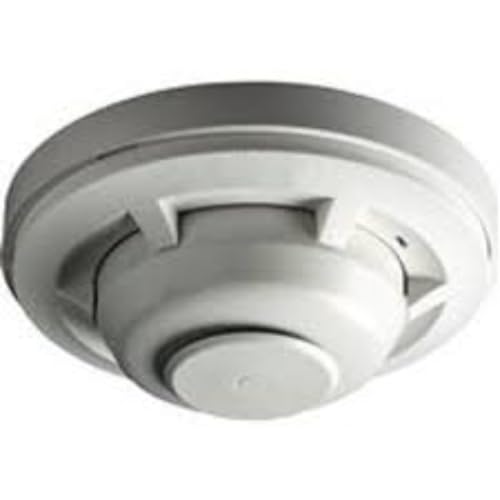
The X-Sense XH02-M is the retrofit option here: a sealed 10-year lithium battery means no wiring and no annual battery swap, and units interconnect wirelessly rather than over a hardwired loop, so one alarm sounds them all. It uses a Class A1 thermistor and pairs with the X-Sense app for alerts when nobody is home. Two things to check before buying in Canada: confirm the unit you receive carries a ULC or UL heat-alarm listing for this market, since X-Sense sells regionally certified variants, and confirm the retail listing actually matches the XH02-M — the storefront behind this entry has shown a different manufacturer's hardwired heat alarm.

How Heat Detectors Work, and Where They Belong
Heat detectors use two sensing strategies, often together. Fixed-temperature sensing alarms once the air at the ceiling reaches a set threshold — 57 °C (135 °F) on nearly every residential model. Rate-of-rise sensing alarms when the temperature climbs faster than a set rate, typically about 8 °C (15 °F) per minute, which catches a fast-flaming fire before the absolute threshold is reached. Because neither method looks at airborne particles, a heat detector ignores the steam, cooking smoke and dust that cause nuisance trips in exactly the rooms where people are most tempted to disable a smoke alarm. That is the entire case for the device, and it comes with a hard limit: heat is a late signal. A fire that smoulders for an hour produces lethal smoke long before it produces the heat needed to trip the detector, which is why fire authorities treat heat detectors as a supplement to smoke alarms in ancillary spaces rather than as detection for sleeping and living areas.
Fixed-temperature vs rate-of-rise: fixed units alarm at a set threshold, usually 57 °C (135 °F); rate-of-rise units alarm on a rapid climb of about 8 °C (15 °F) per minute. Combination units do both, and are the sensible default.
A heat detector is not a smoke alarm and not a CO alarm. It detects neither smoke nor carbon monoxide, and it must never be installed in place of either one.
Put them where smoke alarms fail: kitchens, garages, attics, furnace and utility rooms, workshops and unheated spaces. Keep smoke alarms in bedrooms, hallways and living areas.
Certification in Canada: household single- and multiple-station heat alarms are listed to ANSI/UL 539 and CAN/ULC 589. Heat detectors wired into a fire alarm panel are listed to CAN/ULC-S530 (being merged with ANSI/UL 521). Verify the listing mark on the device itself.
Installation follows the National Building and Fire Codes of Canada and CAN/ULC-S524 for system-connected devices — not NFPA 72, which is the United States standard. Check with your local authority having jurisdiction before relying on a device for code compliance.
Frequently Asked Questions
Can a heat detector replace a smoke alarm?
No. A heat detector responds only to temperature — it detects neither smoke nor carbon monoxide, so it will stay silent through a smouldering fire that a smoke alarm would catch early. Heat is a late signal. Install heat detectors in kitchens, garages, attics and furnace rooms as an addition to your smoke alarms, and keep working smoke alarms in every bedroom, hallway and living area.
At what temperature does a heat detector trip?
Nearly every residential heat detector uses a fixed threshold of 57 °C (135 °F). Combination units add a rate-of-rise stage that alarms when the temperature climbs about 8 °C (15 °F) in one minute, which catches a fast-flaming fire before the fixed threshold is reached. The System Sensor 5601P on this list uses exactly that pairing: 135 °F fixed plus 15 °F per minute rate-of-rise.
Which heat detector should I put in a kitchen or garage?
If you already have interconnected hardwired alarms, the Kidde HD135F Fyrnetics Hardwired Heat Detector is the straightforward pick — it trips at 57 °C (135 °F), ties into an existing Kidde interconnect loop, and holds a 9V battery backup for power cuts. It rates 4.4 on this list. The First Alert HD6135FB is the alternative if you want rate-of-rise sensing as well as the fixed threshold, and rates 4.2. Both suit kitchens and garages precisely because they ignore cooking steam, dust and exhaust.
What certification should a heat alarm carry in Canada?
It depends on how the device is wired. Standalone and interconnected household heat alarms are listed to ANSI/UL 539 and CAN/ULC 589, the standard for single and multiple station heat alarms. A heat detector wired into a fire alarm panel — like the System Sensor 5601P — is listed instead to CAN/ULC-S530, the Canadian standard for heat actuated fire detectors for fire alarm systems, which is being merged with ANSI/UL 521 into a single bi-national standard. Look for the listing mark on the device, and confirm requirements with your local authority having jurisdiction.
Conclusion
For most Canadian homes the practical choice is a 57 °C fixed-temperature unit with rate-of-rise, hardwired and interconnected if you have the wiring, sealed-battery if you do not. The Kidde HD135F Fyrnetics Hardwired Heat Detector is the safest default on this list: it is the common residential fixture, interconnects with existing Kidde devices, and keeps working through a power cut on its battery backup. The First Alert HD6135FB covers the same ground with combined fixed and rate-of-rise sensing, and the System Sensor 5601P is the unit to specify when the detector has to report to a fire alarm panel. One caution about the Google Nest Protect listed here: it is a smoke and carbon monoxide alarm, not a heat detector, and Google discontinued production in 2025 — it belongs alongside a heat detector, not instead of one. Whatever you choose, keep working smoke alarms in every bedroom and on every storey, and test all of them monthly.