

Best Stovetop Waffle Makers in Canada 2026: Top 5 Picks
Quick answer: a stovetop waffle maker is a non-electric hinged mould you heat directly on a burner or over a fire — choose cast iron if you want heat retention, campfire use and induction compatibility, and cast aluminium if you want light weight and fast heat-up (aluminium will not work on induction). Stovetop waffle makers require manual operation on a stove, offering a traditional approach to waffle making without electricity. In Canada they are popular for cottage life, camping, small kitchens and emergency preparedness because they deliver crisp, deep-pocketed waffles using simple heat and durable materials rather than built-in electric elements. Canadian buyers often choose stovetop models for their portability, long-lasting construction (especially cast iron), compatibility with gas and open-flame cooking, and the ability to produce Belgian-style and classic waffles with a handmade texture. Trends through 2026 show strong interest in cast iron cookware, outdoor cooking gear, and energy-conscious appliances, making stovetop waffle makers an appealing choice for shoppers who want versatility, reliable heat retention and a bit of old-fashioned cooking control.
Inception's AI took the time to understand this market in Canada · · How we pickWe may earn a commission on purchases. It never affects our rankings.
Top Picks Summary
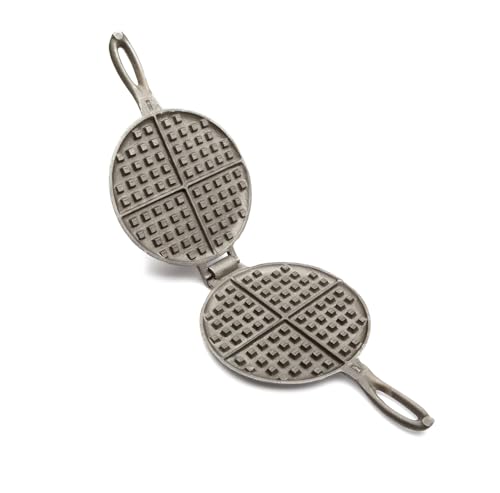
Rome Industries Old Fashioned Waffle Iron
Rome Industries' cast iron waffle iron is the best-value heavy-duty stovetop option on this list, pairing thick American cast iron with deep grids for crisp, evenly cooked waffles and strong heat retention over a campfire or high-heat burner. It undercuts premium European models like the Petromax by a wide margin in Canada while still beating lightweight cast-aluminum options such as the NordicWare on thermal mass and durability. One thing to plan for: it does not arrive pre-seasoned — the factory wax coating has to be washed off and the iron seasoned before the first waffle.
Estimated$40 – $80
NordicWare Original Stovetop Belgian Waffle Maker
NordicWare's Original Stovetop Belgian Waffle Maker is the market leader for lightweight, cast-aluminum stovetop waffles, prized for fast heat-up, consistent Belgian waffle shape, and an attractive price-to-weight ratio. It does not match the thermal mass and longevity of the cast-iron picks here like the Rome or Petromax irons, and being non-magnetic it will not work on induction, but its affordability and quick heating make it the practical everyday choice for gas, electric and ceramic ranges where convenience matters more than maximum heat retention or rugged outdoor use.

Petromax Waffle Iron
Petromax's waffle iron occupies the premium, German-engineered segment with precision machining, durable finishes, and modular handles that improve safety and longevity for frequent outdoor or stovetop use. Although it commands a higher price than NordicWare and Rome, it delivers superior heat distribution and build quality that justify the premium for enthusiasts who want a versatile, pro-level tool across multiple heat sources.

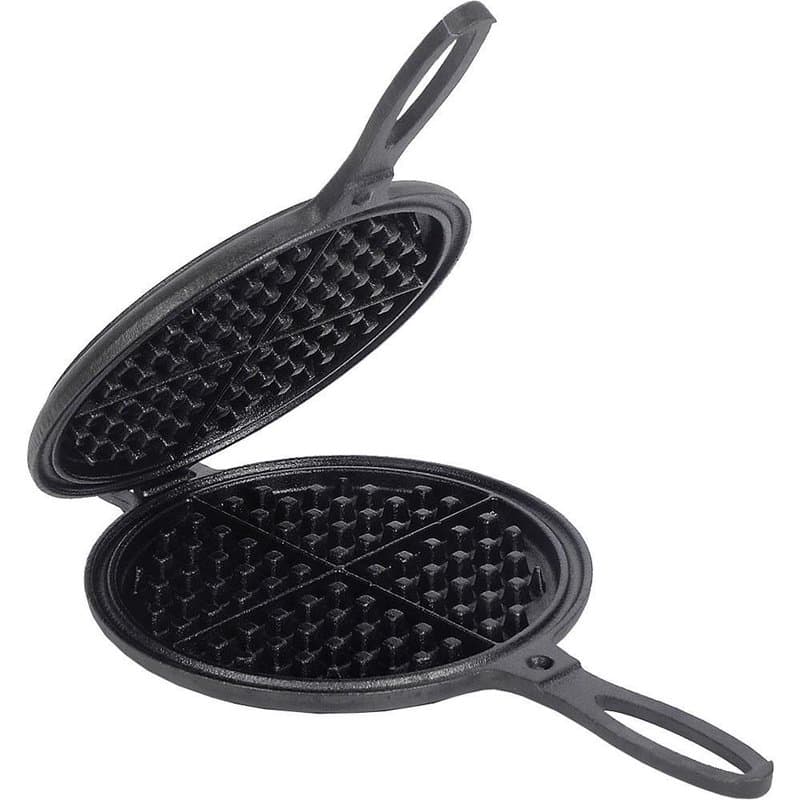
Iwatani Waffle Maker for Gas Stove
Iwatani's waffle maker for gas stove is a niche, gas-optimized solution designed for portable burners and tabletop grilling, offering immediate compatibility with gas canisters and exceptional mobility for RVs, small kitchens, and outdoor cooking. It is typically more compact and competitively priced compared with heavy cast-iron models, and while it doesn't match the mass thermal inertia of Rome or the premium build of Petromax, its plug-free, rapid heat control fills a unique market need for buyers prioritizing portability and on-demand flame control.
Estimated$80 – $140
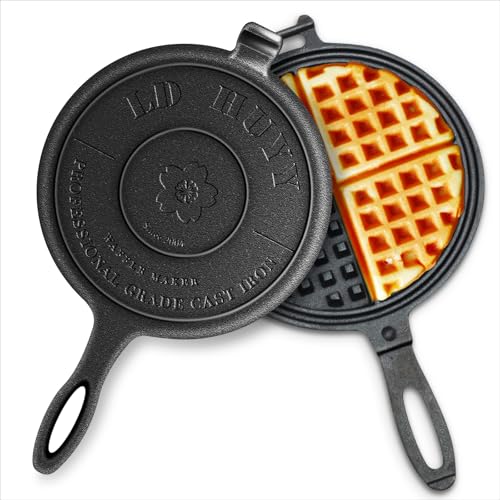
LD HuYY Rustic Round Cast Iron Waffle Iron
This 8-inch round cast-iron waffle iron is a budget-friendly, mass-market option prized for durability and value, with a thick, non-coated surface that develops natural seasoning over time and dependable heat retention once broken in. It offers a reliable, wallet-friendly choice compared with lighter options like NordicWare, and while it may trade off some niche features (deeper Belgian pockets or modular handles) found on Rome or Petromax, it offers predictable performance and a strong value proposition for everyday users willing to season and maintain it.
The science behind better stovetop waffles
Basic cooking science explains why stovetop waffle makers produce distinct results. Heat transfer and the Maillard reaction create the browned, complex flavors and crisp exterior people look for. Material choice affects how evenly and quickly the plates heat and how well they hold temperature during cooking. These are practical benefits that anyone can use to make consistently good waffles.
Maillard reaction and temperature: Browning and flavor development accelerate between roughly 140 and 165 degrees Celsius, which stovetop irons can reach quickly on medium to medium-high heat for a properly browned crust.
Heat capacity and retention: Cast iron has high heat capacity, so once hot it holds temperature well. That even, steady heat helps create uniform browning and crispness over multiple waffle batches.
Thermal conductivity differences: Aluminum heats faster and is lighter, while cast iron heats more slowly but keeps heat longer. Each material changes how you manage stove settings and cook time.
Energy and off-grid use: Using a stovetop iron on gas, propane or wood avoids reliance on electricity. For short use periods, this can be more energy efficient and useful during power outages or camping.
Dietary iron contribution: Cooking in seasoned cast iron can contribute small amounts of dietary iron to food, which some studies note as a dietary benefit for people with low iron intake. This is a secondary effect and varies by food acidity and cooking time.
Safety and handling: Manual control requires basic heat management and safe handling. Research and cookware guidelines recommend preheating, using stable cookware surfaces, and handling hot irons with protective gloves or handles to prevent burns.
Frequently Asked Questions
Do stovetop waffle makers work on induction cooktops?
Only some of them. Cast-iron irons are magnetic, so an induction hob can drive them, but most stovetop waffle irons are hinged two-piece moulds: only the lower plate sits on the element, and a small or ridged base sometimes fails to trigger the hob's pan-detection at all. Expect to flip the iron partway through to cook the top side. Cast-aluminum models like the NordicWare 15040 are non-magnetic and will not heat on induction — Nordic Ware lists it for gas, electric and ceramic stovetops only. The Iwatani is built for portable butane and gas burners, not induction. If induction is your only heat source, pick a flat-bottomed cast-iron iron and plan on flipping.
Do you need to season a stovetop waffle iron, and how?
Cast-iron irons need seasoning; the cast-aluminum NordicWare does not. The two cast-iron picks here differ. The Petromax ships with a seasoned finish and is ready to use out of the box. The Rome Industries #1100 is not pre-seasoned — it arrives coated in a thin protective wax that has to be scrubbed off with hot soapy water before the first seasoning. Rome's instructions are to coat the iron inside and out with vegetable oil or solid shortening (not butter or olive oil), unhinge it, bake at 350°F for about an hour, then let it cool slowly in the oven. Repeat two or three times, re-oil lightly after each wash, and keep cast iron out of the dishwasher.
Are stovetop waffle makers better than electric ones?
They serve different needs. Stovetop irons need no electricity, so they work for camping, cottages and power outages, and a cast-iron model can last for decades. The trade-off is a learning curve: you control browning by managing the burner and flipping the iron, rather than a thermostat doing it for you, so the first few waffles often take practice. Electric makers are more consistent and hands-off but tie you to an outlet and tend to wear out sooner. Pick stovetop for durability, portability and off-grid use; pick electric for convenience and repeatable results.
How much do stovetop waffle makers cost in Canada?
The spread is wide because most of these are imports. At the time of writing the Rome Industries #1100 sits around CA$60 and the NordicWare 15040 around CA$89 — those two are the realistic budget entry points. Heavier no-name cast-iron rounds such as the LD HuYY land near CA$155. The German-made Petromax carries the steepest Canadian markup, roughly CA$258 on Amazon.ca even though Petromax lists it at about €40 in Europe, so it is worth pricing against Canadian specialty outdoor retailers before you commit. Listings move often, so treat these as a snapshot rather than a fixed range.
Conclusion
Stovetop waffle makers remain a practical, enjoyable choice across Canada for people who value durability, portability and the distinctive texture of manually cooked waffles. This roundup covers five picks: the Rome Industries Old Fashioned Waffle Iron, NordicWare Original Stovetop Belgian Waffle Maker, Petromax Waffle Iron, Iwatani Waffle Maker for Gas Stove, and LD HuYY Rustic Round Cast Iron Waffle Iron. For most Canadian buyers the Rome Industries iron is the best overall value — American cast iron with deep grids at a fraction of the imported Petromax's Canadian price — while NordicWare is the pick for classic Belgian-style results on a gas, electric or ceramic range, Iwatani suits portable butane and tabletop gas burners, Petromax is the premium choice for embers and campfire cooking, and the LD HuYY round iron is a heavier budget cast-iron alternative. We hope you found what you were looking for; use the search to refine filters, check availability across Canadian retailers or expand to electric or sandwich waffle options if you want other styles.