

Cat Litter Boxes in Canada: Top 8 Options for 2026 for Odour, Small Spaces and Multi-Cat Homes
Quick answer: for most Canadian homes the Catit Jumbo Hooded Cat Pan (about $59.97 CAD) is the best all-round box, the Petmate Basic Litter Pan (about $7.49 CAD) is the cheapest one that still works, the IRIS USA Top Entry (about $55.99 CAD) does the most to stop tracking, and the PetSafe ScoopFree (about $156.11 CAD, plus roughly $73 CAD per 3-pack of crystal trays) is the hands-off option. None of the eight need an app or a subscription. Whatever you pick, plan on one box per cat plus one. This category covers open, covered, self-cleaning, top-entry and privacy litter boxes tailored for Canadian homes in 2026, designed to address space constraints, odor control and the needs of multi-cat households. Canadian shoppers increasingly seek solutions that balance compact footprints for condos and apartments, strong odor management for year-round indoor living, and durable, low-maintenance options for busy households. Preferences are driven by practical factors—easy cleaning, reduced litter tracking, and compatibility with different litter types—and by pet health considerations, such as reducing stress-related elimination problems. Manufacturers are responding with modular designs, quieter self-cleaning mechanisms, higher walls and top-entry models for litter containment, and privacy-forward shapes that respect feline behavior. This guide helps shoppers compare styles and features so they can pick the right box for their home layout, number of cats, and daily routine.
Inception's AI took the time to understand this market in Canada · · How we pickWe may earn a commission on purchases. It never affects our rankings.
Top Picks Summary
- Petmate Giant Litter Pan with Microban
- Catit Jumbo Hooded Cat Pan
- IRIS USA Top Entry Cat Litter Box
- PetSafe ScoopFree Ultra Self-Cleaning Litter Box
- PawHut Wooden Cat Litter Box Enclosure with Storage
- Omega Paw Roll'N Clean Self-Cleaning Litter Box Large
- Van Ness Pets Eco-Friendly Disposable Cat Litter Box
- IRIS USA Portable Travel Litter Box
The Petmate Basic Litter Pan is a tried-and-true, no-frills open box that wins for durability and low cost, making it a reliable baseline for everyday use or multi-pan setups. It offers a wide entry and solid construction at a price similar to or below Van Ness, but without high sides or shields—so while it’s the most straightforward financial choice, it lags in scatter and odor control compared with Nature's Miracle or Catit. For buyers seeking the simplest, most replaceable open-pan option, Petmate provides predictable performance with minimal upfront expense.
Show More Open Litter Boxes for Cats
The Catit Jumbo Hooded Cat Pan earns a best-in-class spot for covered litter boxes due to its oversized interior, sturdy construction and user-friendly removable hood and filter system that accommodate larger cats and heavy use. Compared with the more space-restrictive top-entry and dome styles on this list, Catit offers superior privacy and capacity, giving households a durable, long-term solution that often reduces the need to buy replacements as frequently. Its technical advantage — thicker plastics and a roomy footprint — makes it a cost-effective choice for multi-cat or large-cat homes.
Show More Covered Litter Boxes for Cats
Estimated$35 – $55
The IRIS USA Top Entry Cat Litter Box earns a best-in-class spot for budget-conscious cat owners who still want effective litter containment; its simple top-entry design, large opening and high walls minimize scatter and are easy to clean. Compared with premium options like the Modkat XL, IRIS sacrifices designer finishes for a much lower price, and versus midrange competitors it often wins on availability and replacement part simplicity. Its financial advantage is clear for multi-cat households or those stocking several boxes without large upfront cost.
Show More Top Entry Litter Boxes for Cats
The PetSafe ScoopFree Ultra is a market-leading, budget-friendly option that uses disposable crystal trays to deliver excellent odor control with minimal hands-on scooping, making it attractive for owners who prioritize low daily maintenance. It is significantly cheaper upfront than high-end automatic rotating units but incurs recurring costs for replacement trays and lacks advanced connectivity and the long-term durability of Litter-Robot models.
Show More Self-Cleaning Litter Boxes for Cats
Estimated$140 – $220
PawHut Wooden Cat Litter Box Enclosure with Storage
The PawHut Wooden Cat Litter Box Enclosure with Storage is a budget-friendly, practical option that hides the litter box while adding usable storage—delivering strong value for cost-conscious cat owners. While it lacks the moisture resistance and long-term durability of New Age Pet's ecoFLEX and the premium finish of Refined Feline, it undercuts both on price and provides more built-in utility than the minimalist Way Basics eco option.
Show More Litter Box Furniture and Enclosures for Cats
We may earn a commission on purchases. It never affects our rankings.
$64.99CAD$69.00
12% below its usual priceUsual price $74.00: the median of the daily prices we observed at this store over the last 60 days, 34 days of dataOmega Paw Roll'N Clean Self-Cleaning Litter Box Large
Omega Paw Roll'N Clean Self-Cleaning Litter Box Large is the market-leading time-saving option for multi-cat stations, offering a manual self-cleaning mechanism that drastically reduces scooping frequency without motors or electricity. While its upfront price is higher than simple pans and corner boxes, its labor-saving technical design provides clear financial value over time for busy multi-cat households, though very large colonies may still prefer multiple simple pans for capacity.
Show More Multi-Cat Litter Stations for Cats
Estimated$100 – $170
Van Ness Pets differentiates itself as the eco-friendly disposable, using biodegradable materials and compostable components to reduce landfill impact while still offering a convenient single-use format. It appeals to environmentally conscious buyers willing to pay a modest premium compared with generic disposables like Kitty's WonderBox, though it generally trades off some of the advanced odor and moisture control found in Nature's Miracle and PetSafe's crystal systems.
Show More Disposable Litter Boxes for CatsEstimated$8 – $18
The IRIS USA Portable Travel Litter Box earns its place for travel and short‑term training thanks to a lightweight, folding design that makes it easy to stash in a car or suitcase and inexpensive to replace. Its portability and low price point make it a better financial choice for owners who need an on‑the‑go solution than bulkier, higher‑end boxes like the ModKat, though those models may provide superior odor containment and durability for daily home use. Compared with the roomy Petmate pan it trades capacity for packability, appealing to travelers and temporary training setups.
Show More Travel and Training Litter Boxes for Cats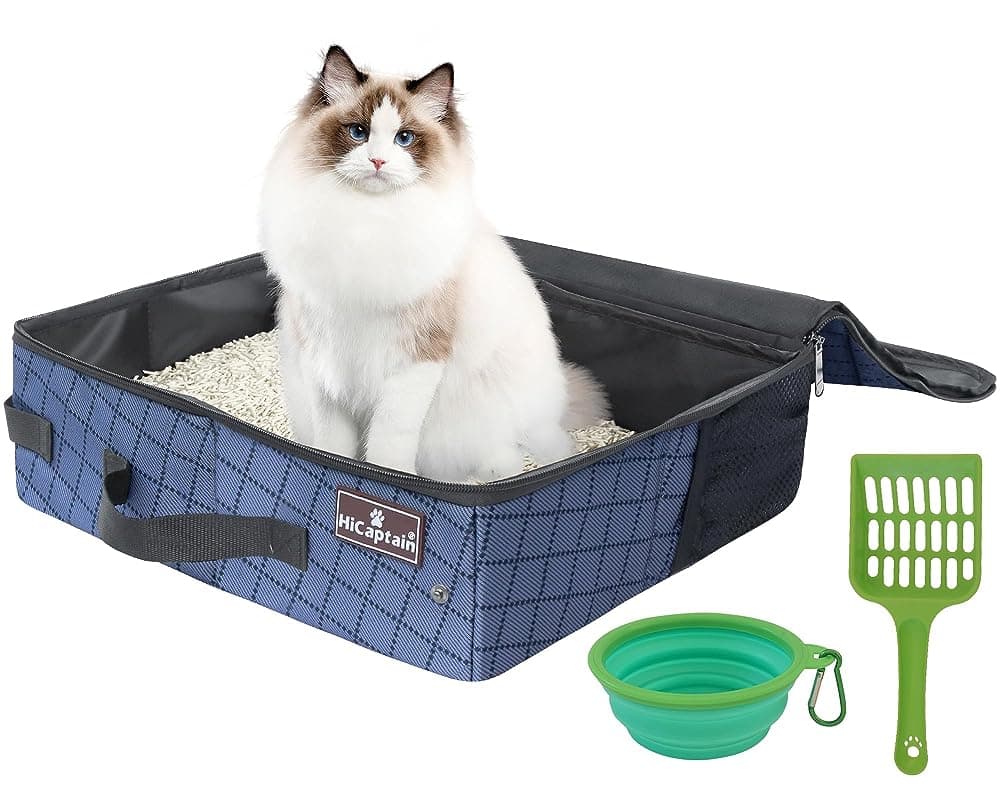
Estimated$25 – $40
Why Litter Box Design Matters: Research-Backed Benefits
Research in feline behavior and veterinary guidance highlights that litter box design and placement directly affect cat welfare and litter box use. Studies and professional recommendations emphasize factors such as appropriate box size, number of boxes for multi-cat homes, and the impact of noise and airflow on a cat's willingness to use a box. Practical benefits from following research-backed guidelines include fewer elimination problems, reduced household odor, and improved litter economy when the right box style is matched to household needs.
Number of boxes: Veterinary and behavior guidelines often recommend one more box than the number of cats (n + 1) to reduce conflict and inappropriate elimination in multi-cat homes.
Size and access: Research and feline behavior experts advise litter boxes large enough for a cat to turn and dig comfortably—often 1.5 times the cat's body length—to reduce stress and avoid avoidance.
Privacy versus ventilation: Studies show cats value privacy, but enclosed boxes can trap odors and may be avoided by some cats; designs with ventilation and easy cleaning strike the best balance.
Self-cleaning units: When quiet and reliable, self-cleaning boxes can lower odor and maintenance time; however, research and vets caution that loud or unpredictable mechanisms may stress some cats.
Placement and predictability: Research indicates consistent placement and easy access, especially for senior or mobility-impaired cats, improves litter box usage and health outcomes.
Frequently Asked Questions
Which box should I buy for multi-cat odor control?
For multi-cat households, the Catit Jumbo Hooded Cat Pan (rating 4.3, about $59.97 CAD) is the strongest pick on this list: its 22.4-inch-long shell gives larger cats room to turn, the removable hood adds privacy, and the built-in active carbon filter helps trap odor. Pair it with the n+1 rule (one more box than the number of cats) for the best results.
Do any of these litter boxes need an app or a subscription?
No. None of the eight boxes on this list requires an app, an account or a subscription, including the two self-cleaning picks: the Omega Paw Roll'N Clean uses no electricity at all (you roll the dome to sift), and the PetSafe ScoopFree runs on a simple timer with no connectivity. The ScoopFree is the only one with a recurring cost — its disposable crystal trays run about $73 CAD for a 3-pack at Canadian retailers, and PetSafe rates one tray at up to about 30 days for a single cat, so budget roughly $25 CAD a month on top of the $156.11 CAD box.
Is the Petmate Basic Litter Pan good value versus a self-cleaning box?
Yes, if you don't mind daily scooping. The Petmate Basic Litter Pan (rating 4.2, about $7.49 CAD) is a durable, reinforced open pan at a fraction of the cost of an automated box like the PetSafe ScoopFree (about $156.11 CAD), which also adds roughly $73 CAD per 3-pack of replacement crystal trays. Over a year the ScoopFree costs well over $400 CAD; the Petmate costs under $10 CAD and your time.
How does the IRIS USA top-entry box reduce mess?
The IRIS USA Top Entry Cat Litter Box (rating 4.4, about $53.99 CAD) uses high, enclosed walls with a single top opening so litter stays inside rather than scattering across the floor, and its textured lid wipes litter off your cat's paws on the way out. The top-entry design also keeps dogs and curious toddlers out of the litter. The trade-off is the climb: the high rim is awkward for kittens, arthritic or very large cats.
Conclusion
In the Canadian context—where condos, small homes and multi-cat households are common—choosing the right litter box can make daily life cleaner and your cats more comfortable. We hope this guide helped you identify the right open, covered, self-cleaning, top-entry or privacy litter box for your needs. If you want to narrow results by size, noise level, budget or number of cats, use the search to refine or expand your options.