

The Top 5 Dog Recovery & Medical Clothing Picks in Canada for 2026
A recovery suit is a full-body garment that covers a surgical site so a dog can't lick or scratch it — the soft alternative to the plastic cone. For most spay and neuter incisions, veterinary clinics advise keeping the site covered for roughly 10 to 14 days, until the wound has closed and the sutures dissolve or are removed. This page compares five recovery suits and medical onesies sold in Canada, ranked on protection, fit and price: the Suitical Recovery Suit (CAD $49.99, rated 4.7) leads on published materials and a documented toileting design, the BellyGuard onesie (CAD $34.99, rated 4.5) is the value pick for a single recovery, and the remaining three cover comfort, durability and adjustable fit. What separates a good suit from a bad one is fit, not fabric. Too loose and the dog reaches the wound; too tight and you get rubbing and pressure points. Most suits are sized by neck-to-base-of-tail length rather than by weight, so measure your dog along the spine before ordering, and check the incision daily whatever garment you use. A suit is not a substitute for veterinary follow-up: for head, ear, eye or paw procedures — or a determined licker — a clinic may still want a cone, sometimes alongside the suit.
Inception's AI took the time to understand this market in Canada · · How we pickWe may earn a commission on purchases. It never affects our rankings.
Top Picks Summary
Suitical Recovery Suit for Dogs
Suitical's Recovery Suit is the reference product in this category: the manufacturer publishes its fabric (94% cotton, 6% Invista Lycra four-way stretch) and a hold-up system — an internal belly strap with a snap button that lets the rear panel roll up so the dog can relieve itself without undressing. Compared with the other items here it is the premium, clinical option; at CAD $49.99 it is the most expensive pick, and the cost is justified mainly by construction and by surviving the repeated washing a one-to-two-week recovery demands. Sizing runs by neck-to-base-of-tail length, so it must be measured rather than guessed.

We may earn a commission on purchases. It never affects our rankings.
$53.99CAD
BellyGuard After Surgery Recovery Onesie
BellyGuard’s After Surgery Recovery Onesie is a budget-friendly, full-coverage onesie designed specifically to shield abdominal incisions and reduce licking without the complexity of straps or zippers. Compared to premium options like Suitical, BellyGuard prioritizes affordability and simplicity, making it a strong choice for short-term recovery or single-use scenarios where lower cost matters. Its technical strengths are straightforward—soft, flexible fabric and snap closures—though it trades off some of the durability and tailored fit seen in higher-end medical suits.

We may earn a commission on purchases. It never affects our rankings.
$34.99CAD
Surgi Snuggly Wonder Suit
Surgi Snuggly Wonder Suit earns its market-leader spot by focusing on therapeutic compression and a snug, calming fit that helps reduce anxiety-driven licking and promotes circulation during healing. It occupies the middle ground between premium medical suits and low-cost onesies, offering better targeted support than BellyGuard while typically costing less than the most clinical options like Suitical. Technically, Surgi Snuggly’s elastic panels and contoured seams deliver consistent compression and a secure fit for a wide range of body shapes.

Estimated$35 – $70
MAXX Medical Pet Clothing Recovery Suit
The MAXX recovery suit is the entry-level clinical option here, marketed on reinforced seams and adjustable panels for larger or more active dogs. Customer feedback tells a more mixed story than the marketing: reviewers describe thinner fabric and faster wear than the premium suits, plus sizing that runs inconsistently, so it fits a short recovery window better than months of repeat use. It carries the lowest rating on this list.
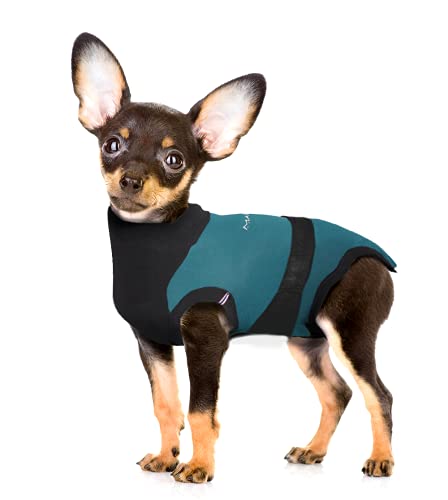
Estimated$50 – $100
Cover Me by Tui Adjustable Fit Recovery Suit
Cover Me by Tui’s Adjustable Fit Recovery Suit is notable for its customizable fit, using multiple adjustment points and adaptable closures to accommodate atypical body shapes and post-op bandages. Compared with one-size styles or fixed-tailored suits, it reduces the need to buy multiple sizes and can be more economical for owners of dogs with unique proportions, though it may not match the industrial-grade materials of top-tier medical brands. Technically, its user-friendly Velcro and panel system makes fitting and dressing quick, which is especially helpful for stressed or painful pets during recovery.

Estimated$35 – $65
The practical benefits of dog recovery and medical clothing are a physical barrier that stops licking and scratching of an incision, far less stress and less restricted movement than a rigid e-collar, and openings or roll-up panels that let the dog relieve itself without undressing. Most are machine washable and reusable, which matters because a recovery window usually runs one to two weeks and the garment needs regular laundering.
What Research and Veterinary Guidance Say About Recovery Clothing for Dogs
Scientific literature and clinical experience in veterinary medicine indicate that protective garments can play a meaningful role in post-operative care when used appropriately. Research and expert guidance emphasize correct sizing and application, fabric breathability, and pairing garment use with veterinary follow-up. While no single product fits every case, evidence-based principles show how garments reduce common post-op risks and improve comfort.
Barrier function: Protective suits and onesies reduce direct paw and mouth contact with wounds and sutures, which can lower the risk of licking-related contamination. Several clinical reports and veterinary reviews note reductions in self-trauma when contact barriers are used.
Compression effects: Light, evenly distributed compression can help control mild swelling and support soft tissues; controlled compression is commonly used in both human and veterinary post-op protocols to manage edema.
Skin health and materials: Breathable, moisture-wicking fabrics help prevent skin maceration and secondary dermatitis. Studies on textile-skin interactions advise choosing fabrics that balance breathability with coverage to reduce moisture build-up.
Behavioral and welfare outcomes: Many owners report reduced stress and easier handling compared with rigid e-collars. Veterinary behaviorists recommend combining garment use with monitoring, training, and enrichment to limit licking and ensure recovery compliance.
Fit and monitoring: Research and clinical guidance repeatedly underscore that ill-fitting garments can cause rubbing, restricted movement, or pressure points. Proper fit plus regular wound checks are essential for safe use.
Frequently Asked Questions
Which recovery suit should I buy for dog surgery?
Choose the Suitical Recovery Suit for Dogs if you want full-body coverage to protect surgical sites and wounds without cones, plus breathable four-way stretch for movement; it’s rated 4.7 and costs CAD $53.99 CAD
How long should a dog wear a recovery suit after a spay or neuter?
Most veterinary clinics advise keeping the incision covered for about 10 to 14 days — roughly how long a spay or neuter wound needs to close before sutures dissolve or are removed. Keep the suit on overnight and whenever the dog is unsupervised. Your own vet's instructions override any general timeline.
Can a dog pee and poop while wearing a recovery suit?
Yes. Recovery suits are built to stay on for toilet breaks. The Suitical Recovery Suit uses an internal belly strap with a snap button, so the rear panel rolls inward and fastens out of the way; the onesies on this list use comparable step-in or snap-closure openings. You do not remove the whole garment each time.
Is a recovery suit better than a cone for a dog?
For abdominal incisions — spay, neuter, most belly surgery — a suit is usually more comfortable than a plastic e-collar and lets the dog eat, drink and sleep normally. A cone is still the better tool for head, ear, eye or paw sites a suit doesn't cover, and for a determined licker some clinics use both, alternating suit and cone.
Conclusion
In summary, investing in dog recovery and medical clothing is crucial for ensuring your pet's comfort and support as they heal. The top picks in Canada for 2026 include the Suitical Recovery Suit for Dogs, which excels in allowing full mobility while protecting wounds; the BellyGuard After Surgery Recovery Onesie, known for its unique design that provides additional coverage; the Surgi Snuggly Wonder Suit, which ensures a snug fit and optimal warmth; the MAXX Medical Pet Clothing Recovery Suit, recognized for its durability; and the Cover Me by Tui Adjustable Fit Recovery Suit, celebrated for its adjustable features. Among these, the Suitical Recovery Suit is often highlighted as the best choice due to its comprehensive design and vet endorsements. We hope you found the information you were looking for to make an informed decision for your dog. Should you wish to refine or expand your search for the ideal recovery solution, feel free to browse our additional resources.