

2025 Canadian Guide: Top 5 Compact Small-Leaf Rosette Plants for Freshwater Aquascapes — Tropica Cryptocoryne parva, Tropica Echinodorus tenellus, Tropica Sagittaria subulata, Bucephalandra Wavy Green, Anubias Petite (Expert Picks for Nano Tanks)
Published on Thursday, August 21, 2025
Dwarf and compact rosette varieties featuring small leaves are ideal for creating fine texture and precise foreground detail in planted freshwater tanks. These plants appeal to Canadian hobbyists who favor nano aquascapes, apartment-friendly setups, and tightly scaled layouts where careful placement and proportion matter. Small-leaf rosette species deliver dense, low-profile growth that defines negative space, supports microfauna such as shrimp, and helps suppress filamentous algae when established. In Canada, demand is driven by limited living space, rising interest in low-maintenance natural aquascaping, and wider availability of nursery-grade stock from trusted brands and local sellers. Buyers choose these varieties for their balance of aesthetic detail, predictable growth habit, and compatibility with low- to moderate-light systems.
Top Picks Summary
Tropica Cryptocoryne parva
Tropica Cryptocoryne parva ranks as the best-in-class compact rosette for freshwater aquascapes because its naturally tiny leaves and very slow, compact growth create a true nano-foreground carpet with minimal trimming. Compared with the faster-running carpet species in this list, its slow growth lowers ongoing maintenance costs and its stable, low-light performance gives a predictable technical advantage for budget-conscious layouts.

Echinodorus Tenellus
Tropica Echinodorus tenellus is the market leader for fast, fine-leaved carpeting — it establishes dense cover quickly, giving strong visual impact and faster propagation that improves value-per-plant for large foreground areas. Technically it demands higher light than Cryptocoryne parva but its rapid spread makes it a cost-efficient choice when quick coverage and economies of scale are priorities.

Tropica Sagittaria subulata
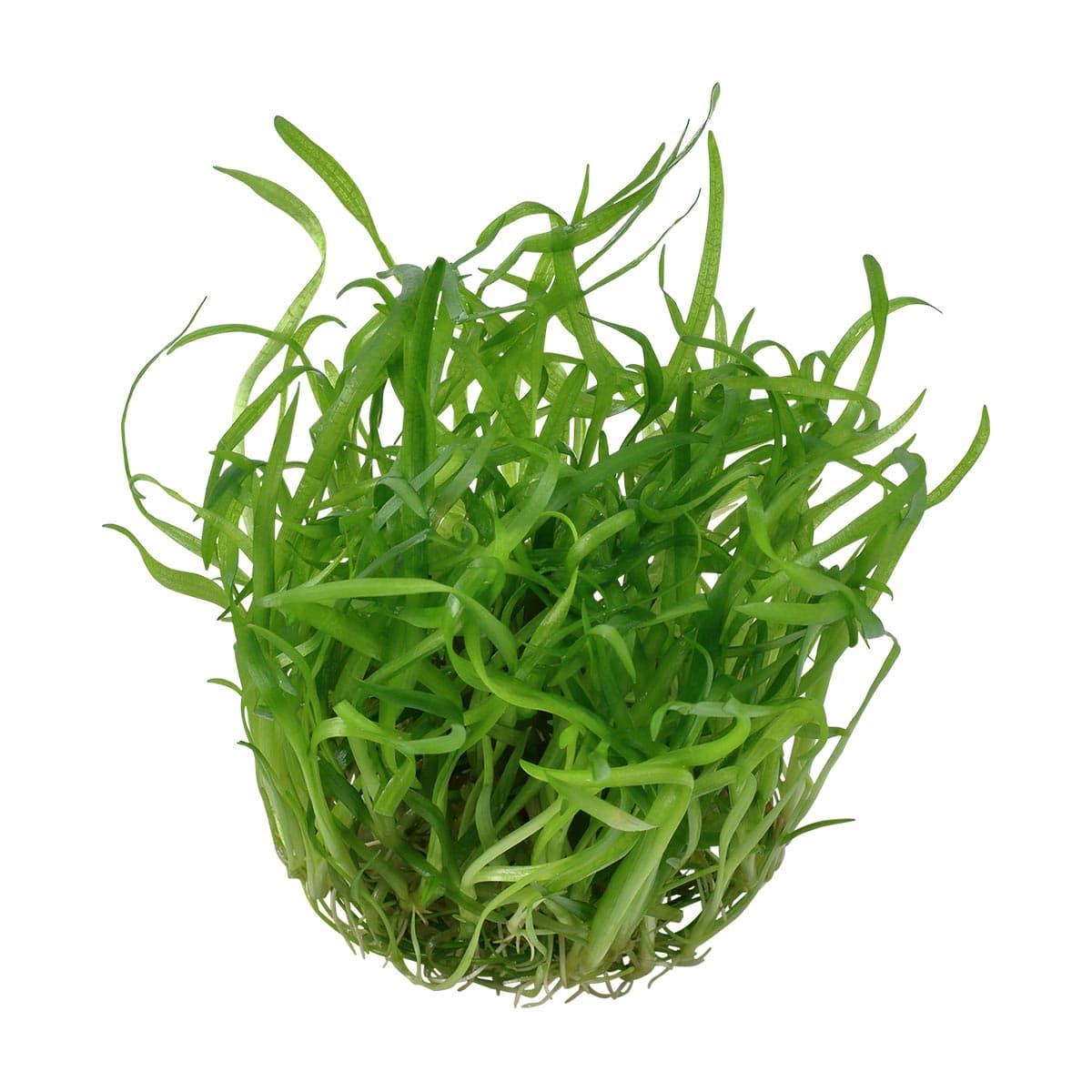
Tropica Sagittaria subulata occupies the sweet spot between fine carpets and taller midground grasses, offering hardy, runner-based coverage that tolerates a wide range of conditions and is very budget-friendly to expand. Compared to Echinodorus tenellus it produces a slightly more structured clump while remaining cheaper and simpler to propagate than premium epiphytes like Bucephalandra.
Bucephalandra Green Wavy
Bucephalandra Wavy Green stands out as the boutique choice for compact rosette-style epiphytes with richly textured leaves and a sculptural look that elevates hardscape focal points; its slow growth commands a higher upfront price but reduces replacement needs and preserves long-term value. Technically it excels when attached to wood or rock in shaded, low-flow niches—an advantage over substrate-rooted Tropica varieties—and its collectibility can justify premium pricing for specialty aquascapes.

Anubias Petite
Anubias Petite is the practical, low-cost epiphyte for nano aquascapes: extremely hardy, tolerant of very low light and rough handling, it delivers dependable greenery with minimal ongoing expense. While it lacks the ornate texture of Bucephalandra Wavy Green, its wide availability and low maintenance make it the most economical choice for beginners and for planted tanks where longevity and low risk are priorities.

What research and evidence say about compact small-leaf rosette plants
Scientific and hobbyist studies on planted aquaria consistently highlight several practical benefits of small-leaf rosette foreground plants. Controlled aquarium trials and general aquatic plant research show that plant architecture, leaf size, and root structure influence nutrient uptake, substrate stabilization, and microhabitat formation for invertebrates. For beginners, the evidence supports using compact rosette species to achieve dense foreground carpets with manageable maintenance and reliable scale in nano and small tanks.
Nutrient uptake and water quality: Multiple controlled aquarium studies indicate that higher surface-area-to-biomass ratios in dense foreground plants help reduce dissolved nitrates and phosphates, improving water clarity and reducing algal pressure over time.
Algae suppression by shading and flow modification: Research on light interception demonstrates that dense low foliage and small leaves limit light penetration to the substrate, which reduces conditions favorable to filamentous algae.
Substrate anchoring and erosion control: Studies of root and rhizome systems show that rosette and stoloniferous foreground plants bind fine substrate and reduce resuspension, especially useful in shallow nano layouts.
Microhabitat benefits: Ecological observations in planted tanks confirm that fine-leaved foregrounds increase refuge and grazing surfaces for shrimp and small invertebrates, supporting biodiversity and natural grazing cycles.
Growth under low to moderate light: Cultivation trials from commercial growers report that many small-leaf rosette species perform well without high CO2 dosing, making them accessible for hobbyists using LED lighting and gentle fertilization regimes.
Frequently Asked Questions
Which plant should I pick for nano foreground texture?
Choose Tropica Cryptocoryne parva for nano foregrounds because it has ultra-compact rosettes with very small leaves and very slow, compact growth, helping you build a dense carpet with minimal trimming; it holds a 4.4 average rating.
How fast does Tropica Echinodorus tenellus carpet?
Tropica Echinodorus tenellus forms a soft, low, grass-like carpet and spreads rapidly via runners under moderate to high light to fill foreground/midground areas quickly; it has a 4.5 average rating.
Is Tropica Echinodorus tenellus good value at $19.99?
At $19.99, Tropica Echinodorus tenellus delivers fine, grass-like carpeting that establishes dense cover quickly via runners, and it’s tolerant of a wide range of water parameters; it has a 4.5 average rating.
Which plant is more forgiving for changing conditions?
Tropica Sagittaria subulata is more forgiving because it’s a compact rosette that produces runners for dense colonies and tolerates a wide range of conditions while working well in low to moderate light; it has a 4.3 average rating.
Conclusion
In the Canadian context, compact small-leaf rosette plants are a practical and attractive choice for anyone building a nano or tightly scaled aquascape. The five featured options here — Tropica Cryptocoryne parva, Tropica Echinodorus tenellus, Tropica Sagittaria subulata, Bucephalandra Wavy Green, and Anubias Petite — each bring distinct textures and planting strategies: Cryptocoryne parva is my top pick for true dwarf rosette foreground work due to its proven scale and stability, Echinodorus tenellus and Sagittaria subulata excel where carpet or fine grassy texture is desired, Bucephalandra Wavy Green offers durable low-light color contrast, and Anubias Petite is a robust choice for hardscape accents and shrimp-friendly cover. I hope you found what you were looking for; use the site search to refine by light level, tank size, or propagation method to expand or narrow these selections.