

Top 11 Water Treatment and Test Kits in Canada for 2025: Expert-Selected Water Conditioners, Dechlorinators, Remineralizers and Precision Test Kits
This category covers water conditioners, dechlorinators, remineralizers, pH and hardness adjusters, disease treatments and cycling aids, plus digital and reagent test kits for ammonia, nitrite, nitrate, pH, GH and KH. Canadian buyers choose these products to manage variable tap water chemistry, protect aquatic life, maintain aquarium stability, and verify water safety for drinking and hobby use. Preferences in Canada tend toward accuracy, ease of use, measurable outcomes, proven safety for livestock and people, and local availability or shipping reliability. The range presented here reflects both hobbyist needs and municipal water considerations across provinces, including common concerns such as chlorine and chloramine removal, remineralizing reverse osmosis water, and tracking nitrogen cycle parameters with laboratory-caliber test options.
Inception's AI took the time to understand this market in Canada · · How we pickWe may earn a commission on purchases. It never affects our rankings.
Top Picks Summary
Fluval Water Conditioner earns a market-leader position through broad brand recognition, easy-to-use packaging and a balanced formula that neutralizes chlorine and chloramine while detoxifying heavy metals; it’s favored by hobbyists who want a dependable, well-supported product with clear dosing. Technically it offers solid performance comparable to other mainstream conditioners but positions itself as a reliable mid-tier choice with strong retail availability and competitive pricing.
Show More Aquarium Water Dechlorinators and Conditioners
We may earn a commission on purchases. It never affects our rankings.
$5.99CAD
Seachem Equilibrium is widely regarded as a market leader for freshwater remineralization because it provides a simple, predictable formulation of major ions (calcium, magnesium, potassium) to raise GH without dramatically altering KH or pH. Its dosing simplicity and reliable, testable results make it financially efficient for hobbyists who want consistent water hardness compared with more specialized or trace-element–focused products on this list. Technically, Equilibrium’s focus on balanced major minerals gives it an advantage for generalists and mixed-species tanks versus niche shrimp or planted formulas that prioritize different ion profiles or micronutrients.
Show More Aquarium Remineralizers and Mineral Supplements
Fritz pH Lower is a concentrated, professional-grade solution favored by advanced hobbyists and aquaculture users for aggressive or rapid corrections in very hard-water systems. Its potency and focused formulation make it more dose-sensitive—offering cost efficiency for large or frequent treatments but requiring more careful use than gentler products like Fluval or Nutrafin and more monitoring than Seachem’s buffering approach.
Show More Aquarium pH Adjusters and Buffers
See price at Amazon
The API GH & KH Test Kit is an affordable, widely available liquid kit for measuring both general and carbonate hardness, serving as the essential diagnostic tool for any hardness adjustment plan. As a market leader it pairs with Equilibrium, Alkaline Buffer, Fluval Sea Alkalinity, and pH conditioners by offering low-cost, frequent testing and quick actionable readings to guide precise dosing decisions.
Show More Aquarium Hardness Adjusters for GH and KH
We may earn a commission on purchases. It never affects our rankings.
$12.59CAD
Nutrafin Cycle provides a straightforward, mid-priced bacterial starter that is widely available and tailored for hobbyists who want an easy-to-use cycling aid without a premium price tag. It offers solid short-term ammonia and nitrite control but generally features a narrower strain profile and lower dose efficiency than market leaders like Seachem Stability or Fluval Cycle, making it a practical choice for routine setups or budget-conscious aquarists. Compared with API Quick Start, Nutrafin often positions itself as a slightly more concentrated alternative while remaining competitively priced and retailer-friendly.
Show More Aquarium Bacterial Starters and Cycling Aids
Hikari PraziPro is a praziquantel-based specialist formulated to target flukes and other flatworm-type external parasites, making it the market leader for confirmed trematode or monogenean infections. While often pricier per bottle than generalist remedies, its single-active-agent precision is cost-effective when fluke infestation is known and is a preferred choice when copper treatments are contraindicated by tank inhabitants.
Show More Aquarium Disease Treatments and Medications
Estimated$20 – $40
API AlgaeFix is a concentrated liquid algicide designed for rapid knockdown of green spot, hair and some filamentous algae, making it a go-to for acute outbreaks. It earns its place as a market leader for fast, low-upfront-cost intervention compared with longer-term nutrient solutions on this list, though it is technically harsher than biological or phosphate-targeting options and should be used selectively to protect plants and invertebrates.
Show More Aquarium Algae Control TreatmentsEstimated$8 – $20
Tetra Water Clarifier is an accessible, gentle clarifier designed for routine use in community tanks and sold widely through brick-and-mortar retailers. It tends to be more affordable per bottle than premium brands but is also milder and may need repeat dosing or follow-up filtration compared with the stronger, more concentrated formulations like Seachem Clarity.
Show More Aquarium Water Clarifiers and Flocculants
AquaClear’s Ammonia Remover insert is a plug‑and‑play polymer sachet packed with ion‑exchange material that excels at rapid ammonia control and emergency use, providing quick peace of mind for new setups or acute spikes. It is generally more affordable and simpler to install than multi‑media sachets, but because it is focused on ammonia removal it is best used in tandem with broader‑spectrum media like API Zorb or Boyd Chemi‑Pure Elite for ongoing water quality management.
Show More Aquarium Heavy Metal and Toxin Removers
Estimated$10 – $25
JBL ProScan Multi Water Test Kit
JBL ProScan Multi Water Test Kit uses a smartphone-driven colorimeter to digitally read test reagents for ammonia, nitrite, nitrate, pH, GH, KH and more, delivering lab-like repeatability and automated logging that outclasses subjective strip or visual drop comparisons. The upfront cost is higher, but the technical advantage in accuracy, elimination of human color-matching error, and digital record-keeping make it the market-leader choice for serious hobbyists and small labs who need traceable results and fewer follow-up tests.
Show More Aquarium Reagent and Strip Test Kits for Ammonia, Nitrite, Nitrate, pH, GH, KH
Apera Instruments PC60 Premium 5-in-1 Meter
The PC60 Premium 5-in-1 is a market-leading value-focused meter that packages pH, conductivity/TDS, salinity and temperature into an intuitive, portable design with smart features, giving aquarists broad functionality at a lower price point than heavy-duty field units. Against competitors here it stands out for its combination of user-friendly interface and economical sensor performance, making it the practical choice for everyday aquarium monitoring without the premium cost of specialized DO-focused instruments.
Show More Aquarium Digital Test Meters for pH, Conductivity, TDS and Oxygen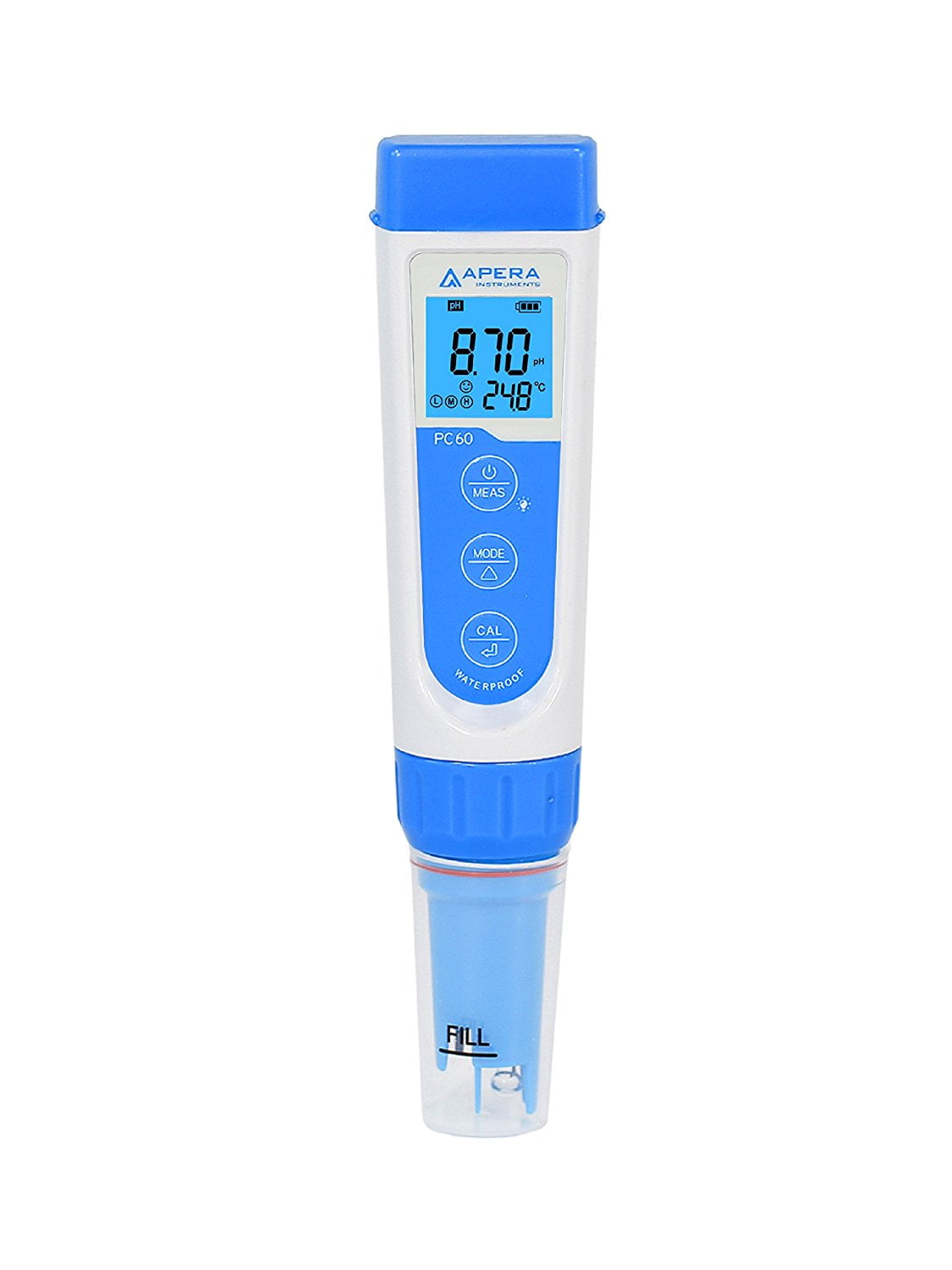
Estimated$200 – $300
What Research and Guidelines Say About Water Treatment and Testing
Scientific literature, municipal guidance and aquaculture research consistently support precise water treatment and monitoring to reduce stress on aquatic organisms and to ensure safe potable water. Studies show that removing disinfectants, stabilizing pH, and maintaining appropriate general and carbonate hardness improves biological filtration performance and reduces disease risk. For drinking water, Health Canada and provincial guidelines emphasize monitoring of regulated contaminants and the importance of certified treatment when altering water chemistry. For hobby and aquaculture use, peer-reviewed work and extension resources highlight how ammonia and nitrite toxicity are strongly influenced by pH and temperature, why remineralization after reverse osmosis prevents osmotic shock, and how routine testing prevents chronic water-quality decline.
Dechlorination and chloramine neutralization reduce gill and mucous membrane irritation in fish and lower the formation of harmful byproducts; many municipal advisories recommend neutralization before use.
Remineralizers restore essential ions lost during reverse osmosis or distillation, helping prevent osmotic stress and supporting metabolic processes in aquatic life.
pH and hardness directly affect the proportion of toxic un-ionized ammonia; maintaining stable pH and adequate KH improves buffer capacity and reduces sudden toxicity spikes.
Regular testing for ammonia, nitrite and nitrate enables early detection of biological filter problems; both reagent kits and calibrated digital meters have roles depending on required sensitivity and frequency.
Advanced monitoring systems and data logging can reveal slow trends and diel cycles that single-point tests miss, improving long-term aquarium and aquaculture health.
Health Canada and provincial water authorities provide standards and recommendations for treated drinking water; when using home treatment systems, consumers should follow certified product guidance and test treated water regularly.
Frequently Asked Questions
Which water conditioner should I choose for beginners?
Nutrafin Aqua Plus is a budget-friendly conditioner that effectively removes chlorine and chloramine and binds heavy metals, with an average rating of 4.1 at CA$12.79, making it a good fit for new aquarists and smaller tanks or frequent water changes.
How does Seachem Equilibrium adjust aquarium water chemistry?
Seachem Equilibrium uses a concentrated mineral blend to restore general hardness (GH) without significantly affecting pH, and it’s easy to dose for a predictable GH rise; it has a 4.6 average rating and costs $36.97 CAD
Is API pH Down better value than other pH options?
API pH Down costs $36.97 CADand uses a phosphoric-acid based liquid formula for fast, reliable freshwater pH reduction, with an average rating of 4.4; compared to Seachem Equilibrium at $36.97 CADyou get a cheaper pH adjuster option.
Is API pH Down safe for community and planted tanks?
The only stated compatibility from the provided data is that Seachem Equilibrium is safe for community tanks, planted aquaria, and sensitive species when used as directed; API pH Down is described as for general freshwater aquariums, with no community/planted claim listed, at $36.97 CAD
Conclusion
In the Canadian context, selecting the right treatment or test kit depends on your source water, the species you keep, and whether you need portable tests or continuous monitoring. We hope this guide helped you identify which of the top 11 options fits your needs. If you want to narrow results by parameter (for example pH, ammonia, or GH), format (digital or reagent), price, or intended use (aquarium versus drinking water), use the search or filters on this site to refine or expand your selection.