

Best Insect Growth Regulators & Larvicides for Barns in Canada — Top 7 (2026)
Chemical and biological insect growth regulators (IGRs) and larvicides are essential tools for preventing fly, moth and stored-product pest outbreaks in equine facilities, stable bedding and barn environments across Canada. These products interrupt insect life cycles by preventing larvae from maturing or by targeting immature stages with precise biological toxins. In Canadian markets they are popular with homeowners, farm operators, pest management professionals and municipal vector-control teams because they enable targeted application, reduce reliance on broad-spectrum spraying, support resistance management, and lower environmental impact when used as part of integrated pest management. One rule comes before product choice: in Canada anything sold with a pest-control claim is a pest control product under the Pest Control Products Act and must be registered with Health Canada's Pest Management Regulatory Agency (PMRA), with a PCP registration number printed on the label. A US EPA registration number is not a substitute — a product registered only with the EPA is not approved for sale or import into Canada, even when a US retailer will ship north. Buyers therefore prioritize a verifiable PCP number, easy-to-use formats such as dunks, bits, concentrates and point-source devices, clear label instructions, and proven safety around people, horses, pets and beneficial wildlife. Cost-effectiveness, brand reputation and compatibility with other barn sanitation and rodent-control measures also drive purchase decisions, making IGRs and larvicides a practical choice for long-term barn pest management in Canada.
Inception's AI took the time to understand this market in Canada · · How we pickWe may earn a commission on purchases. It never affects our rankings.
Top Picks Summary
Summit Mosquito Dunks
Summit Mosquito Dunks are a homeowner-friendly Bti briquette that reliably kills mosquito larvae in small, standing-water habitats; their slow-release donut form makes them highly cost-effective for container and backyard use compared with bulk professional products. In the context of Insect Growth Regulators and Larvicides, they stand out as an affordable, low-application-risk larvicide that complements IGRs by rapidly reducing larval populations before IGRs like Precor can deliver longer-term population suppression.

Estimated$12 – $30
Summit Mosquito Bits
Summit Mosquito Bits are a Bti-based granular formulation designed for rapid larval control in small containers and shallow water, providing an affordable, fast-acting spot-treatment option for residential or transient breeding sites. They complement longer-lasting IGR products (such as Altosid or NyGuard) in integrated approaches by delivering immediate reductions in larval numbers while IGRs suppress subsequent generations, though their shorter persistence means more frequent re-treatment in high-pressure areas.
Estimated$15 – $30
Nyguard IGR Concentrate
NyGuard IGR Concentrate is a professional-strength liquid insect growth regulator designed for dilution and targeted application to breeding habitats, giving applicators flexible dosing and favorable per-treatment economics at scale. Unlike biologicals that deliver immediate larval mortality, this concentrate disrupts development to reduce future adult populations and—when applied precisely or tank-mixed—can extend control longevity compared with single-mode treatments, though it requires calibrated application to maximize cost-effectiveness.

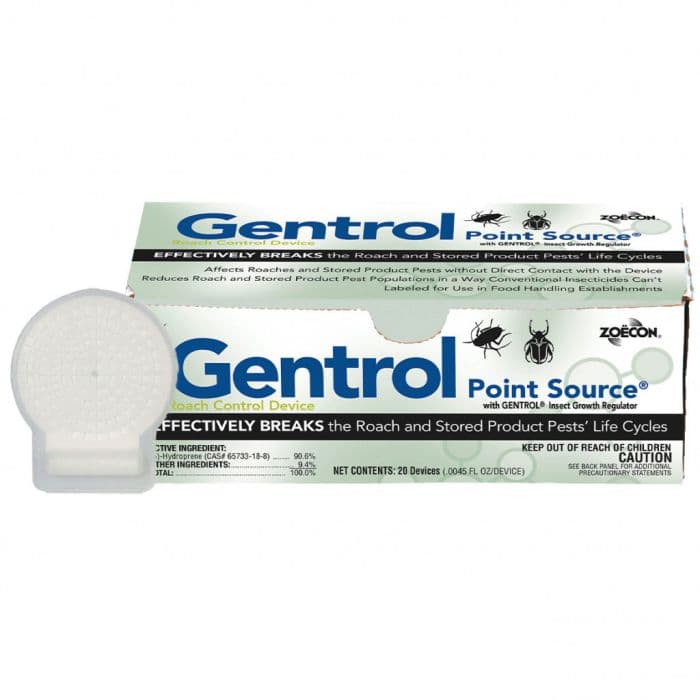
Gentrol Point Source IGR
Gentrol Point Source uses a controlled-release point-source format to dispense a juvenile hormone analog continuously at infestation hotspots, offering long-duration suppression with minimal worker interaction or frequent reapplications. Its technical advantage lies in sustained, localized disruption of pest development—making it especially valuable in confined or indoor sites—while higher per-unit costs are often offset by reduced labor and the ability to pair with quick-acting larvicides for integrated programs.
Estimated$50 – $100
Altosid Pro-G Mosquito Larvicide
Altosid Pro-G is an extended-release granular insect growth regulator formulated to prevent mosquito larvae from emerging as adults, providing weeks to months of residual control that makes it especially cost-effective for large or recurring breeding sites. Compared with quick-acting biological larvicides like BTI dunks and bits, Altosid trades faster knockdown for longer persistence and reduced reapplication frequency, making it a strong technical and financial choice for municipal and commercial programs focused on suppression over time.

Estimated$90 – $200
VectoBac 200G Biological Larvicide
VectoBac 200G is a granular Bti formulation designed for large-scale and municipal larval control, offering rapid larval mortality and good coverage in catch basins, marshes, and large water bodies; its professional-grade packaging and application flexibility make it more efficient per-acre than small-dose consumer dunks. Compared to Summit Dunks it provides scalable operational advantages and compared to methoprene IGRs like Precor it gives immediate larval kill, making it a preferred tactical choice when immediate reduction of larval density is required in integrated programs.

We may earn a commission on purchases. It never affects our rankings.
Estimated$40 – $90
Precor IGR Concentrate
Precor IGR Concentrate is (S)-methoprene 1.2%, an insect growth regulator formulated as an indoor premise treatment for fleas. Diluted and applied to flea harbourages — carpet, upholstered furniture, pet bedding and throw rugs — it stops flea eggs and larvae from developing into biting adults, so it suppresses the next generation rather than killing the adults already present. It is normally paired with an adulticide and with vacuuming and laundering to deal with the existing population. It is the odd one out on this list: unlike the Bti and mosquito-larvicide entries here it is not labelled for mosquito larvae and not labelled for application to standing water, and its registration is US EPA (Reg. No. 2724-352).
Estimated$80 – $160
Research and science behind IGRs and larvicides
IGRs and biological larvicides operate through well-documented modes of action and have a strong evidence base for efficacy and safety when used according to label directions. Scientific research and regulatory assessments, including work reviewed by Health Canada PMRA, Agriculture and Agri-Food Canada and academic entomology programs, support their use for reducing immature insect populations, delaying resistance development, and limiting non-target impacts. Below are clear, beginner-friendly summaries of the main scientific points and practical implications for barn use.
How they work: Juvenile hormone analogues and chitin synthesis inhibitors disrupt development so larvae cannot mature to reproductive adults. Microbial larvicides such as Bacillus thuringiensis israelensis (Bti) produce toxins that specifically target mosquito and certain fly larvae.
Efficacy data: Field and laboratory studies show IGRs and Bti formulations significantly reduce larval populations and future adult emergence when applied to breeding or feeding sites, lowering pest pressure without repeated broad-spectrum insecticide sprays.
Resistance management: Because IGRs act on developmental pathways distinct from conventional neurotoxic insecticides, rotating products and combining biological larvicides with sanitation lowers the chance that pests will develop resistance.
Safety and non-target effects: Regulatory reviews emphasize that properly labeled biological larvicides, and many IGRs at label rates, have limited toxicity to mammals, birds and most beneficial insects. Still, careful application to target areas minimizes any risk to non-target organisms.
Best practices: Scientific guidance recommends integrating IGRs and larvicides with sanitation, moisture control, and physical exclusion for stable bedding and barn environments. Correct dosage, timing and product selection are critical for reliable results.
Canadian legal status: check the label for a Health Canada PCP registration number, not just an EPA number. Registration is product-specific, so a brand family being sold in Canada does not mean every SKU in that family is registered here; the label also fixes which sites and pests the product may legally be used for.
Match the product to the right pest and site: a mosquito larvicide is applied to standing water, a premise IGR is applied to indoor surfaces, and a feed-through fly-control IGR for horses is fed in the daily ration so the active passes into manure and stops fly larvae developing there. Feed-throughs are regulated as feed/veterinary products rather than as premise larvicides and are a separate class from the products on this page. Always follow the application directions on the label of the pack you buy — never a rate quoted from a third-party page.
Frequently Asked Questions
Do insect growth regulators and larvicides have to be PMRA-registered to be sold in Canada?
Yes. Anything sold with a pest-control claim is a pest control product under the Pest Control Products Act and must be registered with Health Canada's PMRA, with a PCP registration number printed on the label. A US EPA registration number is not a substitute: a product registered only with the EPA is not approved for sale or import into Canada, even if a US retailer will ship it north. Registration is per product, so check the PCP number on the exact pack you are buying.
Which of the products on this page are confirmed for the Canadian market?
The Bti (Bacillus thuringiensis israelensis) larvicides. VectoBac 200G appears in Health Canada's pesticide label registry as a commercial-class biological larvicide with a Canadian label, and Summit Mosquito Dunks and Mosquito Bits are sold through Canadian retail. Gentrol Point Source ((S)-hydroprene), NyGuard IGR Concentrate (pyriproxyfen) and Precor IGR Concentrate ((S)-methoprene) are US EPA-registered and we could not confirm a Canadian PCP registration for them — verify the label before ordering.
Is Precor IGR Concentrate a mosquito larvicide for standing water?
No. Precor IGR Concentrate is (S)-methoprene 1.2% (US EPA Reg. No. 2724-352) and its label covers indoor flea control — carpets, upholstered furniture, pet bedding and throw rugs. It is not labelled for mosquito larvae and not labelled for application to standing water. For standing water use a product whose own label lists that site, such as a Bti dunk, bit or granule.
Which product should I pick for standing water mosquitoes?
Summit Mosquito Dunks: Bti briquettes made for birdbaths, gutters, rain barrels and other small standing-water sites, with the manufacturer rating each dunk at about 30 days. Bti dunks and bits of this type are sold in Canada. For larger or commercial water bodies, VectoBac 200G is the granular Bti equivalent and carries a Canadian label. Follow the directions on the pack you buy.
Conclusion
In Canada, IGRs and larvicides are a practical, lower-impact approach to protecting stables, bedding and barn supplies from fly and stored-product pest pressure. The top options reviewed here include Summit Mosquito Dunks, Summit Mosquito Bits, Nyguard IGR Concentrate, Gentrol Point Source IGR, Altosid Pro-G Mosquito Larvicide, VectoBac 200G Biological Larvicide, and Precor IGR Concentrate. Their Canadian standing is not the same across the list. The Bti products are the ones we could confirm for the Canadian market: VectoBac 200G appears in Health Canada's pesticide label registry as a commercial-class biological larvicide with a Canadian label, and Summit's Bti dunks and bits are sold through Canadian retail. That is why VectoBac 200G is our best overall pick for mixed-use barn settings where proven larval control and environmental safety are both priorities. Gentrol Point Source ((S)-hydroprene), NyGuard IGR Concentrate (pyriproxyfen) and Precor IGR Concentrate ((S)-methoprene) are US EPA-registered products for which we could not confirm a Canadian PCP registration — several US retailers state outright that Gentrol Point Source cannot be shipped to Canada. Treat those three as reference entries and verify a PCP number before buying. Note also that Precor IGR Concentrate is an indoor flea premise IGR, not a mosquito larvicide, and is not labelled for application to standing water; and that none of the seven is a feed-through fly-control IGR for horses, which is a different, separately regulated product class. We hope you found what you were looking for; you can refine or expand your search using the site search to compare labels, PMRA status, application methods and pack sizes.