

Top 5 Automated Humidity Management Systems in Canada for 2025 — Expert-Verified Picks for Barn Ventilation, Water Savings, and Remote IoT Control (Find the Right Fit for Your Operation)
Automated humidity management systems integrate sensors, controllers, and actuators to maintain optimal barn humidity and support ventilation strategies while minimizing water use. In Canada’s diverse agricultural regions, growers and livestock producers prioritize systems that deliver reliable performance in cold winters and humid summers, reduce respiratory problems and mold risk, and lower energy and water costs. Buyers are looking for solutions with accurate sensors, flexible scheduling, seamless integration with existing climate controllers, and remote monitoring or IoT connectivity for predictive control. Market appeal is driven by tighter animal welfare standards, rising energy costs, and the need for operational data to make evidence-based decisions — all of which make automated humidity control a practical investment for modern Canadian farms and greenhouses.
Inception's AI took the time to understand this market in Canada · · How we pickWe may earn a commission on purchases. It never affects our rankings.
Top Picks Summary
Munters DryCool Systems ERV
Munters DryCool Systems ERV leads for automated humidity management where energy efficiency and large-scale continuous dehumidification are required; its integrated energy-recovery ventilation and desiccant-assisted approach reduces operating costs compared with electric-only dehumidifiers. Unlike the controller-first solutions on this list (Fancom, SKOV, Big Dutchman), Munters supplies the mechanical humidity removal core, making it the best-in-class choice for facilities that need guaranteed dew point control and lower long-term energy bills.

Estimated$15,000 – $35,000
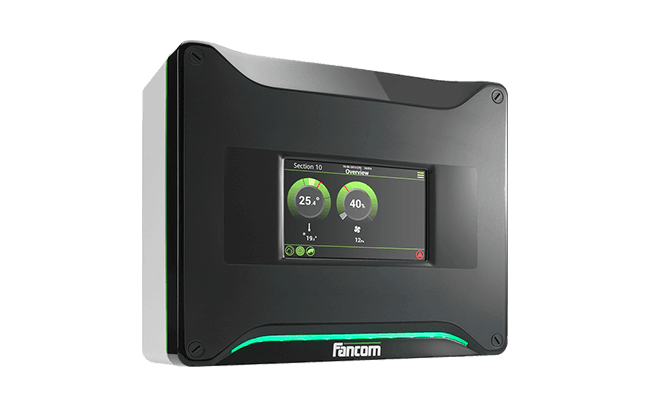
Fancom Lumina 21 Climate Controller
Fancom Lumina 21 is a market-leading climate controller prized for intuitive farm- and greenhouse-focused humidity control, strong algorithmic management, and cloud connectivity that simplify remote monitoring and automation. Financially it often lowers total project cost by enabling precise use of existing humidification/dehumidification hardware rather than forcing full equipment replacement, and it compares favorably to SKOV and Big Dutchman on ease-of-use and modular integrations for mid-sized operations.
Estimated$1,200 – $2,400
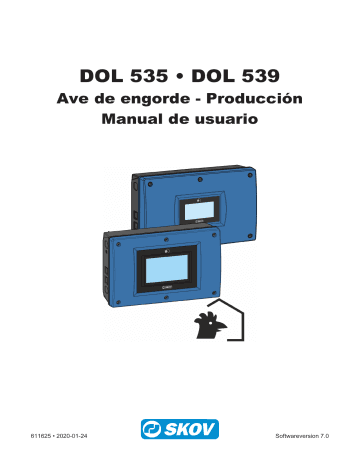
SKOV DOL 539 Climate Computer
The SKOV DOL 539 is positioned as a high-precision climate computer that excels where tight humidity setpoints and predictive control are critical; its advanced sensor integration and adaptive algorithms reduce energy waste by modulating HVAC and humidification hardware more precisely than basic controllers. Technically it rivals Fancom on connectivity but pulls ahead for large installations requiring complex control logic, offering a measurable operating-cost advantage when paired with variable-speed equipment.
Estimated$2,000 – $4,500
Big Dutchman ViperTouch Controller
Big Dutchman ViperTouch is a robust, touchscreen-based controller designed for turnkey agricultural environments where integrated control of ventilation, heating and humidity is required; its strengths are seamless compatibility with Big Dutchman equipment and simplified installation that reduces labor and maintenance costs. While it’s not a dedicated dehumidifier like Munters, ViperTouch provides a financially attractive path to automated humidity management through system-level coordination, especially in poultry and livestock operations.

Estimated$900 – $2,200
What Research and Field Studies Say About Humidity Control
Controlled humidity and coordinated ventilation are backed by agricultural research and field trials that demonstrate benefits for animal health, building longevity, and resource efficiency. Studies from Canadian and international agricultural research centers emphasize that maintaining targeted relative humidity (RH) reduces condensation, ammonia buildup, mold growth, and respiratory stress in livestock. When humidity control is combined with ventilation scheduling and energy recovery, farms can reduce overall heating and ventilation energy use while improving indoor air quality. Sensor accuracy, appropriate control logic, and proper commissioning are repeatedly cited as critical success factors.
Animal health and performance: Research from agricultural universities and extension services (including Canadian institutions) links stable barn humidity and proper ventilation to reduced respiratory disease incidence and improved animal comfort.
Building protection and mold prevention: Controlled RH reduces condensation on walls and ceilings, lowering mold risks and protecting insulation and equipment.
Energy and water efficiency: Modeling and field trials show coordinated humidity control with ventilation and heat-recovery devices can lower heating and ventilation demand and minimize unnecessary water consumption for humidification.
Importance of sensors and commissioning: Multiple studies stress that the accuracy and placement of humidity and temperature sensors, along with professional commissioning of control algorithms, determine real-world outcomes more than any single hardware choice.
IoT and predictive control advantages: Emerging trials demonstrate that remote monitoring and predictive algorithms reduce downtime and allow proactive maintenance, translating to fewer production interruptions and better long-term ROI.
Frequently Asked Questions
Which product should I choose for poultry humidity control?
For poultry houses needing cloud-based remote monitoring, choose Fancom Lumina 21 Climate Controller with multi-sensor inputs, scheduling, and automated control of ventilation and humidification; it’s rated 4.1.
What exact humidity capability does the SKOV DOL 539 provide?
SKOV DOL 539 Climate Computer uses advanced PID and programmable logic tailored for precise humidity and climate profiles, with modular I/O plus scalable network connectivity; it’s rated 4.4.
How does price value compare between Munters DryCool and Fancom Lumina 21?
Price and exact cost aren’t provided for Munters DryCool Systems ERV or Fancom Lumina 21 Climate Controller, so only their ratings and features can be compared; Munters is rated 4.1 and Fancom is rated 4.1.
Does Munters DryCool Systems ERV support continuous dehumidification?
Munters DryCool Systems ERV is built for continuous operation with corrosion-resistant components and accessible service points, combining high-capacity energy recovery ventilation with integrated dehumidification; it’s rated 4.5.
Conclusion
In the Canadian context, automated humidity management is a practical way to improve animal welfare, protect buildings, and reduce operating costs. The five systems featured here — Munters DryCool Systems ERV, Fancom Lumina 21 Climate Controller, SKOV DOL 539 Climate Computer, Big Dutchman ViperTouch Controller, and Hydrofogger Pro-6 Zone System — represent different strengths: Munters DryCool Systems ERV excels at whole-building dehumidification with energy recovery for cold climates and is a strong all-around choice for many Canadian operations; Fancom Lumina 21 shines for integrated farm-level climate control and remote management; SKOV DOL 539 is tailored to poultry and precision climate strategies; Big Dutchman ViperTouch offers a modern interface and retrofit flexibility; Hydrofogger Pro-6 Zone provides focused, low-water zone humidification. I hope you found what you were looking for — you can refine or expand your search using the site search to compare system specs, seasonal performance, or dealer support in your province.