

Top 5 Feeder Insects in Canada 2026 — What 'Sustainably Farmed' Actually Covers, and the Calcium Problem It Doesn't
Feeder insects are only as good as what you do to them before they reach the animal. Crickets carry a calcium-to-phosphorus ratio of roughly 1:3 and mealworms are worse, against the 1.5:1 to 2:1 an insectivorous reptile actually needs — so every product on this page has to be gut-loaded and calcium-dusted no matter how well it was farmed. Black soldier fly larvae are the one common feeder that meets the ratio unaided at about 4.5:1, and none of the five options below are BSFL. On the sustainability question in the slug, the honest picture for Canada in 2026 is narrower than the category's marketing: Entomo Farms in Norwood, Ontario is a genuine vertically integrated Canadian insect farm that holds Ecocert organic certification on its organic line, while the other three suppliers here are US pet-trade companies that publish no audited environmental claim at all. Two practical Canadian constraints before you buy: live Blaptica dubia need a CFIA plant-protection import permit under Directive D-12-02, which is why the dubia option below is vacuum-packed and pre-killed rather than a live colony; and dried or roasted insects will not trigger a feeding response in many reptiles that hunt by movement.
Inception's AI took the time to understand this market in Canada · · How we pickWe may earn a commission on purchases. It never affects our rankings.
Top Picks Summary
Entomo Farms Whole Roasted Crickets
Entomo Farms in Norwood, Ontario is the one supplier on this page whose sustainability claim survives checking: a vertically integrated Canadian cricket and mealworm farm operating since 2014, with Ecocert organic certification on its organic range. Two caveats matter for a feeder-insect buyer. This is a human-grade edible-insect product — the 113 g bag is merchandised for paleo and keto diets, and at CA$16.95 the per-gram cost is far above pet-trade feeders. And because the crickets are roasted and dried, they carry more fat per gram than live crickets and will not move, so reptiles that strike at motion tend to ignore them. As bird feed, as a supplement, or for insectivores that accept dried insects, the traceability is genuine and unusual in this category.

Estimated$15 – $20
Next Millennium Farms Cricket Powder
This is Entomo Farms cricket powder listed under Next Millennium Farms, the company's pre-2016 name — same Norwood, Ontario farm, same certification position. Milling to a powder buys consistency and easy dosing into formulated feeds or supplements, and removes the mortality and cold-chain losses that live feeders carry. What it cannot do is feed a reptile that needs to hunt: powder has no movement cue and works only as an additive. At CA$16.95 for 113 g it sits at the same price as the whole roasted crickets, so treat the two as a format choice rather than a value comparison.

Estimated$15 – $20
Fluker's Fresh Feeder Vac Pack Dubia Roaches
The reason to buy pre-killed dubia in Canada is regulatory, not environmental. Live Blaptica dubia require a CFIA plant-protection import permit under Directive D-12-02, which puts a live colony out of reach for most Canadian keepers. Fluker's vacuum-packed roaches deliver the dubia nutritional profile without that problem, alongside the usual conveniences of a pre-killed feeder: no escape risk, no colony maintenance, no thawing. Fluker's is a Louisiana company and publishes no third-party sustainability audit, so read this tile as a regulatory and convenience pick rather than a low-impact one. Being pre-killed, the roaches do not move, so animals that strike at motion may need tong-feeding or may refuse them.

We may earn a commission on purchases. It never affects our rankings.
$8.39CAD
Evolution Reptiles Live Mealworms
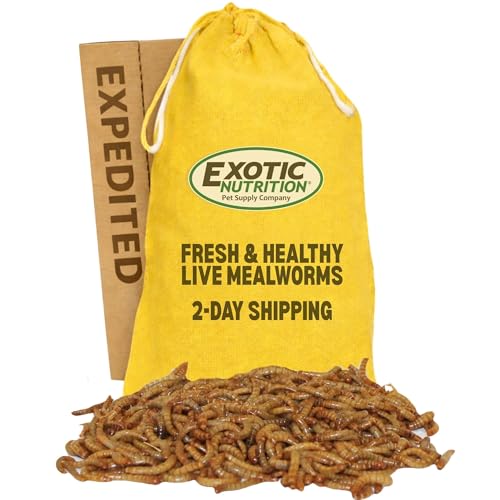
This listing resolves to Exotic Nutrition large live mealworms in a 1000-count pack. Exotic Nutrition is a pet-supply company based in Newport News, Virginia; it describes its mealworms as US-raised from responsible growers, which is a sourcing statement rather than a certification, and it publishes no third-party environmental audit. Live mealworms give you the movement cue that dried insects lack, and they store easily under refrigeration — but they are the most calcium-inverted common feeder, so gut-loading and dusting matter more here than anywhere else on this page. Because the supplier is US-based and live insects travel poorly across the border, especially in winter, confirm shipping to your province before ordering.
Northern Gecko Banded Crickets
This listing resolves to Josh's Frogs 1-inch large adult banded crickets in a 1000-count pack, priced at CA$109.82. Josh's Frogs is based in Owosso, Michigan and states that it ships within the United States only, so Canadian delivery is the first thing to confirm — that price is for a bulk quantity aimed at keepers feeding multiple animals, not a casual purchase. Banded crickets themselves are a sound choice: they are hardier and quieter than common house crickets and size-graded packs let you match prey size to the animal, which reduces waste. There is no environmental certification behind this product, and like all crickets it arrives at roughly a 1:3 calcium-to-phosphorus ratio, so gut-loading and dusting are mandatory.

Estimated$100 – $120
What the Research Supports — and Where These Products Fall Outside It
Two separate questions get blurred together in this category. The first is whether insect farming is environmentally better than conventional livestock at scale — the research broadly says yes. The second is whether any particular bag on a shelf was farmed that way, which is a certification and traceability question that most feeder-insect brands simply do not answer. The nutrition literature is clearer still, and it points at the keeper rather than the farm.
The calcium ratio is the fact that decides outcomes: crickets sit near 0.33:1 calcium to phosphorus and mealworms are more inverted still, versus the 1.5:1–2:1 target. Untreated, either one drives metabolic bone disease in growing reptiles. Gut-loading with a calcium-rich diet plus dusting is not optional refinement — it is the whole intervention.
Gut-loading works and is measurable: properly formulated gut-load diets have been shown to raise the calcium content of crickets, mealworms, waxworms and silkworms several-fold, which is why a cheap well-loaded feeder beats an expensive poorly-loaded one.
Black soldier fly larvae are the exception to the ratio problem, at roughly 4.5:1, and are also the species most often reared on upcycled food waste. If the sustainability angle is your priority, BSFL is the substantiated choice — and it is not represented in this lineup.
Reduced environmental footprint is real at the farm level: FAO analyses and life-cycle studies show many insect species emit fewer greenhouse gases and need less land than conventional livestock when reared at scale. That finding describes the sector, not any individual SKU.
Certification is what separates a claim from a fact: Ecocert organic, BRC and comparable third-party audits are verifiable. 'Sustainably farmed' printed on a feeder-insect label with no audit behind it is an assertion, and in this category it usually is one.
Format changes the nutrition: roasted and dried insects run substantially higher in fat per gram than the live equivalent and lose the movement cue that many reptiles need to strike, so they work as supplements or for birds far better than as a live-feeder replacement.
Frequently Asked Questions
Do I still need calcium dusting if the insects are sustainably farmed?
Yes. Farming practice has no effect on the calcium-to-phosphorus ratio. Crickets are about 0.33:1 and mealworms are more inverted, while an insectivorous reptile needs roughly 1.5:1 to 2:1. Every product on this page needs gut-loading and calcium dusting before feeding, regardless of how it was raised.
Are dubia roaches legal in Canada?
Live Blaptica dubia are restricted. Importing them requires a CFIA plant-protection import permit under Directive D-12-02, so keeping or breeding a live colony is not practical for most Canadians without authorisation. Fluker's Fresh Feeder Vac Pack Dubia Roaches avoid this because they are pre-killed and vacuum-packed, which is the real reason to choose them here — not their environmental profile.
Which of these actually has sustainability certification?
Only the Entomo Farms products. Entomo Farms in Norwood, Ontario is a vertically integrated Canadian insect farm holding Ecocert organic certification on its organic range, and the cricket powder still listed here as Next Millennium Farms is the same company under its former name. The Fluker's, Exotic Nutrition and Josh's Frogs items are US pet-trade products with no published third-party environmental audit.
Is Entomo Farms Whole Roasted Crickets better value than the cricket powder?
They are priced the same at CA$16.95 for a 113 g bag, so the choice is format, not value. Whole roasted crickets suit birds and small insectivores that will take a dried insect; the powder is easier to dose into formulated diets or supplements. Both are sold as human food, which is why the per-gram cost is high for routine feeder use.
Conclusion
The five options here split cleanly by what can actually be verified. Entomo Farms Whole Roasted Crickets and the cricket powder listed under its former name, Next Millennium Farms, are the only two backed by a named Canadian farm with real certification — but both are sold as human food, at human-food prices, which makes them poor economics as a staple feeder and better suited to birds, small insectivores or supplementation. Fluker's Fresh Feeder Vac Pack Dubia Roaches earn their place on regulation rather than ecology: pre-killed dubia sidestep the CFIA permit that live ones require in Canada. The two live options, listed here as Evolution Reptiles Live Mealworms and Northern Gecko Banded Crickets, link to US suppliers — Exotic Nutrition in Virginia and Josh's Frogs in Michigan — so confirm live shipping to your province before ordering, particularly in winter. For most Canadian keepers the best answer is not on this page at all: a local live-insect supplier plus a proper gut-load and calcium supplement will outperform any of these on both cost and animal health.