Best Red Light Therapy Devices in Canada 2026: Top 5 for Skin, Pain Relief, and Recovery
Published on Friday, January 2, 2026
Red light therapy devices use red (roughly 630 to 670 nm) and near-infrared (roughly 810 to 850 nm) LEDs to deliver light to skin and tissue, a practice called photobiomodulation. The category runs from compact handhelds for spot treatment to full-height panels for whole-body sessions. The evidence is strongest for skin — collagen density and fine lines — and modest for short-term pain relief; claims about weight loss, cellulite, detox or thyroid function are not supported. In Canada a device that makes a therapeutic claim is a Class II medical device and needs a Health Canada Medical Device Licence, yet most panels sold online here are marketed as general wellness products instead, so it is worth checking before you buy on the strength of a medical promise. Beyond that, Canadian buyers weigh treated area, session length, bilingual documentation, a warranty that can actually be claimed from Canada, and whether the price includes a stand and eye protection.
Top Picks Summary
Rouge G3 Pro
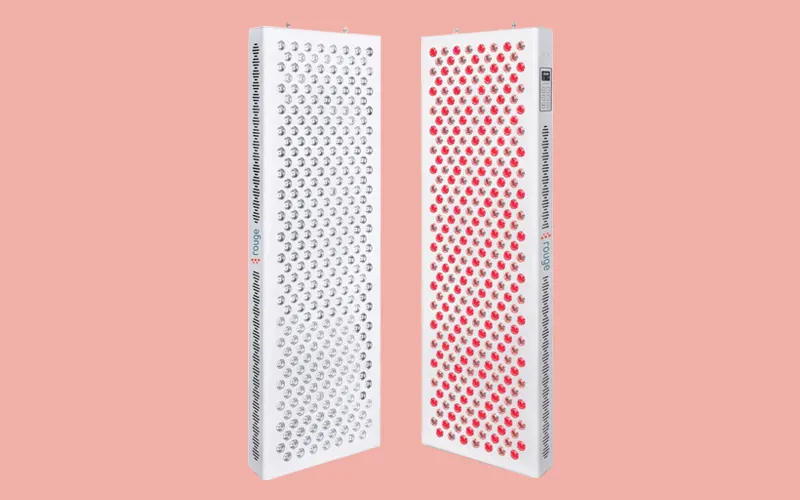
The Rouge G3 Pro is the full-size clinical option on this list: a 300-LED panel roughly 36 inches tall by 12 inches wide running 660 nm red and 850 nm near-infrared, with thermal management built for back-to-back sessions. Independent bench testing by Light Therapy Insiders measured 81 mW/cm2 averaged across nine points at six inches, peaking at 97 mW/cm2 — a figure worth noting because most quoted irradiance numbers are zero-distance peaks. It costs more than the consumer-focused units here and covers a larger area per session, which suits clinics that care about throughput. Rouge is Canadian, with its head office in Quebec, so warranty and support are handled domestically. The trade-off against a device like the Kala Elite is portability and price.
$750 – $950
Kala Elite
The Kala Red Light Elite is a full-body panel rather than the handheld its name suggests: 231 LEDs across 660 nm red and 850 nm near-infrared, shipped with a stand and protective goggles. It is sold on Amazon.ca as a wellness device, not as a Health Canada licensed medical device, and the listing makes no therapeutic claim. Against the Rouge G3 Pro it offers a comparable format at a similar price point but without published independent irradiance testing, so the output figures you will see quoted for it are the manufacturer's own. It suits someone who wants whole-body coverage and domestic Amazon returns rather than a direct import.

Rojo Therapy Refine 900
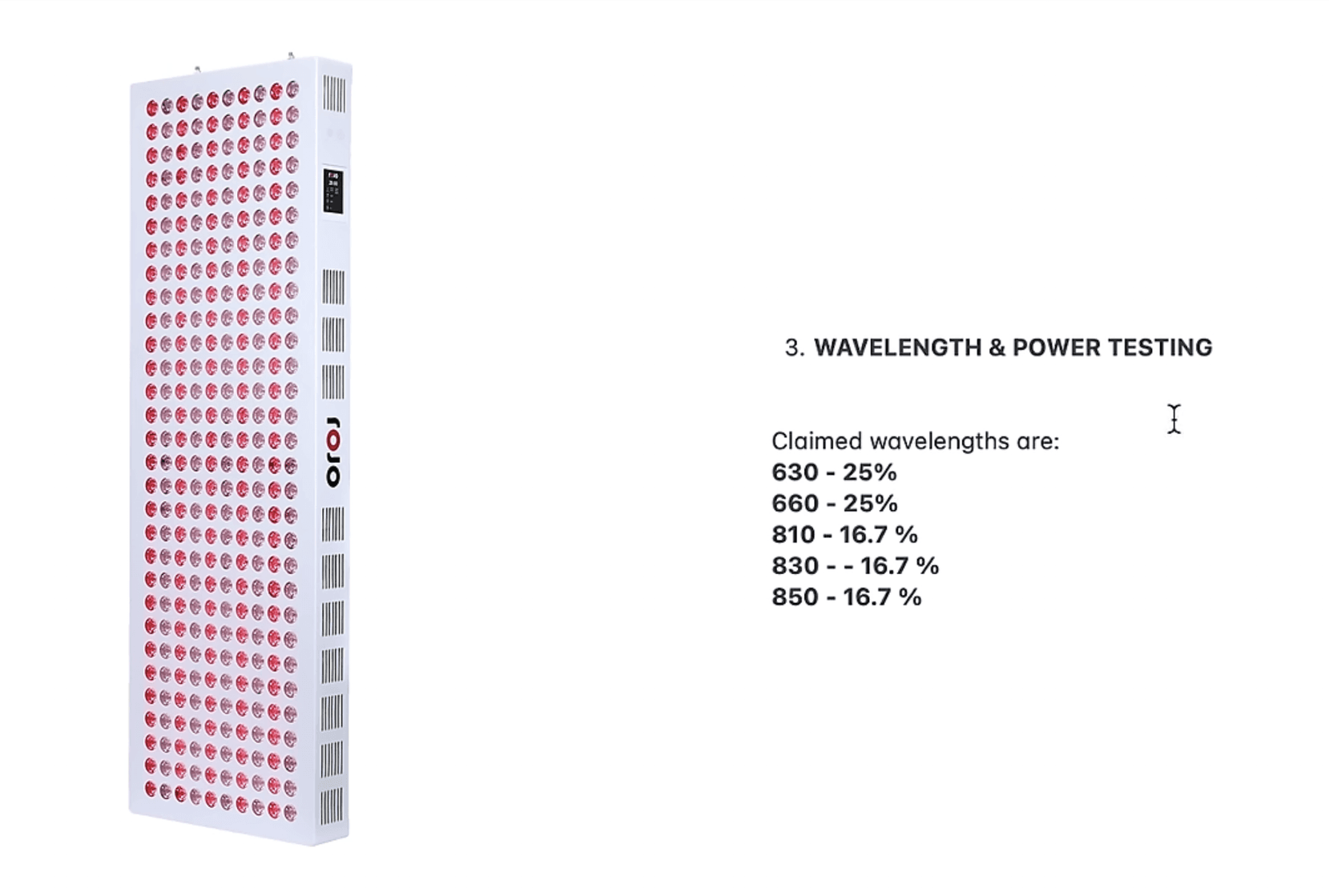
The Rojo Therapy Refine 900 is positioned as a value-minded hybrid, combining a compact panel with a targeted wand to give users both wide-area and precision treatments in one package. It is priced below professional systems yet offers configurable intensity settings and multiple wavelength options that make it more versatile than single-purpose budget units. Compared to Vellgus Pro V2's calibration-focused approach and Rouge G3 Pro's raw power, the Refine 900 aims to deliver practical versatility for small clinics and serious home users without the highest-end cost.
$1,300 – $1,800
Vellgus Pro V2
Vellgus Pro V2 stakes its position on engineering precision and repeatable dosing, featuring factory-calibrated output, modular panels, and professional-grade connectivity for clinics that require reproducible results across sessions. Financially it sits between the high-end Rouge G3 Pro and consumer offerings, offering clinics an economical route to professional features like scheduled dosing and modular expansion. In contrast to the Infraredi Pro Max which prioritizes broad, affordable coverage, the Vellgus Pro V2 emphasizes measurement accuracy and clinical workflow integration.

Infraredi Pro Max
Infraredi Pro Max targets coverage-for-dollar: a large-format panel priced to make full-body sessions accessible at home. Infraredi is an Australian-owned brand, so Canadian buyers should confirm shipping, warranty handling and return terms before ordering. Its published wavelength and irradiance figures come from the manufacturer and have not been independently bench-tested that we could find, which is the main reason it sits below the Rouge G3 Pro here despite a similar panel format. Compared with the more control-focused systems on this list, it trades advanced dosing features for treated area.

Science and Evidence Behind Red Light Therapy
Red and near-infrared light therapy is studied on the premise that cells absorb specific wavelengths and respond with biochemical changes. The research base is real but uneven, and the distinction that matters most for a home buyer is this: the strongest trials use clinician-administered lasers or research-grade LED arrays at controlled doses, and those results do not automatically transfer to a consumer panel used at home. Evidence quality varies sharply by condition.
Mechanism: the leading hypothesis is that red (about 630 to 680 nm) and near-infrared (about 800 to 880 nm) light is absorbed by mitochondrial chromophores such as cytochrome c oxidase, raising ATP production. It remains a hypothesis rather than settled science, and on its own it does not establish any clinical benefit.
Skin: the best-supported use. Controlled trials have shown measurable gains in collagen density and reductions in fine lines over roughly two to three months of repeated sessions. Effects build slowly and fade if you stop.
Pain: meta-analyses of low-level laser therapy report modest short-term pain reduction in knee osteoarthritis and some tendinopathies, but those trials use specific laser doses delivered by clinicians. A home panel is not equivalent and is not a substitute for treatment.
Athletic recovery: several trials report lower muscle-damage markers and faster recovery when light is applied around intense exercise. Sample sizes are small and the devices used are typically research-grade rather than consumer panels.
What the evidence does not support: weight loss, cellulite reduction, detox, thyroid conditions or depression from a home red light panel. Hair growth is one of the few indications for which specific devices — laser caps and combs — have actually been licensed, and only for that use.
Dose and safety: outcomes depend on wavelength, irradiance in mW/cm2, distance, session length and total dose. Headline irradiance figures are often measured at zero distance with a solar meter and overstate what reaches you at a normal 15 to 30 cm treatment distance, so treat them sceptically and ask for the measurement distance. Use the supplied eye protection, and speak to a clinician first if you take photosensitising medication or have a skin condition under investigation.
Canadian regulation: a red light device making a therapeutic claim is a Class II medical device here and requires a Health Canada Medical Device Licence, searchable in the MDALL database. "FDA cleared" is a United States clearance and carries no Canadian standing. Many well-known panel brands are absent from MDALL and sell legally as wellness products only — which also means no regulator has reviewed their health claims.
Frequently Asked Questions
Are red light therapy devices approved by Health Canada?
Only some are. A device that makes a therapeutic claim — pain relief, arthritis, wound healing — is a Class II medical device in Canada and needs a Health Canada Medical Device Licence, which you can search in the MDALL database. Most consumer panels sold online in Canada are not licensed and are sold as general wellness products. "FDA cleared" is a United States clearance and has no Canadian standing.
What does the evidence for red light therapy actually support?
Skin is the best-supported use: controlled trials show gradual gains in collagen density and reduced fine lines over about two to three months of repeated sessions. Meta-analyses of low-level laser therapy also report modest short-term pain relief in knee osteoarthritis and some tendinopathies, but at clinician-delivered doses rather than home-panel doses. There is no good evidence that a home red light panel causes weight loss, reduces cellulite, detoxes, or treats thyroid disease or depression.
What wavelengths does the Rouge G3 Pro use?
660 nm red and 850 nm near-infrared, and only those two. Independent bench testing by Light Therapy Insiders measured 653 to 665 nm for the red band and 856 nm for near-infrared across a 300-LED panel roughly 36 inches tall by 12 inches wide. It does not emit 630 nm or 810 nm, which some competing panels add.
How should I read an irradiance figure on a red light panel?
Sceptically, and never without the distance. Manufacturers usually quote a peak reading taken at zero distance with a solar meter, which overstates the dose you get at a normal 15 to 30 cm treatment distance. Independent testing of the Rouge Pro G3, for example, found a 97 mW/cm2 peak but an 81 mW/cm2 average across nine points at six inches. Always ask for both the distance and the measurement method.
Conclusion
Canada's red light market now runs from handheld spot devices to full-height panels, and the differences that matter are wavelength coverage, treated area, real irradiance at your actual treatment distance, and whether a warranty can be claimed from Canada. The five covered here are the Rouge G3 Pro, Kala Elite, Rojo Therapy Refine 900, Vellgus Pro V2 and Infraredi Pro Max. Rouge is Canadian-based and the only one of the five with independently measured output we could verify, which makes it the easiest to check before you spend; Infraredi and Rojo are Australian brands, so factor in support and return logistics. Before buying on the strength of a medical claim, look the device up in Health Canada's MDALL licence database — if it is not listed, it is a wellness product, whatever the marketing says.