

Best Inflatable Freestanding Backpacking Tents in Canada — Top 6 for 2026
Air-beam or inflatable freestanding backpacking tents replace traditional poles with inflatable tubes to deliver very fast pitching, improved internal volume, and a more comfortable liveable space. Advances through 2026 in low-pressure beam design, reinforced fabrics, and better repair kits have made inflatable options practical for shorter backpacking trips and multi-day outings that start from a car or hut. In Canada, where conditions range from wet coastal rain to alpine wind and cold, these tents appeal to recreational backpackers, weekend bikepackers, and hut-to-hut travelers who value quick setup, roomy interiors for changing layers, and a higher liveable space per gram than many pole-based models. Manufacturers have responded to Canadian needs with insulated air cores, stronger TPU and coated ripstop fabrics, taped seams for waterproofing, and improved puncture repair solutions so that air-beam tents can handle damp, variable terrain while still being easy to use on the trail.
Inception's AI took the time to understand this market in Canada · · How we pickWe may earn a commission on purchases. It never affects our rankings.
Top Picks Summary
Heimplanet The Cave
Heimplanet's The Cave earns a top spot for its rugged inflatable geodesic frame and premium materials that deliver reliable freestanding performance in harsh conditions. Compared with the other tents here, The Cave prioritizes storm-handling and long-term durability over absolute ultralight metrics, making it a good pick for backpackers willing to pay a bit more for confidence in bad weather.

Heimplanet Fistral
Heimplanet's Fistral is a premium inflatable freestanding backpacking tent that earns its place for a balance of rugged airframe stability and compact packability. Its geodesic inflatable structure provides superior wind resistance and a quick pitch compared with budget air tents like Quechua, and it is more packable for fastpacking than many Vango models—at a higher price. For backpackers who prioritize durability and on-trail performance, the Fistral trades lower upfront cost for longer-term reliability and lighter carrying weight on multi-day routes.

Vango Airbeam Nevis 200
Vango's Airbeam Nevis 200 is the value leader, offering easy pump-up setup and a lightweight, freestanding inflatable layout at a budget-friendly price point. Compared with the premium Heimplanet and tech-focused NEMO entries, the Nevis sacrifices a degree of fabric quality and insulation in favor of fast pitching and cost efficiency, making it ideal for hikers who want inflatable convenience without a premium outlay.

Estimated$300 – $450
Quechua Air Seconds Fresh Black 2 Person
Quechua's Air Seconds Fresh & Black 2 Person is the budget-friendly, easy-to-pitch inflatable option designed for campers and entry-level backpackers who want convenience without a large investment. Its Fresh & Black fabric reduces interior light and heat and it sets up exceptionally fast compared with more technical (and more expensive) models like the Heimplanet Fistral or Vango Scafell, though it is generally heavier and less robust in extreme weather. If cost and simple, speedy pitching matter more than minimal pack weight or advanced wind stability, this model is the best value on the list.

Estimated$160 – $260
Vango Airbeam Scafell 200
Vango's AirBeam Scafell 200 occupies the middle ground with a spacious, well-ventilated inflatable shelter that emphasizes livable space and resilience for multi-night backpacking trips. It often delivers more internal volume and useful vestibule area than the lighter Heimplanet Kirra and better structural performance than the budget Quechua, while costing less than the top-tier Fistral—making it a strong price-to-performance compromise. For backpackers seeking durable, everyday usability without the premium weight trade-offs of high-end ultralight options, the Scafell is a practical choice.

Estimated$300 – $450
Heimplanet Kirra
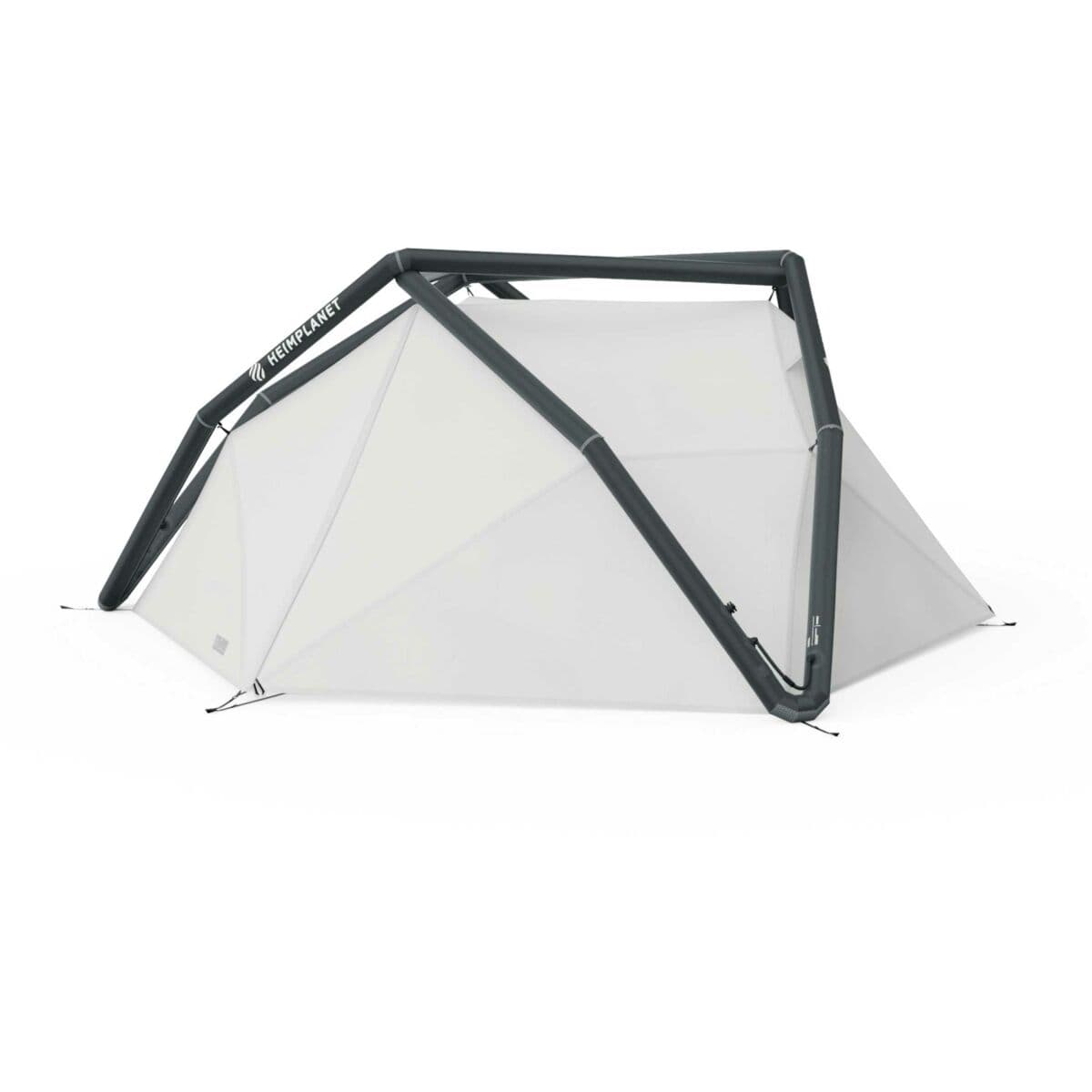
Heimplanet's Kirra is the brand's ultralight inflatable freestanding tent tailored for fastpackers who need minimal pack weight and a very compact stuff size. It deliberately sacrifices some interior volume and the cost-efficiency of models like Quechua and Vango to achieve a superior weight-to-durability ratio compared with heavier Scafell-style tents and the more robust Fistral. For self-supported backpacking where grams matter most, the Kirra offers a technically refined, premium lightweight solution.
What research and tests say about inflatable air-beam tents
Laboratory and field testing over the past decade, including independent outdoor test labs and manufacturer lab work, clarifies why inflatable air-beam tents are increasingly viable for short backpacking trips. Tests focus on structural stability, material durability, thermal behavior, and user ergonomics. Results are generally consistent: low-pressure air beams can provide stiffness comparable to pole frames for many conditions, modern coatings and reinforced fabrics improve puncture and abrasion resistance, and faster setup reduces exposure to weather while improving user comfort and safety.
Setup time and ergonomics: Field trials show air-beam systems cut average pitch time substantially versus multi-pole tents, which reduces exposure to cold, wet conditions and lowers cognitive load for novice users.
Structural performance: Wind tunnel and load testing indicate low-pressure beams distribute loads across the tube structure and can resist gusts when beams are arranged for cross-bracing, though proper staking and aerodynamic orientation remain important.
Materials science: Independent lab work on TPU, polyurethane, and silicone-coated ripstop fabrics demonstrates improved hydrolysis resistance and tear strength when materials are properly formulated and seam-taped, increasing longevity in wet climates.
Thermal and comfort benefits: Insulated air cores and improved inner geometry increase internal usable volume and can reduce conductive heat loss to the ground compared with thin-pole single-wall alternatives, aiding comfort on cool nights.
Durability and repairability: Tests of puncture scenarios show that durable outer fabrics, reinforced beam coverings, and included repair kits enable field repairs that restore structural integrity in most cases; carrying simple patch kits and spare valves is recommended.
Frequently Asked Questions
Is the Heimplanet Fistral better than Vango Nevis 200?
For most people, choose the Heimplanet Fistral if you want a robust inflatable beam structure with sealed seams for extended backpacking use; it’s rated 4.7 versus Vango Airbeam Nevis 200 at 4.2.
What setup style does the Heimplanet The Cave use?
Heimplanet The Cave uses an AirFrame inflatable structure for fast one-person setup, plus a freestanding, geodesic-influenced shape meant for strong wind stability; rating is 4.4.
How does price compare between Nevis 200 and Fistral?
No prices were provided for Vango Airbeam Nevis 200 or Heimplanet Fistral in the supplied info, so I can’t compare cost; ratings are 4.7 (Nevis 200) and 4.7 (Fistral).
Which tent is more compact for backpacking trips?
Vango Airbeam Nevis 200 is described as having a compact two-person footprint for backpacking and weekend trips, while Heimplanet Fistral emphasizes generous interior volume with a packable footprint; ratings are 4.7 and 4.7.
Conclusion
Inflatable freestanding backpacking tents bring a compelling mix of fast setup, roomy interiors, and improving durability for Canadian conditions. On this page we highlight six standouts for 2026: Heimplanet The Cave, Heimplanet Fistral, Vango Airbeam Nevis 200, Quechua Air Seconds Fresh & Black 2 Person, Vango Airbeam Scafell 200, and Heimplanet Kirra. For most Canadian weekend and hut-to-hut users seeking the best balance of weather resistance, weight, and liveable space, the Heimplanet Fistral stands out as the best overall choice among these six due to its proven beam design, robust fabrics, and thoughtful packability. We hope you found what you were looking for; if you want to refine or expand your search you can use the site search to filter by weight, capacity, season rating, or brand.