

Top 7 Ultralight Backpacking Tents in Canada: 2026 Guide
High-performance ultralight backpacking tents use cutting-edge materials and minimalist designs to push shelter weight to the lowest practical levels, letting experienced backpackers move faster and farther with less fatigue. These shelters appeal to hikers who accept tradeoffs in interior space and multi-use durability in exchange for dramatic reductions in pack weight. The single number that decides most comparisons is also the one most often quoted wrong: trail weight (canopy, inner and poles only) is what brands lead with, while packed weight adds stakes, guylines, stuff sacks and seam-sealing — routinely 100 to 200 g more than the headline figure, so compare like with like before you believe a spec sheet. A workable threshold for a genuinely ultralight shelter is roughly 1.13 kg (2.5 lb) or less per person. In the Canadian market, demand is driven by long-distance trails, fastpacking routes, and technical backcountry travel where weather protection, low bulk, and high strength-to-weight ratios matter. Modern options favour single-wall Dyneema Composite Fabric and performance-coated nylons, frameless or trekking-pole-supported geometries, and deliberate ventilation designs to manage condensation. Canadian buyers often prioritize robust seam and stake systems for wet and variable conditions, balanced with the desire for summit-to-shelter speed and reduced joint stress on multi-day treks.
Inception's AI took the time to understand this market in Canada · · How we pickWe may earn a commission on purchases. It never affects our rankings.
Top Picks Summary
Durston X-Mid Pro 2
Durston Gear's X-Mid Pro 2 earns its spot by blending true two-person livability with ultralight sensibilities: a low-slung, single-wall ridge design that gives generous vestibule and gear space while keeping pack weight down. Compared with the DCF Duplex Zip it generally costs less and trades a small weight penalty for greater abrasion resistance and value per person, and versus solo-focused shelters it offers superior interior space for two-up trips.

Estimated$900 – $1,100
Zpacks Duplex Zip
The Zpacks Duplex Zip is the market leader for two-person ultralight shelters thanks to full Dyneema Composite Fabric construction that combines exceptional strength-to-weight, waterproofing, and compressibility with modular features like a zippered entry and divider options. It typically outclasses textile-based two-person tents on pure pack weight and compactness, but commands a noticeably higher price than the Durston X-Mid Pro 2, appealing to users who prioritize minimum weight and DCF performance.

Tarptent StratoSpire Li
Tarptent's StratoSpire Li occupies the premium livability corner of ultralight shelters with a semi-freestanding Dyneema design that delivers excellent headroom, storm-shedding geometry and roomy interior comfort for solo or light two-person use. It generally sits above Durston's offerings on price but offers superior interior space and wind performance compared with minimalist solo tents like the Plex Solo, and competes with Zpacks on premium materials while favoring livability over the last possible ounces.

Hyperlite Mountain Gear Unbound 2P
The Unbound 2P is the market leader for ultralight backpacking tents thanks to its Dyneema Composite Fabric construction, which delivers an exceptional strength-to-weight ratio and outstanding weatherproofing for extended use. It commands a premium price but returns that cost in long-term durability, low stretch, and reliable seam performance that budget shelters can’t match. Compared with the other tents here, it prioritizes premium materials and technical resilience over the absolute lowest purchase price or the roomiest interior.

Big Agnes Fly Creek HV UL1
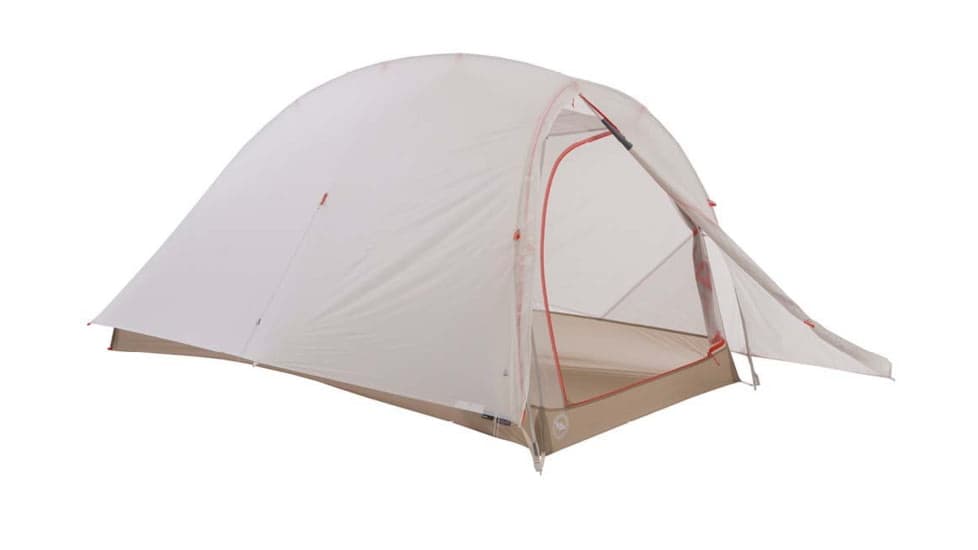
The Fly Creek HV UL1 is a value-oriented ultralight shelter that pairs proven DAC pole architecture with a user-friendly, pitch-anywhere design, making it a popular choice for thru-hikers who want dependable performance without premium material costs. It doesn’t reach the same extreme lightness or high-end weatherproofing as Dyneema shelters, but it is significantly more affordable and repairable in the field. Versus the Hyperlite and Nemo options it trades some cutting-edge materials for a lower sticker price and easier maintenance, while offering more structure and comfort than ultra-budget tarptents.
Gossamer Gear The One
The One targets solo ultralight backpackers who want the lowest possible pack weight on a tight budget, using a trekking-pole-supported tarptent layout to minimize materials and cost. It sacrifices some interior livability and extreme-weather robustness in exchange for exceptional value-per-ounce and easy DIY repairs on trail. Compared to Hyperlite and Nemo it favors minimalism and affordability over premium fabrics or two-person comfort, and compared to Big Agnes it typically costs less while achieving a lighter pack weight at the expense of freestanding convenience.

Nemo Hornet Elite OSMO 2P
The Hornet Elite OSMO 2P strikes a strong balance for ultralight backpacking by delivering a roomy two-person footprint and refined pole geometry while keeping overall weight competitive for pair use. It often sits between the Hyperlite and budget offerings on price, offering more interior comfort, dual vestibules and improved ventilation without the highest-cost materials. Against the others here, Nemo’s model emphasizes livability and thoughtful livable features per ounce, making it a compelling choice for partners who want true two-person shelter performance with minimal pack burden.

Estimated$600 – $900
Why ultralight shelters make a measurable difference
Research and field testing in outdoor physiology, textile science, and expedition logistics back the practical benefits of reducing carried weight. For hikers willing to trade interior space for lower mass, ultralight shelters change how energy is used on long days, influence sleep comfort through better condensation management, and require different care and pitching techniques to match their specialized materials. Understanding the scientific and practical foundations helps buyers choose a tent that provides the right balance of weight savings, protection, and durability for Canadian backcountry conditions.
Reduced energy cost: Field and lab studies show each kilogram removed from pack weight lowers metabolic cost and perceived exertion on sustained uphill and off-trail travel, which translates to faster daily mileage and less fatigue.
Material performance: Dyneema Composite Fabric (DCF) and high-tenacity, silicone or polyurethane coated nylons offer excellent strength-to-weight ratios and low stretch. Textile testing demonstrates high tensile strength and puncture resistance relative to their mass, though UV and abrasion resistance vary by construction.
Condensation and ventilation: Single-wall shelters emphasize careful vent placement and pitch technique. Research on microclimate inside tents indicates that ventilation design and user habits reduce condensation more effectively than material choice alone.
Weather and seam systems: Waterproof coating performance and seam construction are critical in prolonged wet conditions common in many Canadian regions. Laboratory moisture ingress tests and field reports highlight the importance of taped seams, robust stake patterns, and reliable guylines for storm resilience.
Tradeoffs and longevity: Scientific and user studies note that ultralight shelters often require more careful handling and may have shorter service lives under heavy abrasion. Buyers should balance weight savings against repairability and expected use patterns.
Frequently Asked Questions
Which tent should I choose for two-person ultralight trips?
Choose the Durston X-Mid Pro 2 if you want true two-person livability: its symmetrical X-Mid geometry pitches with two trekking poles and gives you two doors plus two large vestibules for gear, at a trail weight of about 17.9 oz (509 g) — roughly 255 g per person, comfortably inside the ultralight threshold. It is rated 4.7 here.
What fabric and structure does Zpacks Duplex Zip use?
The Zpacks Duplex Zip is a single-wall, trekking-pole-supported shelter built from 0.55 oz/sqyd Dyneema Composite Fabric (DCF), with a full-coverage zippered entry and an optional divider. It is rated 4.6 here.
How does the Zpacks Duplex Zip price compare to Durston?
The Zpacks Duplex Zip is the pricier of the two at roughly $1,400-1,800 CAD, while the Durston X-Mid Pro 2 runs about $900-1,100 CAD. You pay the Zpacks premium for the lower DCF pack weight and compressibility, whereas the Durston trades a small weight penalty for more abrasion-resistant fabric options and better value per person. Zpacks is rated 4.7 and Durston 4.7 here.
Is Tarptent StratoSpire Li a true two-person tent?
Yes. The current StratoSpire Li is a two-person, trekking-pole-pitched Dyneema shelter with a separate inner — a double-wall design, not a single-wall one — and the updated wide body is about 52 in wide by 86 in long so two sleepers fit side by side on inflatable pads. Minimum weight is about 30.1 oz (853 g), or roughly 427 g per person. It is rated 4.6 here.
Conclusion
This selection highlights a range of proven ultralight shelters suited to Canadian backcountry use: Durston X-Mid Pro 2, Zpacks Duplex Zip, Tarptent StratoSpire Li, Hyperlite Mountain Gear Unbound 2P, Big Agnes Fly Creek HV UL1, Gossamer Gear The One, and Nemo Hornet Elite OSMO 2P. For most Canadian fastpackers and technical trekkers looking for the best balance of storm toughness, ventilation, and reasonable weight, the Durston X-Mid Pro 2 stands out as the top choice on this page — and it is designed in Kamloops, British Columbia, which shortens the shipping and warranty path for Canadian buyers. Note that most of these are direct-to-consumer brands rather than Amazon stock: Durston, Zpacks, Tarptent, Hyperlite and Gossamer Gear sell from their own sites, while Big Agnes and Nemo are the two carried widely through Canadian retail such as MEC and Amazon.ca, so factor cross-border shipping and duty into the DTC prices. We hope you found what you were looking for—use the site search to refine by weight, fabric, door configuration, or expand your search to include footprints and shelters rated for winter use.