

Top 9 Sleeping Bags in Canada for 2026 — Top Picks for Backcountry Warmth, Packability and Multi-Season Performance (Which Models Balance Ethical Down, Wet-Weather Resilience and Ultralight Weight?)
Insulated sleep systems designed for backcountry and car camping with options in down and synthetic fills, multi-season ratings, and ultralight packable constructions. This category covers mummy, rectangular, and double bags focused on warmth-to-weight performance, compressibility and day-to-day durability across Canada’s wide range of conditions. Canadian consumers increasingly prioritize reliable temperature ratings, moisture management, and features that integrate with sleeping pads and shelters — for example contoured hoods, draft collars, and zip configurations that suit solo or shared use. Buyers also choose based on trip profile: ultralight down for long-distance alpine or thru-hikes, durable hydrophobic synthetic for wet coastal camping, and roomy rectangular or double bags for family car-camping. Sustainability and ethical sourcing are rising decision factors — many shoppers now look for Responsible Down Standard certification, recycled synthetic fills, or repairable designs. Practical considerations such as compressibility, loft retention after repeated compression, and real-world comfort at the advertised temperature rating strongly influence preferences in the Canadian market.
Inception's AI took the time to understand this market in Canada · · How we pickWe may earn a commission on purchases. It never affects our rankings.
Top Picks Summary
- Therm-a-Rest Hyperion 20F/-6C
- Teton Sports Celsius XXL Sleeping Bag
- Western Mountaineering HighLite
- Big Agnes Torchlight UL 20
- Feathered Friends Snowy Owl EX -40
- Coleman Tandem 3-in-1 45 Big and Tall Sleeping Bag
- Feathered Friends Egret 20 YF - Women's
- Outbound Kids Compact 32F Sleeping Bag
- KingCamp Oasis 250 3-in-1 Double Sleeping Bag
The Hyperion 20F/-6C is a balanced down-insulated mummy sleep system sleeping bag that blends modern ultralight construction with practical features and a price point that undercuts many boutique makers. In this lineup it offers competitive warmth-to-weight and user-friendly details while remaining more budget-friendly than premium handcrafted options like Feathered Friends or Western Mountaineering, delivering solid three-season performance for pragmatic buyers.
Show More Down Insulated Mummy Sleep System Sleeping Bags
Estimated$450 – $600
Teton Sports Celsius XXL Sleeping Bag
The Teton Sports Celsius XXL Sleeping Bag is the market leader for size and cold-weather synthetic performance in a rectangular format, favored by larger sleepers and those assembling a robust synthetic insulated rectangular sleep system who need extra interior volume and dependable warmth. It typically costs more than basic brands like Coleman and Woods but delivers superior thermal capacity and generous dimensions—trading some packability for unmatched comfort and warmth among full-size rectangular bags on this list.
Show More Synthetic Insulated Rectangular Sleep System Sleeping Bags
Estimated$120 – $180
Western Mountaineering HighLite
Western Mountaineering HighLite earns its best-in-class position for ultralight packable sleep systems through an industry-leading warmth-to-weight ratio, premium hand-selected down, and meticulous U.S. craftsmanship that maximize compressibility and long-term loft retention. It is more refined and durable than many budget or value-focused rivals like Enlightened Equipment and Cumulus, though its higher price reflects that premium build and finish.
Show More Ultralight Packable Sleep System Sleeping Bags
Estimated$700 – $1,000
Big Agnes' Torchlight UL 20 focuses on ultralight simplicity and accessibility, delivering low weight and a competitive price that make it easy to integrate into a lightweight three-season sleep system. While it does not offer the premium down performance of Feathered Friends or the roomy livability of the NEMO Riff, it provides an attractive cost-per-ounce advantage for weight-conscious backpackers on a budget.
Show More Three Season Backpacking Sleep System Sleeping Bags
Estimated$380 – $480
Feathered Friends Snowy Owl EX -40
Feathered Friends' Snowy Owl EX -40 is a market-leading expedition bag tailored for extreme cold, valued for its roomy cut, rugged fabrics, and proven -40 capability that prioritize durability and liveability in polar or high-altitude environments. It sacrifices some packability and weight compared with the more compact Western Mountaineering and Mountain Equipment models, but its robust feature set and field-proven construction make it the go-to choice when durability and fit are mission-critical.
Show More Four Season Cold Weather Sleep System Sleeping Bags
Coleman Tandem 3-in-1 45 Big and Tall Sleeping Bag
The Coleman Tandem 3-in-1 Double Sleeping Bag earns its best-in-class spot for casual car camping thanks to a versatile convertible design that easily separates into two single bags or zips together for shared warmth, offering the most budget-friendly entry to double sleep systems on this list. Compared with bulkier, more technical models like the Big Agnes and Kelty, the Tandem trades advanced insulation and lighter weight for straightforward reliability and the lowest price point, making it ideal for families or occasional campers who prioritize cost and simplicity.
Show More Double Sleeping Bags Sleep System Sleeping Bags
Estimated$60 – $120
Feathered Friends Egret 20 YF - Women's
The Feathered Friends Egret 20 YF is the market-leading, premium women's-specific down bag known for exceptional craftsmanship, high fill-power down, and long-term durability that justify its higher price for serious cold-weather users. Compared to the rest of this list it represents the top-end financial investment but delivers best-in-class warmth-to-weight, meticulous tailoring for female body proportions, and unrivaled customer support, making it the choice for buyers prioritizing longevity and maximum thermal efficiency.
Show More Women Specific Fit Sleep System Sleeping Bags
Estimated$800 – $1,200
The Outbound Kids Compact 32F Sleeping Bag is the value-focused option tailored for mild-weather camping and beginner users who need a lightweight, easy-care sleep system on a tight budget. With the lowest price and broad availability, it trades some technical insulation performance and lower-temperature rating for affordability and convenience, making it a smart financial pick for casual campers or daycare and backyard sleepovers compared with the warmer, more technical Big Agnes and the midrange Therm-a-Rest.
Show More Kids Lightweight Sleep System Sleeping Bags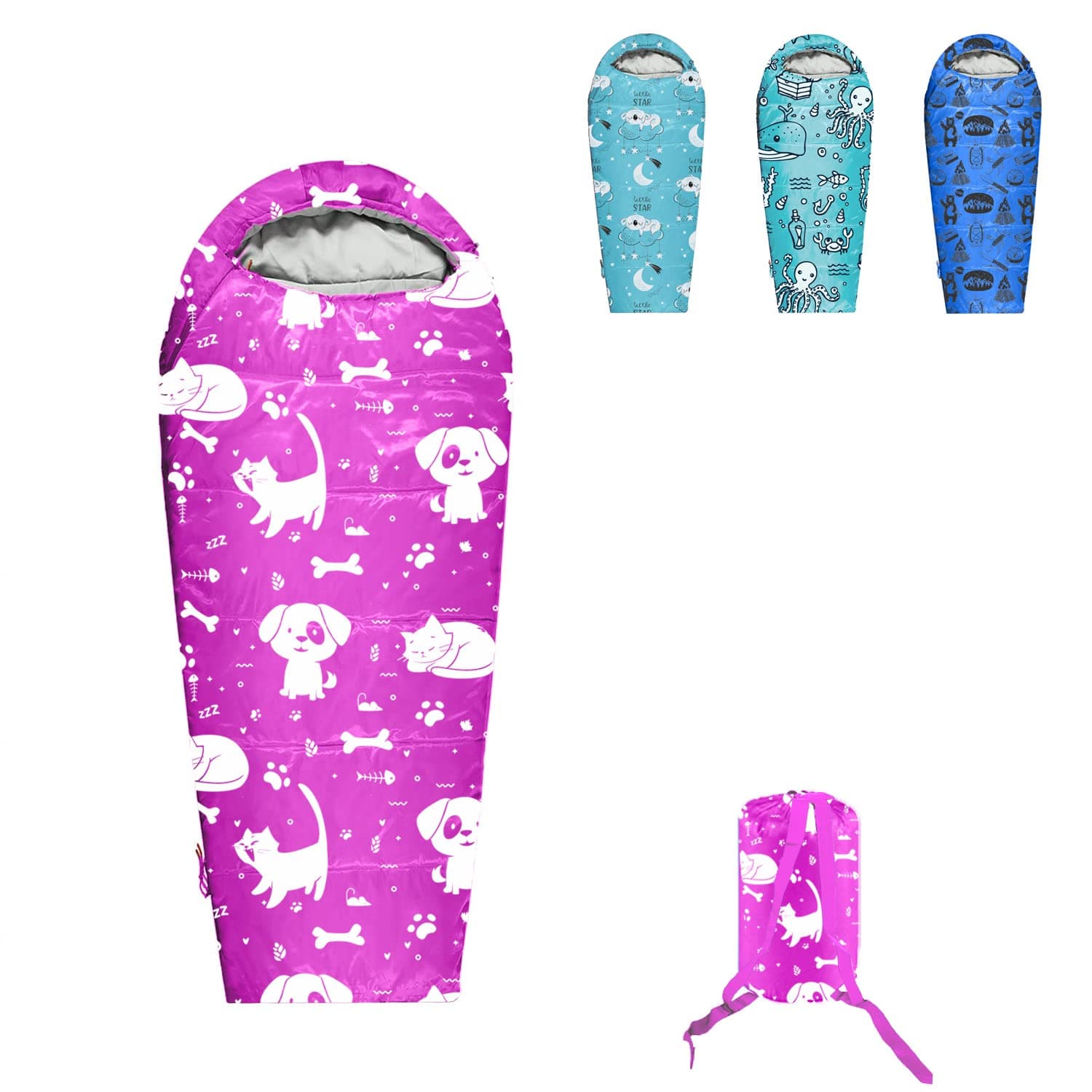
Estimated$25 – $60
KingCamp Oasis 250 3-in-1 Double Sleeping Bag
The KingCamp Oasis 250 3-in-1 offers a value-oriented, modular convertible sleep system aimed at three-season campers who want flexible configurations without premium pricing. It balances lighter construction and modularity that can be split into two sleepers or combined as a double, typically costing less than The North Face or Exped while providing better on-the-ground features and refinement than the most basic Coleman options. As a budget-conscious alternative, it is a smart pick for casual adventurers who want a compromise between affordability and functional versatility compared with the heavier, warmer TETON or the more technical Exped offering.
Show More Convertible Zip Apart Sleep System Sleeping Bags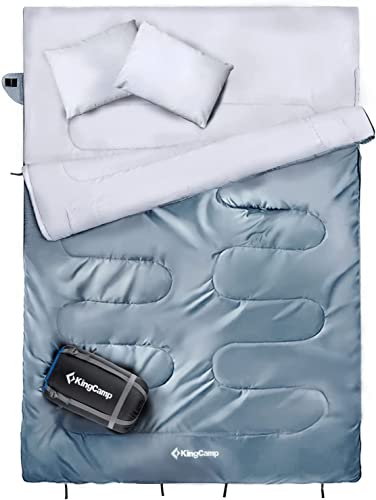
Estimated$120 – $180
What Research and Standards Say About Sleeping Bag Performance and Sleep Quality
Scientific work and industry standards inform how sleeping bags perform in the field and how they affect sleep and core temperature regulation. Insulation performance is tied to loft and thermal conductivity: down typically delivers superior warmth-to-weight when dry, while synthetic fills offer more consistent insulation when damp. Standards like EN 13537 and ISO 23537 define test protocols and temperature ratings so consumers can compare comfort and limit numbers across models. Peer-reviewed studies in environmental physiology and biometeorology link thermal comfort to sleep quality and recovery, highlighting the importance of selecting appropriate insulation, preventing conductive heat loss to the ground, and managing moisture inside the sleep system.
Down insulation offers higher loft and a better warmth-to-weight ratio in dry conditions, but untreated down loses insulating efficiency when wet; hydrophobic treatments reduce that vulnerability.
Synthetic fills retain much of their insulating ability when damp and typically dry faster, making them more reliable in maritime or wet environments common in parts of Canada.
International standards such as EN 13537 and ISO 23537 provide temperature rating methods; use the comfort and lower limit ratings as guides and adjust for personal factors, layering and sleep pad R-value.
Sleep studies show that thermal discomfort and cold stress reduce sleep quality and physiological recovery; selecting a bag with an appropriate temperature rating and ensuring insulating separation from the ground (adequate pad R-value) are critical.
Sustainable practices (Responsible Down Standard, recycled fills) and product repairability are linked to longer product life cycles and lower lifecycle environmental impact, aligning with growing Canadian consumer preferences.
Frequently Asked Questions
What do the comfort, limit and extreme temperature ratings on a sleeping bag actually mean?
Under EN 13537 / ISO 23537 a bag is lab-tested and reported at three numbers. Comfort is the temperature at which a cold-sleeping standard woman sleeps relaxed through the night. Limit is where a warm-sleeping standard man stays asleep curled up — most bags are marketed by this number, so a bag sold as "-6 °C" is usually comfortable nearer 0 °C. Extreme is a six-hour survival figure with a real risk of hypothermia and frostbite; it is not a sleeping rating and should never be used to pick a bag. For Canadian shoulder-season and winter trips, buy to the comfort rating and treat anything colder as headroom.
Which bag should I buy for ultralight trips in Canada?
For ultralight backcountry trips, choose the Western Mountaineering HighLite: it has an average rating of 4.9 and is described as extremely light with a minimalist tapered mummy cut for fast-and-light trips.
What warmth rating and shape does the Therm-a-Rest Hyperion have?
It is a 900-fill-power down mummy, and Therm-a-Rest sells it in two ratings. The Hyperion 20 is EN/ISO tested at 0 °C comfort, -6 °C limit and -23 °C extreme — so the "20F/-6C" on the label is the limit figure, and it sleeps comfortably around freezing. The Hyperion 32 is the warmer-weather version, roughly 5 °C comfort and 0 °C limit. The two look alike and are often listed side by side, so confirm which rating you are ordering before you check out.
Is the Coleman Tandem 3-in-1 better value than the Therm-a-Rest Hyperion?
It depends on your trip. The Coleman Tandem 3-in-1 is the budget synthetic pick at about $164 CAD (3.8 rating) and is best for car camping and shared family use, while the Therm-a-Rest Hyperion is a premium ultralight down mummy built for weight-conscious backcountry trips. Choose the Coleman for affordable roomy warmth and the Hyperion when packability and warmth-to-weight matter most. Note the Coleman's 45 °F rating is a mild-weather number — it is not a shoulder-season bag.
Conclusion
Across Canada, the right sleeping bag balances local climate demands, trip style and personal comfort needs. We hope this guide helped you narrow down options among the top 9 choices for 2026 — whether you need a compressible alpine down bag, a weatherproof synthetic option, or a roomy car-camping double. If you want to refine results by temperature rating, insulation type, weight, or sustainability credentials, use the search filters to expand or focus your selection.