

Top 7 Carbon and Alloy Seatposts in Canada for 2025: Guide for Road, Gravel, and Mountain Riders — Which One Matches Your Ride?
Seatposts available in carbon for vibration damping and weight savings or alloy for durability and value are essential upgrades for riders looking to tune comfort, handling, and reliability across road, gravel, and mountain applications. In Canada, riders choose carbon when they prioritize reduced road buzz, climbing efficiency, and lower overall bike weight, while alloy remains popular for its impact resistance, lower cost, and predictable long-term performance in harsh weather and winter riding. Recent trends for 2026 include mixed-material constructions that combine carbon tubes with alloy clamps, refined profiles to optimize stiffness-to-weight ratios, and integrated dropper-ready designs for trail and enduro use. Consumers in Canadian markets typically balance discipline-specific needs, local terrain, and serviceability when selecting a seatpost, favoring predictable fit (diameters and setback), corrosion resistance, and compliance with bike weight and e-bike requirements.
Inception's AI took the time to understand this market in Canada · · How we pickWe may earn a commission on purchases. It never affects our rankings.
Top Picks Summary
The Enve Carbon Road Seatpost is widely regarded as the best-in-class option for road carbon seatposts thanks to its premium carbon layup that balances lateral stiffness with vertical compliance for long‑ride comfort and precise saddle control. It holds the top position here because its construction and quality control yield consistent ride feel and durability that justify a higher price compared with the lighter or more comfort‑focused rivals on this list. For riders prioritizing performance per dollar on hard efforts and long-term reliability, Enve remains the benchmark against which the others are measured.
Show More Road Carbon Seatposts
Estimated$450 – $600
The Thomson Elite is the benchmark for road alloy seatposts thanks to its heat-treated 7000-series aluminum, superb machining tolerances, and a rock-steady two-bolt clamp that keeps saddle position locked under load. It earns its market-leader position by offering long-term durability and minimal service needs compared with lighter but less robust alternatives like the FSA K-Force Light or budget posts such as the Kalloy Uno 7. For riders prioritizing precision and a low total cost of ownership on alloy road setups, the Thomson delivers a premium technical package that justifies its price spread over economy models.
Show More Road Alloy Seatposts
Zipp's Service Course SL-70 XPLR is a pragmatic, gravel‑focused seatpost that emphasizes compatibility, robustness, and value for money—designed to handle bikepacking loads and rougher terrain without fuss. Unlike the boutique carbon builds from ENVE or Specialized, its strengths are predictable durability and broad fitment at a more accessible price point, making it a strong choice for riders who prioritize reliability and cost efficiency over marginal weight savings.
Show More Gravel Carbon Seatposts
The Easton EA50 is a dependable, no-nonsense alloy seatpost for gravel riders seeking a durable, affordable upgrade that performs consistently in dirty, wet conditions. While not as refined or light as Thomson or FSA, it delivers a strong price-to-durability ratio that makes it an economical choice for commuters and gravel cyclists who want robustness over marginal performance gains.
Show More Gravel Alloy Seatposts
We may earn a commission on purchases. It never affects our rankings.
$80.76CAD
Race Face's Next R Carbon seatpost earns a top spot for mountain carbon seatposts by blending balanced compliance, durable construction, and a value-focused price that suits aggressive trail riders. Compared with the other picks it offers a more forgiving ride than the ultra‑stiff race posts while undercutting premium rivals on cost, making it a practical choice for riders who want carbon performance without the highest premium or the weight penalties of heavier, metal posts.
Show More Mountain Carbon Seatposts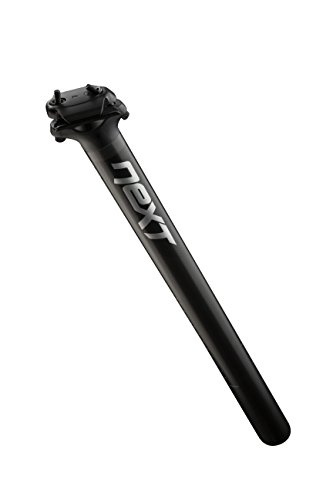
Estimated$250 – $350
The Spank Spoon Seatpost is a best-in-class mountain alloy seatpost because it combines precision CNC machining, a compact two-bolt head and a very favorable stiffness-to-weight ratio that appeals to weight-conscious trail riders. For the Mountain Alloy Seatposts use case it stands out by delivering refined tolerances and simple, durable hardware that often yields lighter builds and crisper feel than bulkier alternatives; compared with the OneUp alloy offering it prioritizes minimal weight and serviceable mechanics over integrated dropper features, giving riders a technical performance edge at a competitive price point.
Show More Mountain Alloy Seatposts
Estimated$80 – $140
The Deda Elementi Superzero Carbon Seatpost takes an Italian design-first approach, delivering an ultra-light carbon shaft married to an alloy clamp to keep saddle security reliable while minimizing mass. It competes with other race-oriented posts for weight savings and aesthetic appeal, but compared with more robust hybrids such as Thomson or PRO it leans toward riders who prioritize lightness and style over long-term toughness or lower replacement cost.
Show More Mixed Material Seatposts
What Research and Tests Say About Carbon vs Alloy Seatposts
Scientific studies, lab tests, and industry test rigs have examined how seatpost material and design affect vibration damping, rider comfort, power transfer, and component longevity. Results consistently show trade-offs: carbon fiber composites can reduce high-frequency vibrations and cut weight, improving perceived comfort and reducing fatigue on long rides, while aluminum alloys typically offer higher impact resistance, easier repairability, and lower cost. Mixed-material designs and modern manufacturing techniques aim to capture the best of both worlds by tuning local stiffness and damping where riders need it most.
Vibration damping: Laboratory and field tests using accelerometers show carbon fiber sections often reduce high-frequency vibrations transmitted to the rider compared with straight aluminum posts, which can translate to improved comfort on rough pavement and long gravel rides.
Stiffness-to-weight trade-off: Finite element analysis and material testing used by manufacturers show carbon layups can be tuned to achieve higher stiffness-to-weight ratios, useful for road climbing and efficient power transfer, while thicker alloy sections rely on mass for stiffness.
Fatigue and impact behavior: Alloy seatposts generally show predictable plastic deformation and can withstand point impacts better than some carbon-only posts; carbon requires correct installation torque and careful inspection after impacts to ensure safety.
Standards and testing: Bicycle component testing protocols (including industry fatigue tests and ISO safety standards) are commonly used by reputable brands to validate strength and longevity; look for manufacturers that publish test methods or certifications.
Mixed-material advantage: Peer-reviewed engineering and industry reports note that combining carbon tubes with alloy heads or clamps can provide damping and weight benefits while maintaining clamp durability and cost-effectiveness.
Real-world relevance: Independent test reviews from cycling publications and lab-backed comfort studies indicate that perceived comfort improvements from carbon can be most noticeable on long endurance rides, while the reliability and serviceability of alloy make it a practical choice for commuter and winter use.
Frequently Asked Questions
Which seatpost should I pick for race-style road riding?
Pick the Zipp Service Course SL Carbon Seatpost if you want a race-oriented, lightweight carbon option with reliable clamp design; it averages 4.4 stars and lists at CAD 151.26.
What exact feature does Thomson Elite use for clamp security?
The Thomson Elite Seatpost uses a rock-steady two-bolt clamp with a micro-adjust clamp head for accurate saddle angle and fore-aft tuning, with a 4.7 average rating.
Is the Zipp Service Course SL Carbon seatpost good value?
Yes—at CAD 151.26, the Zipp Service Course SL Carbon Seatpost pairs a lightweight carbon shaft with a reliable clamp design, and it averages 4.4 stars.
Does Specialized S-Works Pave Carbon Seatpost feel compliant on gravel?
Yes, the Specialized S-Works Pave Carbon Seatpost is engineered compliance for smoothing rough roads while keeping power transfer efficient; it has a 4.6 average rating.
Conclusion
Whether you want a carbon post for vibration damping and weight savings or an alloy post for rugged value, these top 7 options for Canada in 2026 cover road, gravel, and mountain priorities with modern mixed-material and stiffness-optimized designs. We hope you found the information you were looking for; use the site search to refine by diameter, setback, dropper compatibility, or price to find the exact seatpost that fits your bike and riding style.