

Top 7 Electric Adaptive Bikes in Canada for Accessible Cycling
Electric adaptive bikes represent a vital advancement within the Canadian cycling landscape, specifically engineered to make outdoor riding accessible to individuals facing mobility challenges, balance concerns, or rehabilitation needs. Market analysis indicates growing demand across Canadian provinces for models that integrate responsive electric-assist motors with ergonomic, highly supportive frame architectures, such as recumbent seating and ultra-low step-through layouts. Canadian riders value features that accommodate variable seasonal weather, including dependable disc braking systems, wide stable tires, and long-range lithium batteries capable of operating reliably in cooler temperatures. Beyond basic transportation, these vehicles provide an empowering solution that restores personal autonomy and encourages outdoor recreation along multi-use path networks from Vancouver to Halifax, catering to commuters and leisure cyclists alike who demand uncompromising stability, easy mounting, and intuitive controls.
Inception's AI took the time to understand this market in Canada · · How we pickWe may earn a commission on purchases. It never affects our rankings.
Top Picks Summary
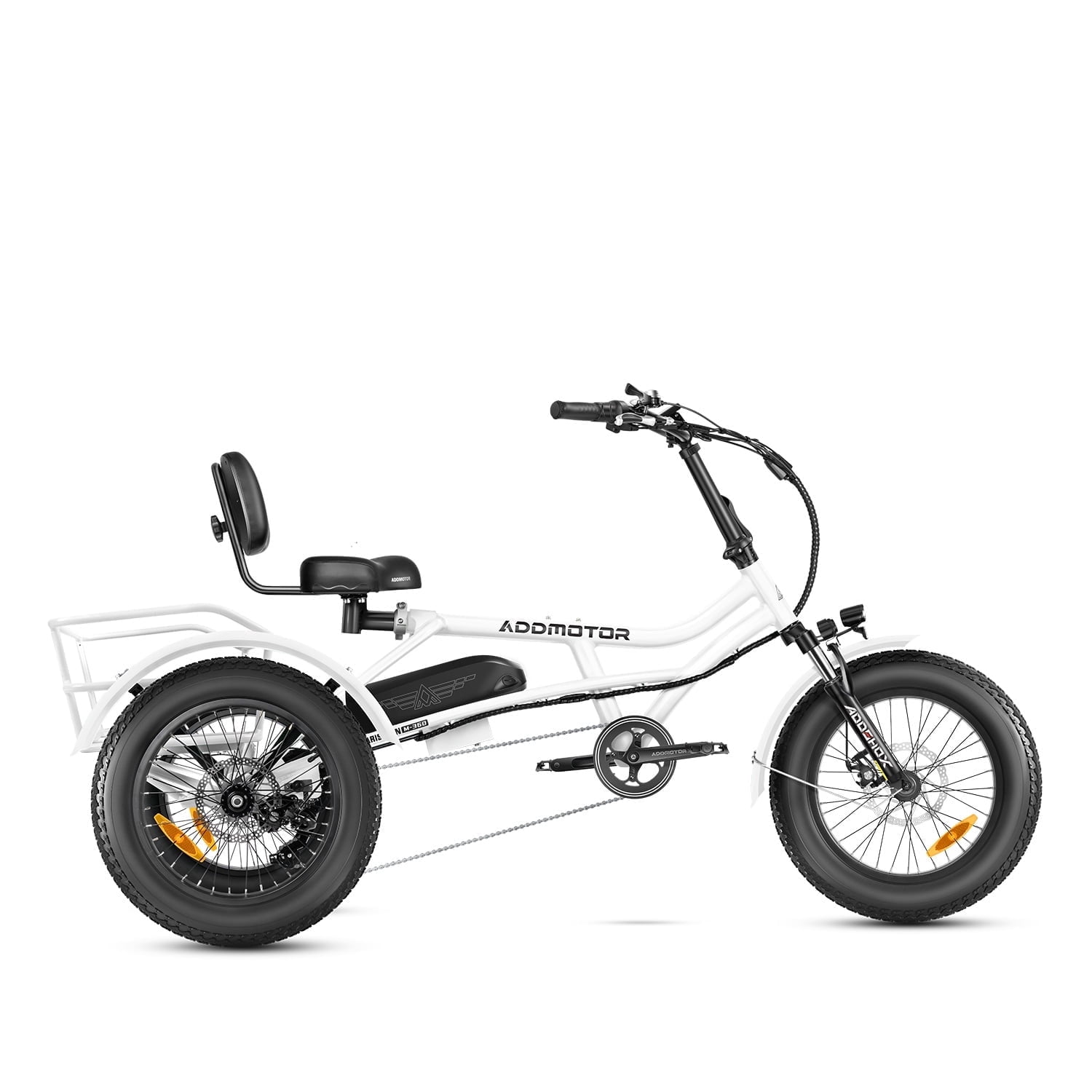
ADDMOTOR M-360 II Semi-Recumbent Electric Trike
The ADDMOTOR M-360 II Semi-Recumbent Electric Trike earns its place as an exceptional adaptive cruiser by combining a relaxed semi-recumbent posture with a 3rd Gen mid-axis torque sensor and a rear speed differential for natural, smooth control. Powered by a 960Wh removable battery delivering an estimated max range of 85 miles and supporting up to 380lbs, it offers superior joint relief compared to standard upright trikes. Its rear-mounted motor and dedicated parking brake system make mounting and accelerating exceptionally safe and stable for adaptive riders.
We may earn a commission on purchases. It never affects our rankings.
$2,799.00CAD
ADDMOTOR CITYTRI Folding Electric Trike
The ADDMOTOR CITYTRI Folding Electric Trike distinguishes itself with an ultra-low 13.8" step-through frame and a quick-folding 6061 aluminum alloy design that enhances transportability for riders needing adaptive mobility on the go. Delivering an impressive 90-mile maximum range from its UL 2849 certified 20AH 48V battery system, it surpasses many competitors in long-distance urban capability. Additionally, its integrated rear differential and parking brake offer dependable balance and anti-tip security on flat terrain.

We may earn a commission on purchases. It never affects our rankings.
$1,499.00CAD
ESKUTE T300 Pro Electric Trike
The ESKUTE T300 Pro Electric Trike is an all-terrain adaptive powerhouse featuring massive 20" x 4.0" fat tires and a unique Butterfly Handlebar designed to encourage an upright posture and prevent hand fatigue. Equipped with a 1200W peak motor and a high-capacity 998.4Wh battery, it achieves up to 80 miles of riding freedom with robust traction across uneven surfaces. While heavier than purely urban options, its combination of twist throttle, pedal-assist, and removable storage bags delivers exceptional versatility and comfort.

Jasion Electric Tricycle
The Jasion Electric Tricycle presents a budget-friendly adaptive choice featuring an oversized seat with a supportive backrest and an adjustable fit accommodating riders from 145 to 190cm. It offers reliable power via a 500W motor with 1200W peak output and a 624Wh battery, achieving up to 88 km of range alongside a functional rear differential. Compared to heavy-duty fat tire options, its 7cm wide tires strike a practical balance between stable cruising and nimbler maneuvering for everyday errands.

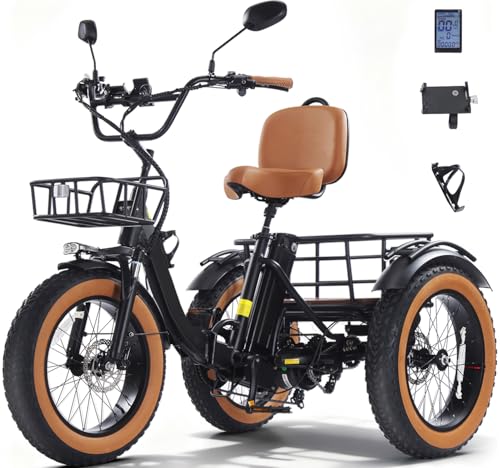
KAKIGO Folding Fat Tire Electric Tricycle
The KAKIGO Folding Fat Tire Electric Tricycle provides high-performance adaptive utility with a 750W rear motor reaching 1350W peak power and 90 Nm of torque to tackle steeper inclines. Its 20" x 4" anti-slip fat tires, low-center-of-gravity folding aluminum frame, and rear differential deliver reliable stability over pavement, gravel, and rougher paths. With an 80–90 mile pedal-assist range from its 48V 15.6Ah battery, it delivers high output without sacrificing step-through accessibility.
Estimated$1,700 – $2,200
DRNANLIT Step-Thru Electric Tricycle
The DRNANLIT Step-Thru Electric Tricycle is an accessible, budget-conscious choice tailored for seniors and riders needing mild adaptive assistance, highlighted by its lightweight folding frame and unique dual-seat configuration. Driven by a peak 500W brushless motor and a 480Wh removable battery, it delivers up to 45 miles of range across three smart riding modes. While offering a more modest range than larger alternatives, its front and rear disc brakes and 300 lbs load capacity ensure safe and practical daily travel.

How to Choose the Right Electric Adaptive Bike
The fundamental factor separating an exceptional adaptive e-bike from a mediocre one is the relationship between seating ergonomics and mechanical stability during turns. Riders must evaluate how effortlessly they can mount the frame without joint strain while verifying that the motor provides progressive, predictable power rather than sudden surges.
Prioritize frame geometry and transfer height: Seek out ultra-low step-through clearances under 15 inches or semi-recumbent bucket seats with supportive backrests to facilitate unassisted mounting.
Scrutinize motor engagement and throttle calibration: Torque-sensing drive systems provide a gradual, intuitive assist that matches pedaling effort, eliminating the abrupt jerking common with budget cadence sensors.
Verify rear differential gearing: For three-wheel configurations, an integrated rear differential is crucial to ensure smooth cornering without lifting the inner wheel or skidding.
Assess Canadian battery resilience: Ensure the battery has reputable safety certifications (such as UL standards) and sufficient amp-hour capacity to counter the natural range loss experienced during chilly autumn and spring rides.
Frequently Asked Questions
Which electric adaptive bike is best for riders needing high stability and an ergonomic seat?
The Van Raam Easy Rider Compact Electric Adaptive Tricycle is specifically engineered for riders with balance limitations or physical challenges requiring specialized ergonomic support, featuring an adjustable lumbar bucket seat and a low center of gravity.
What is the maximum battery range of the ADDMOTOR CITYTRI Folding Electric Trike?
The ADDMOTOR CITYTRI Folding Electric Trike provides up to 90 miles of maximum range using its UL 2849 certified electrical system, 48V 20Ah battery, and rear differential.
Which adaptive trike is best for riders wanting a semi-recumbent posture and maximum distance?
The ADDMOTOR M-360 II Semi-Recumbent Electric Trike suits riders wanting a relaxed posture by combining a semi-recumbent seat with a 960Wh battery delivering an estimated range of up to 85 miles.
Which model offers the easiest mounting for riders with limited mobility?
The ADDMOTOR CITYTRI Folding Electric Trike features an ultra-low 13.8-inch step-through frame designed for effortless mounting and dismounting, alongside a quick-folding aluminum frame for transportability.
Conclusion
Navigating the options for adaptive cycling in Canada reveals a spectrum of specialized machinery built for distinct physical requirements and terrain preferences. Among the leading configurations evaluated, the Van Raam Easy Rider Compact Electric Adaptive Tricycle stands out as the premier benchmark for dedicated therapeutic comfort and medical-grade engineering. Riders interested in relaxed cruising will appreciate the lumbar alignment of the ADDMOTOR M-360 II Semi-Recumbent Electric Trike, while compact living spaces are well served by the ADDMOTOR CITYTRI Folding Electric Trike. Daily urban commuting needs are capably met by the ESKUTE T300 Pro Electric Trike, the user-friendly Jasion Electric Tricycle, and the low-profile DRNANLIT Step-Thru Electric Tricycle. For mixed-surface stability on trails or light snow, the KAKIGO Folding Fat Tire Electric Tricycle provides high-volume traction. We hope this guide helps you find the ideal machine to rediscover your cycling independence, and you are welcome to refine or expand your options further using the search bar.