

Top 7 Rehabilitation Exercise Bikes in Canada 2026
Rehabilitation exercise bikes are engineered for therapeutic use with low-impact pedaling, easy step-through frames, and precise resistance control. In Canada they are widely used in physical therapy clinics, hospital rehab units, long-term care facilities, and home-based recovery programs. Canadian buyers and clinicians prioritize machines that combine robust clinical features with reliable after-sales support and parts availability, because long-term maintenance and warranty coverage are critical to clinic budgets and patient outcomes. Key consumer preferences include adjustable seating and back support, clear digital feedback for heart rate and cadence, programmable resistance profiles for progressive rehabilitation, strong warranties, and models that accommodate a wide range of patient sizes and mobility levels. Accessibility features such as low step-through height, stable handrails, intuitive emergency stop controls, and motorized assistance make these bikes especially appealing for seniors, people recovering from surgery, and patients undergoing neurological rehabilitation. Cost, presence of Canadian service networks, compatibility with insurance or rehab funding programs, and documented clinical efficacy all influence purchase decisions in the Canadian market.
Inception's AI took the time to understand this market in Canada · · How we pickWe may earn a commission on purchases. It never affects our rankings.
Top Picks Summary
NuStep T5XR Recumbent Cross Trainer
The NuStep T5XR is renowned for its accessibility-first design—low step-through, synchronized arm-and-leg movement and extensive seat adjustability—making it a go-to for elderly, stroke and mobility-impaired patients in rehabilitation settings. It occupies the middle ground financially and technically, offering more clinical programming and user support than basic recumbents like the Spirit CR800 while remaining more affordable and easier to integrate than some high-end diagnostic trainers.

Estimated$9,000 – $13,000
SciFit Pro2 Total Body Trainer
The SciFit Pro2 is a market-leading total-body trainer prized for its durable construction, bilateral arm-and-leg engagement, and extensive programmable protocols that suit cardiac, orthopedic, and neurological rehabilitation. Although it typically commands a premium price relative to simple recumbent bikes, its advanced telemetry, heavy-duty frame and comprehensive clinical software deliver superior long-term value for facilities that require robust, measurable therapy options.
Estimated$10,000 – $15,000
HCI PhysioStep MDX Recumbent Elliptical
The HCI PhysioStep MDX is positioned as a cost-effective, compact recumbent elliptical tailored for outpatient and home rehabilitation programs, offering smooth, low-impact reciprocal leg motion that supports early mobility work. It stands out against higher-priced clinical machines by delivering straightforward controls and a smaller footprint, making it a practical choice for clinics that need budget-friendly, space-efficient cardio equipment without sacrificing basic rehab functionality.

Biodex BioStep 2 Semi-Recumbent Elliptical
The Biodex BioStep 2 is a clinically focused semi-recumbent elliptical designed for lower-limb rehabilitation, offering precise incremental resistance, high durability, and an ergonomic recumbent position that reduces weight-bearing stress. It holds a market-leader position on this list due to its clinical-grade construction and advanced workload control, making it a higher-cost but longer-lived option for hospitals and rehab centers compared with the motorized MOTOmed Viva 2 and the simpler PhysioTrainer PRO. For programs that require repeatable protocols, accurate resistance profiling and robust reporting, the BioStep 2’s technical reliability justifies the premium investment.

Estimated$9,000 – $14,000
Spirit Fitness CR800 Recumbent Bike
The Spirit Fitness CR800 is a reliable, economically priced recumbent bike that delivers a stable seated cycling experience with commercial-grade components suitable for light to moderate rehab use in outpatient and fitness-therapy settings. While it lacks the specialized clinical programming and bilateral motion of SciFit or NuStep models, its lower acquisition cost and proven durability make it a sensible option for clinics needing dependable aerobic conditioning without the premium investment.

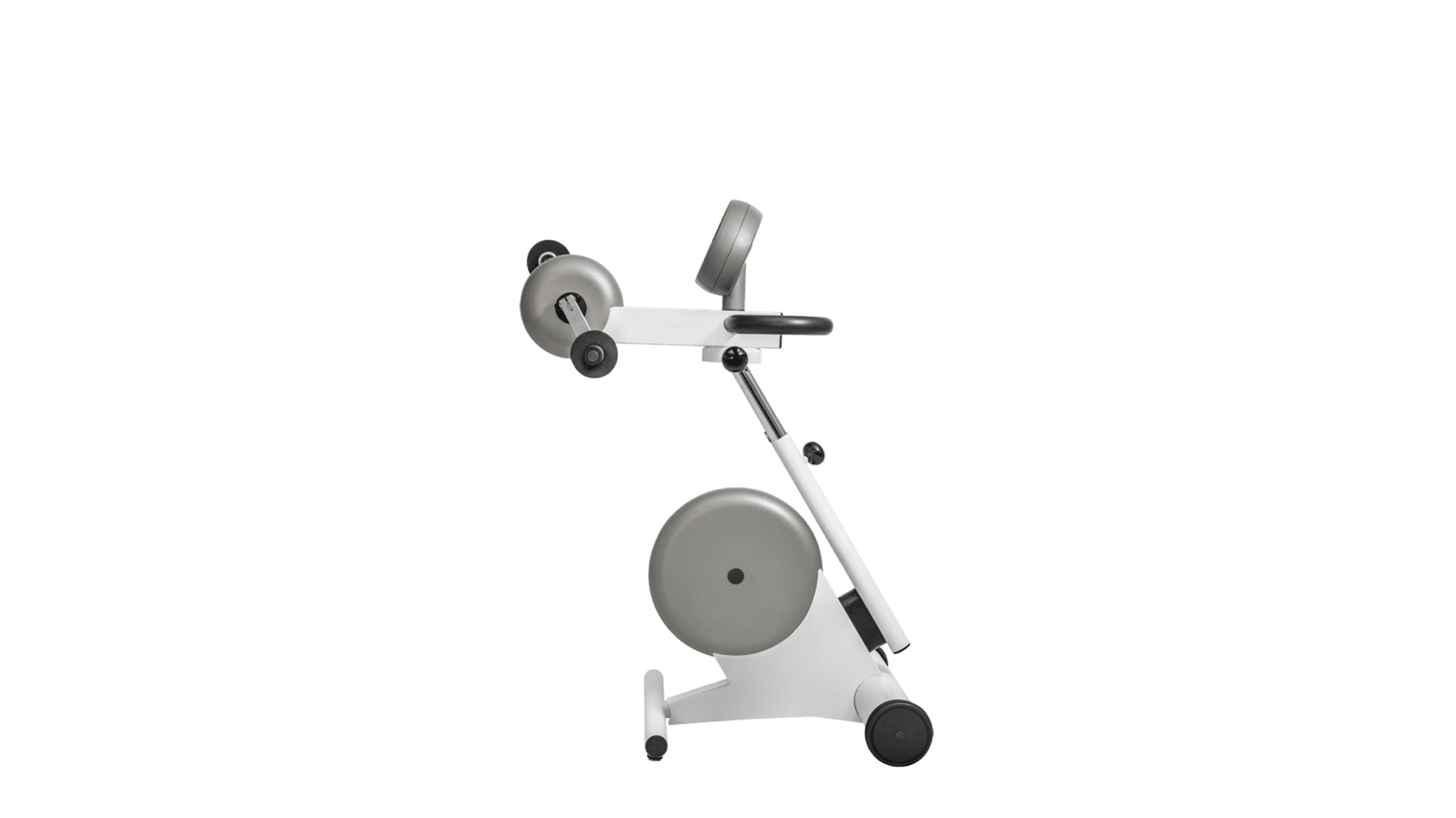
Motomed Viva 2 Motorized Movement Therapy Bike
The MOTOmed Viva 2 is a motorized therapy bike that delivers passive, assisted and active movement modes to enable early mobilization and high-repetition training for patients with limited voluntary control. It differentiates itself from the BioStep 2 by providing motor-driven assistance that is particularly valuable for neurologic and severely deconditioned patients, while generally costing less than a full clinical elliptical and offering more guided therapy capability than the low-cost PhysioTrainer PRO. Its technical advantage is the integrated motor and programmable therapy routines that maintain consistent motion and progression, giving strong clinical value for neurorehabilitation and post-op recovery.
We may earn a commission on purchases. It never affects our rankings.
Estimated$4,000 – $7,000
PhysioTrainer PRO Stationary Exerciser
The PhysioTrainer PRO is a compact, stationary pedal exerciser designed for low-cost in-clinic use or as a patient take-home device, emphasizing portability, simple setup and affordability. It does not include the motorized assistance of the MOTOmed Viva 2 or the heavier clinical ergonomics of the Biodex BioStep 2, but its clear financial advantage and small footprint make it ideal for outpatient programs and home-based adherence between supervised sessions. For providers seeking an economical maintenance device or a straightforward tool to support continuity of care, the PhysioTrainer PRO balances core rehab functionality with minimal investment.

Estimated$800 – $1,800
Why rehabilitation bikes work: research-backed benefits
A body of clinical literature and rehabilitation practice guidelines supports the use of rehabilitation exercise bikes for restoring mobility, building endurance, and improving joint range of motion with low cardiovascular and joint stress. These machines allow controlled, progressive loading and reproducible exercise prescriptions, which clinicians use to measure improvements and reduce risk during recovery. For many patient groups, including post-operative orthopedic patients, stroke survivors, older adults, and people with chronic cardiopulmonary conditions, bike-based therapy offers measurable gains in function, safety, and adherence.
Low-impact aerobic training: Studies show cycling reduces joint loading compared with weight-bearing activities, making it suitable for knee and hip rehabilitation.
Improved cardiovascular fitness: Repeated moderate-intensity sessions on rehab bikes increase aerobic capacity and help with graded return to activity.
Motor relearning and neuromuscular recovery: Assisted or guided pedaling modes support bilateral coordination and can aid rehabilitation after neurological injury.
Pain and function outcomes: Controlled progressive cycling is associated with reductions in pain and improvements in functional mobility after joint surgery.
Safety and adherence: Clear feedback, comfortable seating, and stability features increase patient confidence and adherence to therapy programs.
Frequently Asked Questions
Which rehab exercise bike is easiest for transfers?
NuStep T5XR Recumbent Cross Trainer is easiest for transfers thanks to its low step-through design, swivel/adjustable “throne” comfort seating, and ergonomic handholds, with an average rating of 4.7.
What specific training feature does SciFit Pro2 support?
SciFit Pro2 Total Body Trainer supports independent arm and leg training so you can combine or isolate limb rehabilitation, using robust programming and precise resistance control, with an average rating of 4.5.
How does the HCI PhysioStep MDX compare by price?
I don’t have the price for HCI PhysioStep MDX in the provided data, but it’s described as cost-effective versus higher-priced clinical machines, with an average rating of 4.4.
Is the HCI PhysioStep MDX good for early mobility work?
Yes—HCI PhysioStep MDX Recumbent Elliptical is tailored for outpatient and home rehab, using smooth low-impact reciprocal leg motion for early mobility work, with adjustable seat/step-through transfers and a 4.4 average rating.
Conclusion
In Canada the seven featured machines cover the clinical and home-rehab spectrum: NuStep T5XR Recumbent Cross Trainer, SciFit Pro2 Total Body Trainer, HCI PhysioStep MDX Recumbent Elliptical, Biodex BioStep 2 Semi-Recumbent Elliptical, Spirit Fitness CR800 Recumbent Bike, Motomed Viva 2 Motorized Movement Therapy Bike, and PhysioTrainer PRO Stationary Exerciser. Each model brings strengths: the SciFit Pro2 and Biodex BioStep 2 emphasize clinical durability and programmability, the Motomed Viva 2 and PhysioTrainer PRO add motorized assistance for very impaired users, and the Spirit CR800 provides good value for clinics on a budget. Overall, the NuStep T5XR Recumbent Cross Trainer stands out as the best all-around choice for Canadian clinics and serious home rehab users because of its combination of accessibility, total-body engagement options, strong service network, and clinical adoption. We hope you found what you were looking for — if you want to refine or broaden your options, use the site search or filters to compare features, warranties, and Canadian service coverage.