

Top 7 Baitfish Saltwater Fly Patterns in Canada — 2026 Picks
Baitfish saltwater fly patterns are profiles that mimic schooling baitfish used across inshore and nearshore fisheries to target predators such as striped bass, bluefish, mackerel, pollock and jacks. In Canada these patterns are prized for their ability to match local forage size and color, their versatility across tide and wind conditions, and their effectiveness when cast into schools or along structure. Current trends through 2026 include articulated patterns that impart independent jointed swimming action, 3D eyes for improved target recognition, epoxy or weighted heads for tuned sink rates and casting distance, and tapered synthetic fibers that create a compact, lifelike profile with durable action. Anglers prefer patterns that balance realism and durability, cast easily on modern saltwater rods, and offer interchangeable weight and articulation options so one pattern will work from surf to estuary. Practical benefits include improved hookup rates on fast predators, the ability to fish a single pattern across variable water depths, and longer in-field life for frequently fished flies.
Inception's AI took the time to understand this market in Canada · · How we pickWe may earn a commission on purchases. It never affects our rankings.
Top Picks Summary
Clouser Deep Minnow
The Clouser Deep Minnow earns its spot as a best-in-class baitfish saltwater fly because its weighted-eye profile gets into the strike zone quickly, making it a go-to for deeper presentations and fast-strip fishing. Technically it outperforms many surface or unweighted patterns on this list for hooking larger, bottom-oriented predators, while remaining inexpensive and simple to tie compared with bulkier, purpose-built flies like the Game Changer.

Estimated$6 – $12
Lefty's Deceiver
Lefty’s Deceiver is a market-leading, highly versatile saltwater baitfish pattern prized for its long, action-rich profile that works from topwater to subsurface strips; its simplicity and enormous color variety make it financially accessible and widely available. Compared with the Clouser Deep Minnow it favors flash and length over fast sink, and versus EP-based patterns it trades some lifelike translucency for broader attraction and easier casting in wind.

EP Baitfish
The EP Baitfish stands out for lifelike movement and translucency thanks to EP fibers, making it especially effective in clear-water or pressured conditions where subtle presentation wins strikes. Technically it offers a realism advantage over the more aggressive-action Deceiver and the heavily weighted Game Changer, and while its material cost can push it toward the mid-price range, that investment pays off in higher hookup rates on finicky fish.

We may earn a commission on purchases. It never affects our rankings.
$11.00CAD
Blane Chocklett's Game Changer
The Game Changer sits at the top for baitfish saltwater fly patterns because its articulated profile and lifelike materials deliver superior swimming action and hookup rates in both flats and inshore structure. Technically advanced components and precisely balanced heads make it more effective on pressured fish than simpler patterns, and although it is typically priced higher than the other two options, its conversion-per-cast and durability justify the premium for anglers targeting tournament or trophy fish.

Estimated$8 – $18
Surf Candy
Surf Candy is a compact, corrosion-resistant baitfish fly prized for its bright, varnished body and ability to withstand abrasive surf conditions while presenting a slim, attractive profile to cruising fish. Financially friendly and easy to carry in bulk, it complements the list by offering a high-volume, low-cost option that is less aggressive than the Game Changer and more durable in the surf than delicate EP-based patterns.
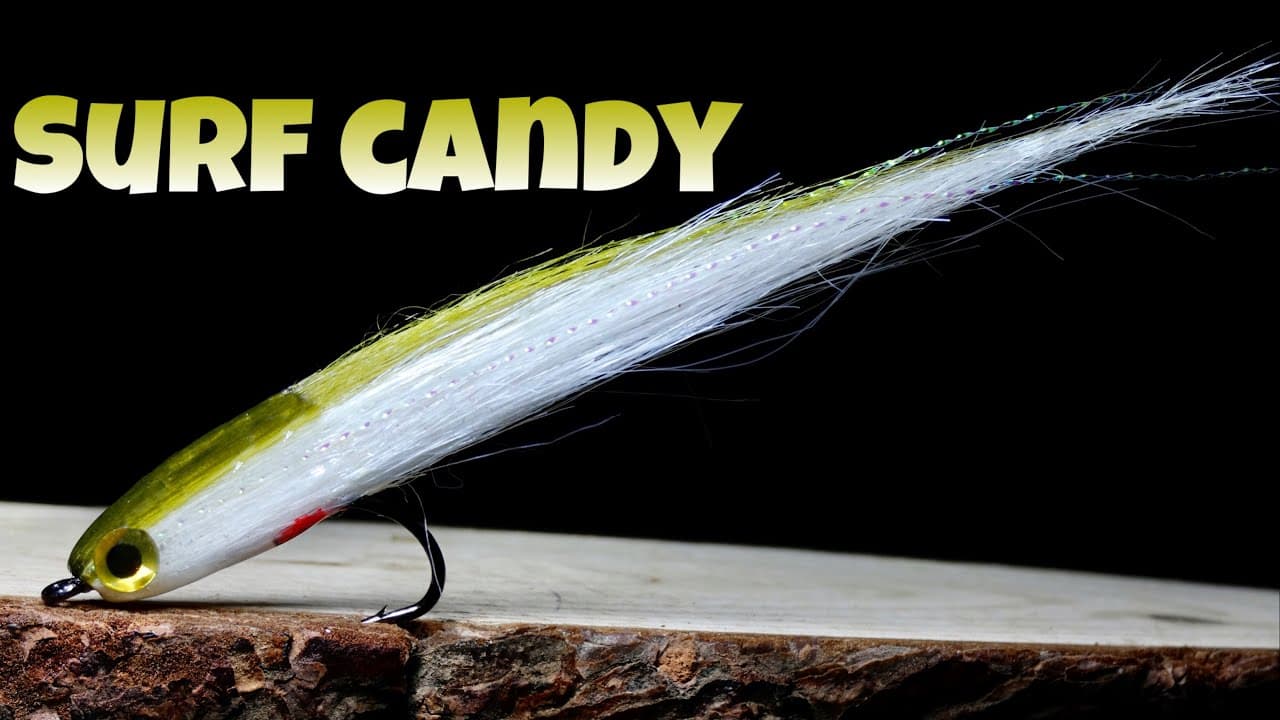
Estimated$6 – $12
Enrico Puglisi Peanut Butter
The Enrico Puglisi Peanut Butter is a market-leading modern baitfish pattern praised for its streamlined silhouette, premium synthetic fibers, and subtle flash that excel at long casts and high-speed strips. It strikes a middle ground between the high-performance Game Changer and the classic Murdich Minnow by offering many of the technical advantages of elite patterns at a more accessible price point, making it a smart value for anglers who want advanced presentation without the top-tier cost.

Murdich Minnow
The Murdich Minnow is the dependable budget-oriented choice, a time-tested, simple baitfish pattern valued for its durability, ease of tying or wide availability pre-tied, and consistent results across species. While it lacks some of the refined motion and premium materials of the Game Changer or Peanut Butter, its low cost and proven effectiveness deliver the best cost-per-fish for everyday saltwater fishing and make it an essential workhorse in any angler's box.

Estimated$9 – $22
What Research and Evidence Say About Baitfish Fly Effectiveness
Scientific and applied studies from fisheries biology, predator-prey behavior, and angling gear research support the design trends behind modern baitfish saltwater flies. Research on visual targeting in predatory fish shows that contrast, motion cues, and eye detail strongly influence strike decisions. Hydrodynamic testing and field trials demonstrate that articulation and tapered synthetic fibers improve lifelike movement without excessive drag. Studies of sink rates and casting mechanics underline how tuned weights and epoxy heads help anglers reach target depths and maintain presentation in current and wind.
Predator visual response: Studies in fish behavior indicate that realistic motion and a clear eye cue increase the probability of a strike compared with static, low-contrast profiles.
Hydrodynamics and articulation: Field tests and tank studies show jointed patterns create independent tail action that simulates swimming baitfish more effectively than single-piece bodies at comparable retrieval speeds.
Sink rate tuning: Research into sink dynamics and angler trials confirm that properly weighted or epoxy-headed patterns reach the strike zone faster and hold position better in current, increasing strike-to-hookup ratios.
Material durability: Comparative testing of synthetic fibers and epoxy coatings highlights longer service life and retained action, reducing fly turnover and cost per fish for frequent saltwater anglers.
Frequently Asked Questions
Which fly should I choose for deep baitfish schools?
Choose the Clouser Deep Minnow (4.6 rating) because its dumbbell/weighted eyes create a horizontal, deep-swimming profile that sinks fast and helps you get into the strike zone quickly for subsurface baitfish imitations.
What makes Lefty's Deceiver work from topwater?
Lefty's Deceiver uses long flowing bucktail and feather wings to build a wide profile that reads as a large baitfish, and it can run unweighted or with added eyes for surface to midwater action.
Is EP Baitfish worth the lower price?
Yes if you want a more affordable option: EP Baitfish costs $37.36 CADand is built with EP fibers for translucent, pulsing motion plus a slim compact profile with built-in flash and subtle translucency.
Which fly is better for clear-water pressured conditions?
EP Baitfish (4.3 rating) is especially suited for clear-water or pressured situations, since its EP fibers deliver translucent, pulsing motion that mimics small baitfish more subtly than more aggressive-action profiles.
Conclusion
In Canada, baitfish saltwater fly patterns remain a top choice for anglers chasing striped bass, bluefish, pollock, mackerel and other nearshore predators. The seven standout options featured here — Clouser Deep Minnow, Lefty's Deceiver, EP Baitfish, Blane Chocklett's Game Changer, Surf Candy, Enrico Puglisi Peanut Butter, and Murdich Minnow — cover a wide range of conditions from surf to estuary. For most anglers seeking a single, highly versatile pattern that casts well, fishes deep when needed, and is widely effective on Canadian forage, the Clouser Deep Minnow is the best overall choice. We hope you found what you were looking for; you can refine or expand your search using the site search to filter by size, weight, color, or target species.