

Top 5 Offline Programming and Simulation Software in Canada — 2026 Guide
Offline programming and simulation software lets manufacturers design, program, and validate robot cells and welding operations away from the shop floor. In Canada, these digital tools are increasingly essential for shortening commissioning time, minimizing production downtime, and improving first-time-right rates. Trending capabilities include digital twins that mirror real equipment, physics-based weld simulation that predicts heat input and distortion, advanced collision detection, and direct integration with CAD/CAM and MES systems. Canadian buyers favor solutions that combine accuracy, vendor interoperability, and clear return on investment: large OEMs and integrators often prioritize full plant-level digital twins, while small and medium enterprises look for affordable, flexible packages with strong CAD integration and easy licensing.
Inception's AI took the time to understand this market in Canada · · How we pickWe may earn a commission on purchases. It never affects our rankings.
Top Picks Summary
DELMIA Robotics
DELMIA Robotics is best-in-class for enterprise offline programming and simulation thanks to its high-fidelity digital-twin capabilities and deep integration with Dassault Systèmes' PLM ecosystem, making it ideal for complex, multi-cell factory validation. Compared with lighter or vendor-specific tools on this list, DELMIA delivers superior systems-level simulation and traceability—at a higher price and implementation effort—providing strong ROI for large manufacturers who need end-to-end process validation. Its technical advantage is broad robot and equipment support plus synchronized product/process change management that reduces downstream rework compared with standalone robot tools.

Estimated$30,000 – $120,000
RoboDK
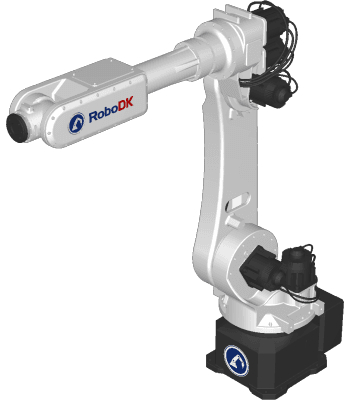
RoboDK is a market-leading, cost-effective offline programming and simulation platform prized for its ease of use, wide robot brand support, and flexible Python API that accelerates deployment for small-to-medium manufacturers and research. Compared to enterprise suites like DELMIA or Siemens, RoboDK offers a much lower entry cost and faster setup while still enabling realistic cycle-time estimation and direct post processors for many controllers, making it the practical choice when budget and agility matter. Its financial advantage is a lighter licensing model and strong community ecosystem that shortens ramp-up versus expensive PLM-integrated systems.
Estimated$800 – $4,500
FANUC ROBOGUIDE
FANUC ROBOGUIDE is the go-to offline programming and simulation tool for FANUC robot deployments because it emulates FANUC controllers precisely and generates controller-ready code for direct cell validation. While it is more limited to FANUC hardware than multi-brand platforms like RoboDK or DELMIA, its fidelity and vendor-supported toolset minimize commissioning time and risk on FANUC lines, often delivering lower integration cost for FANUC-heavy plants. The technical benefit is tight, validated compatibility with FANUC motion and I/O features that generic simulators cannot fully reproduce.

Estimated$5,000 – $25,000
ABB RobotStudio
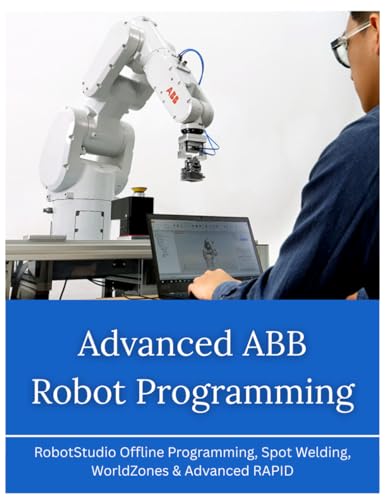
ABB RobotStudio is a market leader for ABB robot ecosystems, offering a virtual controller and high-fidelity simulation that lets integrators produce and test controller-ready programs offline with minimal surprises at commissioning. Compared with generalist tools, RobotStudio provides deeper, out-of-the-box compatibility with ABB-specific tooling and simulation libraries, and its free base-level availability lowers the initial financial barrier for testing and development. Technically, RobotStudio's tight mapping to ABB RobotWare and its application libraries streamline robot-specific motion, tools, and cell simulation better than non-vendor platforms.
Estimated$0-30,000 CAD
Siemens Process Simulate
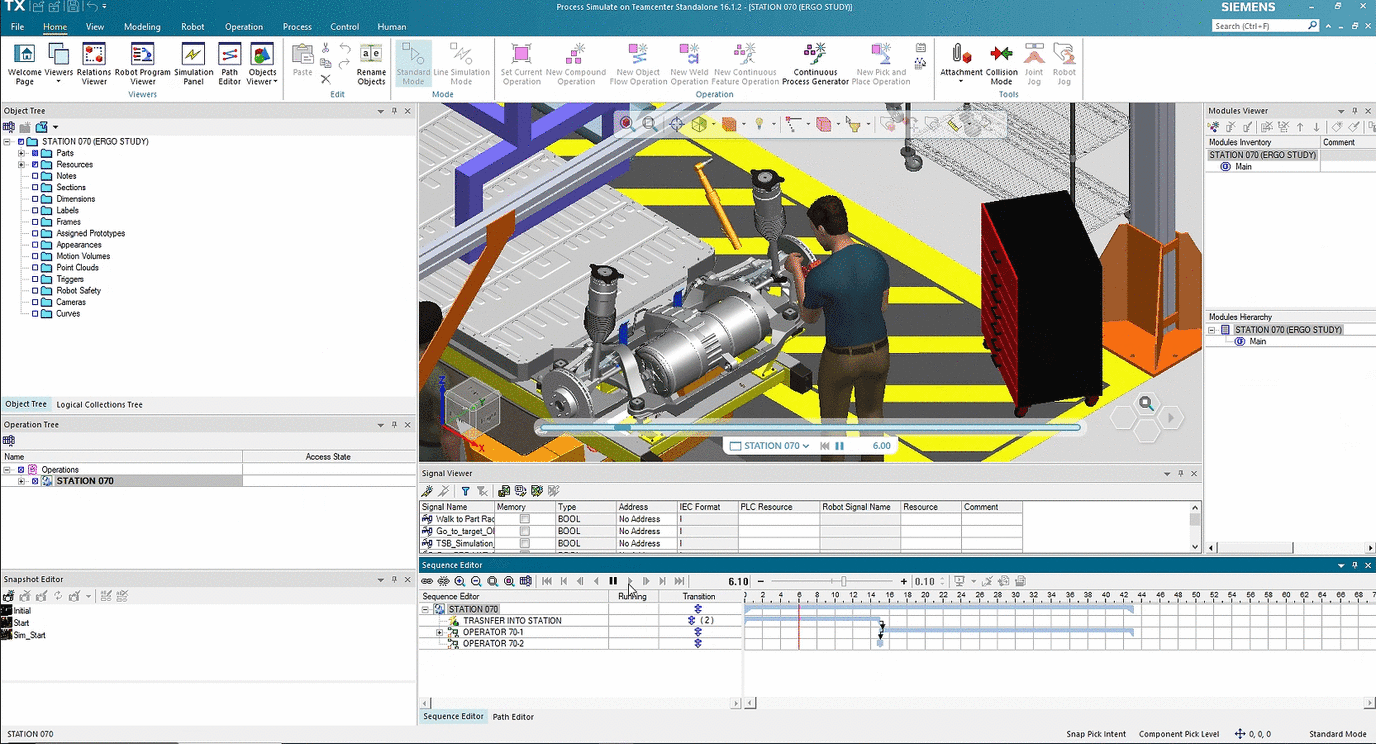
Siemens Process Simulate excels at plant- and assembly-level offline programming and simulation by combining advanced robotics simulation with human ergonomics, material flow and PLM integration through NX/Teamcenter, making it ideal for large-scale process engineering. Versus robot-centric tools on this list, Process Simulate focuses on end-to-end production process optimization rather than only robot code generation, which yields higher upfront licensing but greater savings through reduced line integration and ergonomics-driven rework. Its technical strength is multi-disciplinary simulation (robots, conveyors, human operators) that drives systems-level decisions earlier in the program lifecycle.
Estimated$40,000 – $200,000
What Research and Industry Evidence Say
Academic studies and industry reports consistently show that offline programming and realistic simulation reduce setup time, lower defect rates, and cut costly downtime. Evidence comes from peer-reviewed papers, government-funded projects, and white papers from integrators and vendors. Much of the benefit stems from early detection of collisions and unreachable poses, realistic cycle time estimates, and the ability to test control logic and weld parameters before physical commissioning. Research and controlled trials also highlight gains when simulation is paired with digital twin workflows and closed-loop data exchange with manufacturing execution systems.
Reduced commissioning and setup time: industry reports and case studies commonly report reductions in commissioning time from about 30 percent up to 70 percent depending on complexity and prior readiness.
Lower rework and scrap: physics-based simulation and prevalidated weld programs cut rework rates and scrap volumes by substantial margins in published case studies, often halving the most common defects in robotic welding cells.
Improved throughput and cycle time accuracy: realistic kinematics and process modeling produce more accurate cycle time estimates, enabling layout and takt optimizations that improve throughput by single-digit to low-double-digit percentages.
Safer and faster commissioning: collision detection and virtual commissioning reduce on-floor risk and the need for time-consuming iterative corrections, supporting faster return to production.
Stronger ROI when integrated: studies show the largest returns when offline programming tools are integrated with CAD/CAM and MES systems to enable seamless model and data flow across engineering and operations.
Frequently Asked Questions
Which tool should I pick for multi-cell factories?
DELMIA Robotics is best for complex, multi-cell factory validation because it’s integrated with Dassault Systèmes 3DEXPERIENCE for PLM-driven cell and process planning and supports high-fidelity multi-robot cell simulation; rating 4.3.
What exact simulation capability does RoboDK include?
RoboDK includes a full Python API for custom automation, calibration, and workflow automation, plus fast program generation with built-in post processors for many industrial robot controllers; rating 4.6.
Is RoboDK cheaper than DELMIA Robotics for offline programming?
Your provided list doesn’t show any prices for DELMIA Robotics or RoboDK, so I can’t compare cost; RoboDK is rated 4.6 and DELMIA Robotics is rated 4.3.
Can FANUC ROBOGUIDE transfer programs to physical FANUC controllers?
Yes—FANUC ROBOGUIDE provides seamless transfer of programs and tested cell configurations to physical FANUC controllers, with accurate cycle-time, motion and I/O simulation; rating 4.4.
Conclusion
In the Canadian context, offline programming and simulation software accelerates adoption of Industry 4.0 practices and helps manufacturers keep production flexible and competitive. The top options covered here are DELMIA Robotics, RoboDK, FANUC ROBOGUIDE, ABB RobotStudio, and Siemens Process Simulate. DELMIA Robotics stands out as the best overall choice for large-scale digital twin and full-factory integration, while RoboDK is notable for affordability and flexibility. FANUC ROBOGUIDE and ABB RobotStudio are excellent where vendor-specific fidelity matters, and Siemens Process Simulate is a strong pick for complex plant-level and CAD-driven workflows. I hope you found what you were looking for; you can refine or expand this search using the site search to focus on price, robot brand compatibility, or specific weld and physics simulation features.