

Top 8 Industrial Welding Robots and Automation Cells in Canada for 2026
This category covers industrial robotic welding arms, turnkey automation cells, and end-of-arm tooling designed for high-volume, repeatable welding tasks across automotive, heavy equipment, and metal fabrication sectors in Canada. Systems featured emphasize collaborative robots, vision-guided welding, offline programming, and Industry 4.0 connectivity to enable flexible production, faster changeovers, and data-driven quality control. Canadian buyers prefer solutions that deliver consistent weld quality, lower total cost of ownership, and improved shop-floor safety while addressing skilled-labor shortages and the need for nearshoring. The right automation cell combines reliable hardware, application-specific end-of-arm tooling, integrated safety and vision systems, and software that supports remote monitoring, traceability, and predictive maintenance to meet regulatory and customer requirements in Ontario, Quebec, Alberta, and other manufacturing hubs.
Inception's AI took the time to understand this market in Canada · · How we pickWe may earn a commission on purchases. It never affects our rankings.
Top Picks Summary
The FANUC Arc Mate 100iD is positioned as a best-in-class articulated welding arm for customers who value industrial uptime and predictable lifecycle costs; its longstanding field-proven reliability and extensive global service network reduce long-term maintenance expense compared with less supported alternatives. Compared with ABB, KUKA and Yaskawa models it typically offers faster commissioning and a lower total cost of ownership for high-volume arc welding lines, making it a strong choice where continuity and spare-part availability drive financial decisions.
Show More Articulated Robotic Welding Arms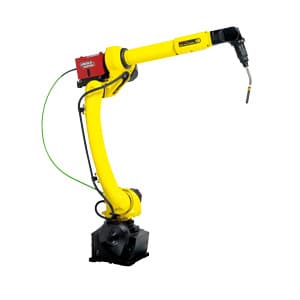
Estimated$80,000 – $160,000
Universal Robots UR10e Welding Cell
The UR10e is best-in-class for collaborative welding cells because its lightweight cobot arm, intuitive teach pendant and extensive third-party ecosystem make cell integration fast and reconfigurable for mixed-product shops. It often yields a lower upfront and lifecycle cost versus fully industrial systems, trading some peak cycle speed and heavy-duty durability for exceptional flexibility and rapid redeployment compared with FANUC or turnkey welding cells.
Show More Collaborative Welding Cells
Estimated$80,000 – $150,000
Servo-Robot POWER-TRAC Laser Vision System
Servo-Robot's Power-Trac is a specialized laser vision seam-tracking system designed for robust production welding and laser welding processes, notable for advanced tracking algorithms and industrialized hardware that reduce scrap and rework. Relative to the other options, it offers a strong balance of adaptability and field-proven tracking performance—often preferred in European manufacturing—but can be more expensive than simpler retrofit lasers like the SmartLaser Plus while providing broader process robustness than basic seam sensors.
Show More Vision Guided Welding Systems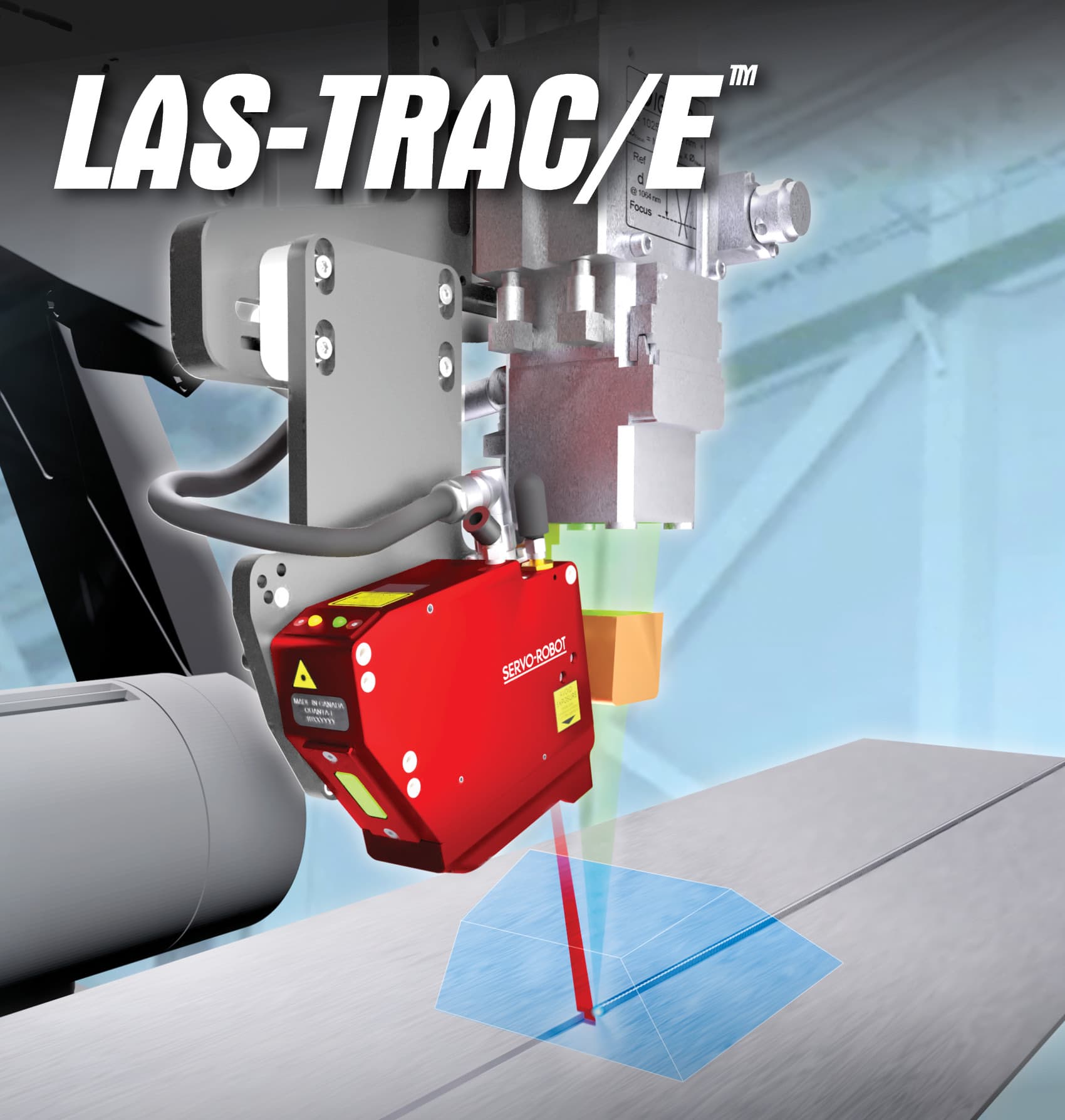
Estimated$30,000 – $80,000
RoboDK is a market-leading, cost-effective offline programming and simulation platform prized for its ease of use, wide robot brand support, and flexible Python API that accelerates deployment for small-to-medium manufacturers and research. Compared to enterprise suites like DELMIA or Siemens, RoboDK offers a much lower entry cost and faster setup while still enabling realistic cycle-time estimation and direct post processors for many controllers, making it the practical choice when budget and agility matter. Its financial advantage is a lighter licensing model and strong community ecosystem that shortens ramp-up versus expensive PLM-integrated systems.
Show More Offline Programming and Simulation Software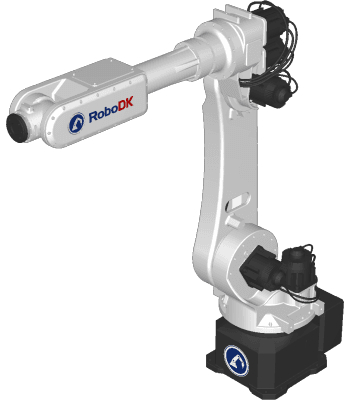
Estimated$800 – $4,500
Lincoln Electric System i21 Robotic Spot Welding Cell
The Lincoln Electric System i21 Robotic Spot Welding Cell combines Lincoln's industry-leading welding power sources and process controls with integrated robotics to maximize weld quality and first-pass yield. Its strength lies in superior welding metallurgy, consumables support and process monitoring—delivering reduced rework costs and strong ROI versus robot-centric offerings—but it typically requires close coordination with robot suppliers to match mechanical flexibility offered directly by brands like KUKA or FANUC.
Show More Robotic Resistance Spot Welding Cells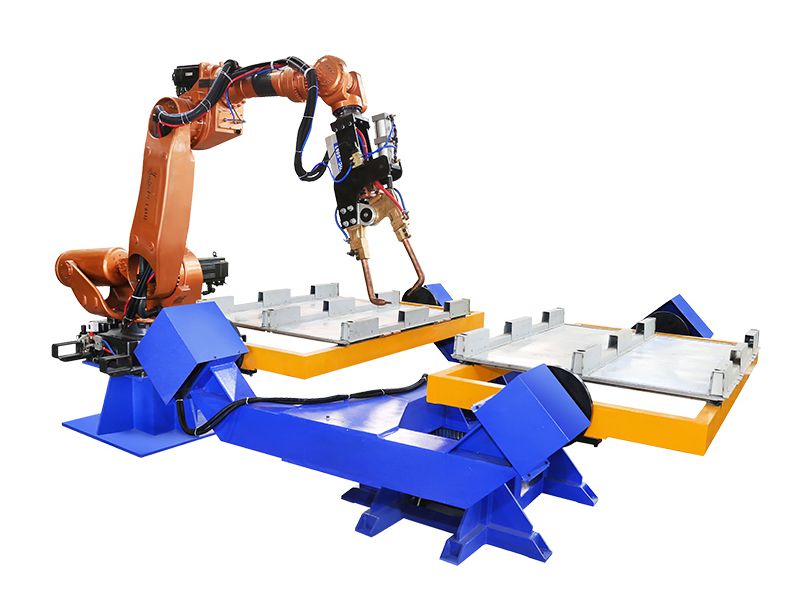
The TRUMPF TruLaser Robot 5020 leads the list for Robotic Laser Welding Cells due to its high-throughput integration of TRUMPF’s proven fiber lasers and intuitive automation software, delivering fast cycle times and strong process stability. Compared with the more compact FANUC QUBE and the cost-focused IPG LightWELD systems, the TruLaser Robot offers a higher production ceiling and lower rework rates, which often translates into a faster return on investment for mid-to-large production runs.
Show More Robotic Laser Welding Cells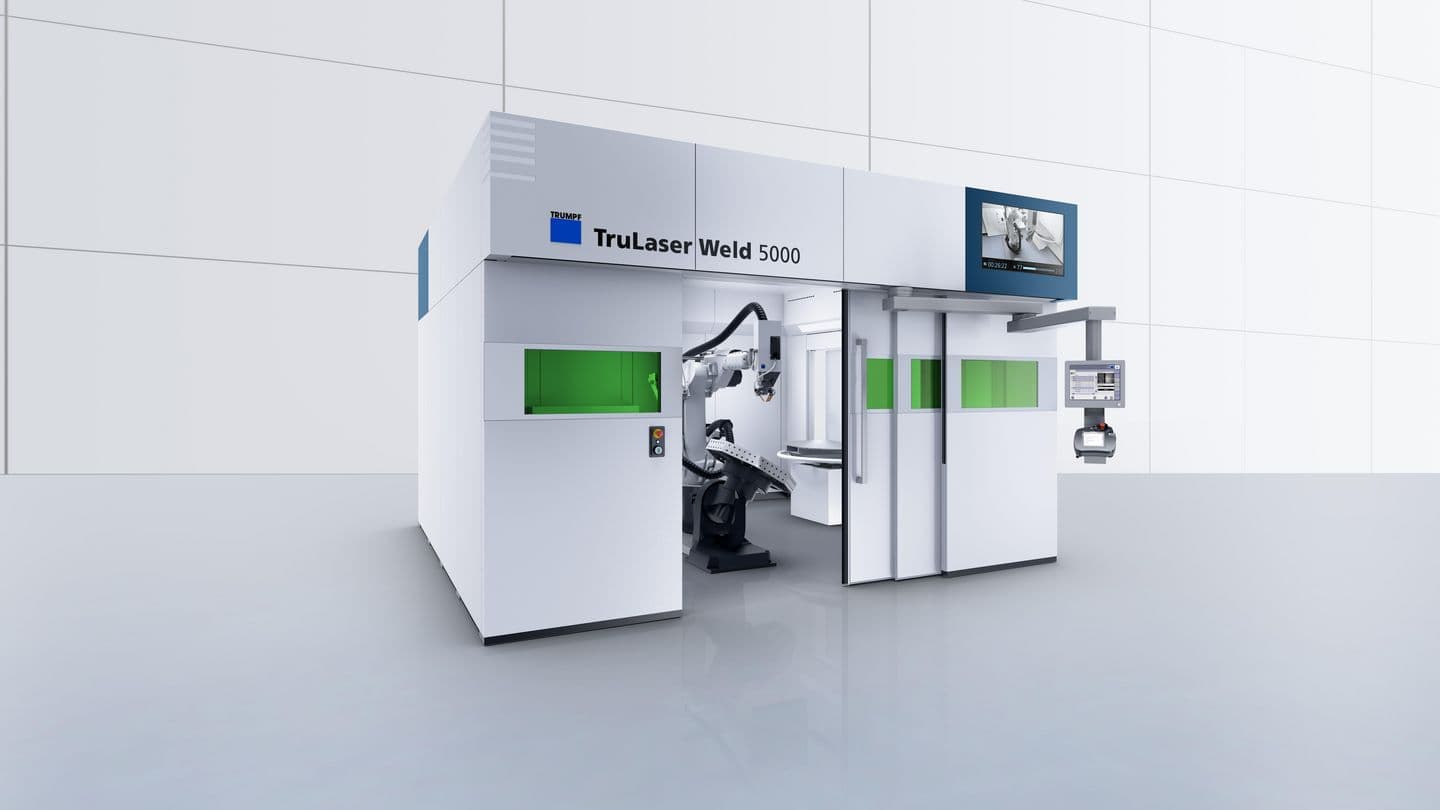
Estimated$400,000 – $900,000
Why robotic welding and automation cells deliver results
A growing body of industrial research and applied studies supports the benefits of robotic welding and complete automation cells. Evidence highlights increased throughput, improved weld consistency, lower scrap and rework rates, and measurable safety gains when automation is paired with proper process control, vision guidance, and operator training. Standards and guidelines, such as ISO safety and collaborative-robot best practices, further help integrators achieve safe, repeatable deployments. For newcomers, the best approach is to evaluate demonstrated return on investment, pilot the solution on representative parts, and use data from connected systems to optimize cycle times.
Consistency and quality: Academic and industry trials show automated welding often reduces weld variability and defect rates compared with manual welding, improving first-pass yield.
Productivity and ROI: Case studies and manufacturing analyses report significant productivity increases; many operations recoup automation investments within a typical 12 to 36 month window depending on throughput and labor costs.
Safety and collaboration: Research into collaborative robots and ISO 15066 guidance demonstrates that cobots can safely perform proximity tasks when integrated with appropriate force limits, safety-rated monitors, and cell design.
Adaptive and vision-guided welding: Studies comparing standard programming to vision-guided and adaptive control show reduced fixturing needs and improved part acceptance for assemblies with variable fit-up.
Industry 4.0 benefits: Connected welding cells enable real-time process monitoring, traceability, and predictive maintenance, which research links to lower downtime and better long-term quality control.
Frequently Asked Questions
Which robot welding arm fits high uptime shops best?
For high-uptime, predictable lifecycle costs, choose the FANUC Arc Mate 100iD, a high-speed 6-axis articulated welding arm built for continuous arc welding production, with an average rating of 4.7.
What exact payload and reach does UR10e welding cell offer?
The Universal Robots UR10e Welding Cell uses a UR10e arm rated for a 10 kg payload and 1300 mm reach, intended for medium‑duty welding tasks, and it has an average rating of 4.6.
Does any listed option include vision for seam tracking?
Yes—FANUC iRVision 3DL Vision System provides integrated 3D scanning for precise spatial awareness and real-time feedback for adaptive weld path correction, with an average rating of 4.6.
What warranty duration is offered for these welding products?
Warranty duration isn’t provided for FANUC Arc Mate 100iD, Universal Robots UR10e Welding Cell, or FANUC iRVision 3DL Vision System in the supplied product data.
Conclusion
In summary, industrial welding robots and automation cells offer Canadian manufacturers measurable gains in quality, throughput, and safety while easing labor constraints and supporting modern production goals. We hope this guide helps you find the right solution for 2026. Use the site search to refine by sector, payload, cell footprint, connectivity features, or to expand results to turnkey integrators and financing options.