

Canada's Top 5 Welding Cell Motion Controllers for 2026
Welding cell motion controllers are high-performance control systems designed to manage coordinated axis motion, path planning, and trajectory control in automated welding cells. In Canada, manufacturers and integrators choose these controllers for their deterministic timing, multi-axis interpolation, and built-in robot kinematics support that deliver precise weld bead placement and repeatable quality. Buyers in Canadian sectors such as automotive, heavy equipment, oil and gas fabrication, and custom metalwork prioritize reliability, local service and parts availability, compliance with regional safety standards, and integration with welding power sources and sensors. Other common preferences include intuitive programming interfaces, offline programming and simulation, Industry 4.0 connectivity for production analytics, and a clear total cost of ownership that balances upfront hardware cost with uptime, ease of maintenance, and energy efficiency.
Inception's AI took the time to understand this market in Canada · · How we pickWe may earn a commission on purchases. It never affects our rankings.
Top Picks Summary
FANUC R-30iB Plus Controller
The Fanuc R-30iB Plus remains a market leader for welding cell motion control thanks to its deterministic high-speed motion architecture, tight robot-tool synchronization, and massive installed base that reduces integration and support costs. Compared with ABB and KUKA offerings it typically delivers faster cycle times and lower total integration expense due to widespread system knowledge and third‑party support, while offering more mature welding-specific I/O and fieldbus options than many alternatives.

Estimated$55,000 – $85,000
ABB OmniCore C30 Controller
ABB's OmniCore C30 stands out for modularity, built-in welding toolkits and advanced cell-level orchestration that reduce custom engineering and enable scalable multi-robot weld cells. Technically it trades the Fanuc mass-market footprint for superior safety integration, virtualization and native cell coordination features that lower long-term capital and commissioning cost in complex, multi-robot welding installations.

KUKA KR C5 Controller
The KUKA KR C5 delivers high-performance motion with a compact footprint and modern real‑time Ethernet support (EtherCAT/Profinet), making it a preferred choice for integrators who prioritize open integration and retrofit flexibility in welding cells. Financially it can reduce hardware and wiring costs in new or upgraded cells and offers an open architecture that can be less costly to adapt than closed, proprietary systems from some competitors.

Estimated$45,000 – $75,000
Yaskawa YRC1000 Controller
Yaskawa's YRC1000 is optimized for arc and spot welding applications with tight motion-to-weld synchronization and an intuitive programming environment that shortens commissioning time for mid-sized welding cells. It competes on lower capital cost and simplicity of deployment compared with Fanuc and ABB, making it attractive where budget and rapid startup are priority considerations without sacrificing welding quality.

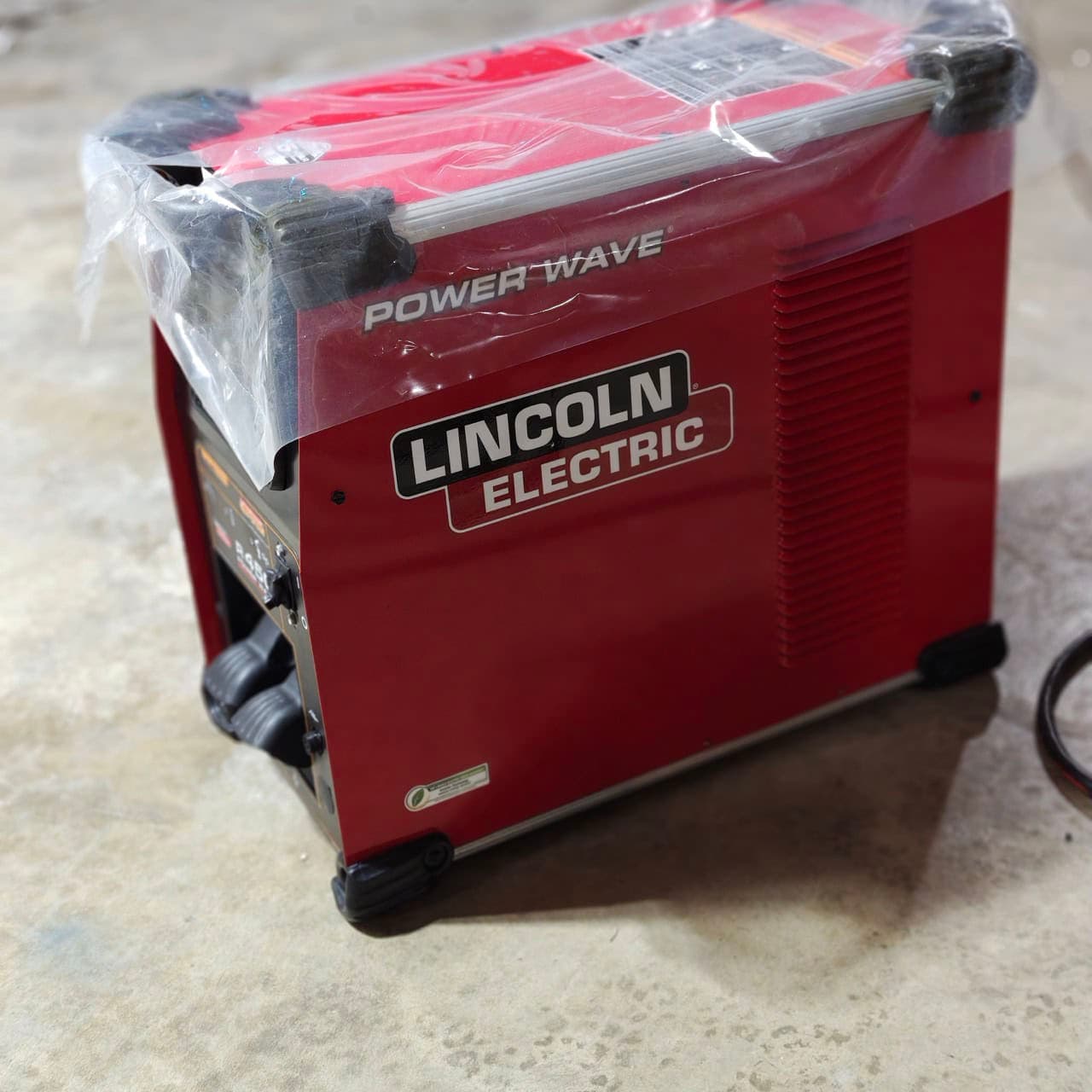
Lincoln Electric Power Wave R450
The Lincoln Electric Power Wave R450 is a high-performance welding power source whose advanced waveform control and process monitoring significantly improves weld quality and reduces consumable and rework costs, making it a complementary leader to motion controllers in a welding cell. Unlike robot controllers that manage motion, the R450 provides the process-side advantages—energy efficiency, programmable welding modes and tight communication interfaces—so pairing it with the listed motion controllers yields the best combined technical and financial outcome for demanding welding applications.
Estimated$25,000 – $45,000
What Research and Industry Evidence Shows
Controlled motion and advanced interpolation methods lead to measurable improvements in weld consistency, reduced rework, and higher throughput. Academic research in control systems and industrial case studies from manufacturing show that deterministic cycle timing and synchronized axis control reduce seam deviation and heat input variability. Integration of motion controllers with robot kinematics, arc sensors, and closed-loop feedback improves bead placement and compensates for part variation. Industry white papers and standards bodies, including papers presented at IEEE conferences and guidance from welding associations, support the link between precise motion control and improved metallurgical consistency and productivity.
Deterministic timing and high-frequency control loops reduce positional jitter, which lowers defect rates and improves bead geometry.
Multi-axis interpolation and path smoothing reduce over-travel and oscillation, producing more consistent weld seams and less spatter.
Closed-loop feedback from arc sensors and force/torque sensing helps maintain ideal arc conditions and adapt to part variation in real time.
Case studies in automotive and fabrication show cycle time reductions and lower scrap rates when advanced controllers and kinematics are adopted.
Industry reports emphasize integration and data connectivity for predictive maintenance and process traceability, improving uptime and compliance.
Frequently Asked Questions
Which controller should I choose for multi-robot welding cells?
Choose the ABB OmniCore C30 Controller if you need modular, cell-level orchestration: it supports multi-robot synchronization and smooth seam tracking with native ABB welding suites.
What motion spec does the KUKA KR C5 support?
The KUKA KR C5 Controller is tuned for precise path following and repeatable bead placement, with modern real-time Ethernet support including EtherCAT/Profinet.
How does KUKA KR C5 listing price compare to others?
The KUKA KR C5 Controller shows a listing price of $34.96, while Fanuc R-30iB Plus and ABB OmniCore C30 don’t list prices in the provided data.
What compatibility options do Fanuc R-30iB Plus controllers offer?
The Fanuc R-30iB Plus Controller has broad compatibility with FANUC robots and native welding packages for seamless welding cell integration, with a 4.6 average rating.
Conclusion
In Canada in 2026, the right welding cell motion controller can be the difference between inconsistent output and reliable, high-quality production. The five controllers featured here are the Fanuc R-30iB Plus Controller, ABB OmniCore C30 Controller, KUKA KR C5 Controller, Yaskawa YRC1000 Controller, and Lincoln Electric Power Wave R450. For most integrators and manufacturers seeking a balance of performance, proven reliability, and widespread local support in Canada, the Fanuc R-30iB Plus Controller is often the best choice. We hope you found the information you were looking for; you can refine your search or expand results using the search function to compare features, certifications, and local service options.