

Top 5 Robotic Resistance Spot Welding Cells in Canada — 2026
Robotic resistance spot welding cells are automated production units specialized for spot joining in automotive, appliance, and metal fabrication manufacturing. These cells deliver consistent electrode force control, tight cycle repeatability, and high throughput while reducing operator variability. Canadian manufacturers prefer systems that combine robust hardware with Industry 4.0 connectivity, local service and parts support, energy efficiency, and compliance with Canadian and North American safety and electrical standards. Recent advances such as servo-controlled squeeze systems, adaptive current profiles, integrated cooling management, and machine-to-cloud quality traceability make modern spot welding cells especially appealing for factories focused on reduced rework, predictable cycle times, and measurable return on investment. Buyers in Canada often prioritize durability, uptime guarantees, modular footprints for plant flexibility, and vendors who offer training, preventative maintenance, and retrofit options to extend lifecycle value.
Inception's AI took the time to understand this market in Canada · · How we pickWe may earn a commission on purchases. It never affects our rankings.
Top Picks Summary
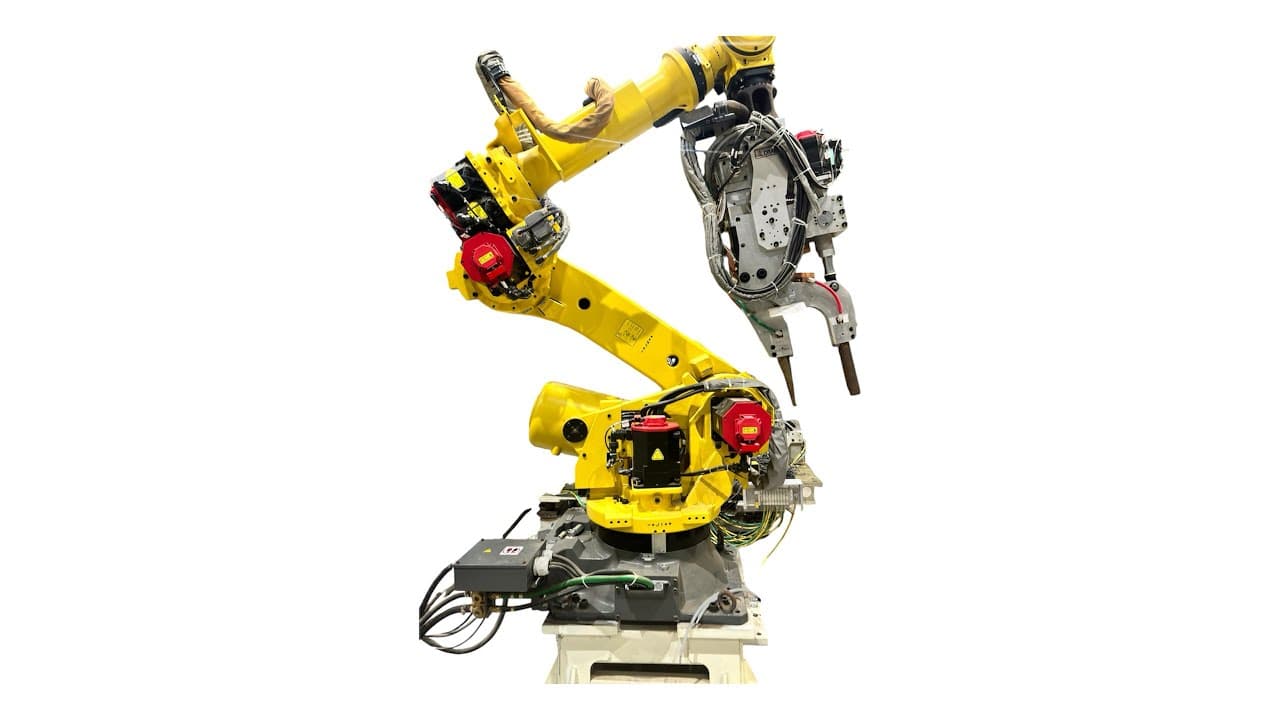
FANUC R-2000iC Spot Welding Cell
The FANUC R-2000iC Spot Welding Cell pairs FANUC's widely deployed R-2000iC robot with integrated spot-welding power modules to deliver exceptional cycle times and class-leading uptime for high-volume welding lines. Its mature software ecosystem and global service network reduce integration risk and total cost of ownership versus niche systems, making it a strong choice when comparing reliability and predictable lifecycle costs across the other leaders in this list.
Estimated$220,000 – $380,000
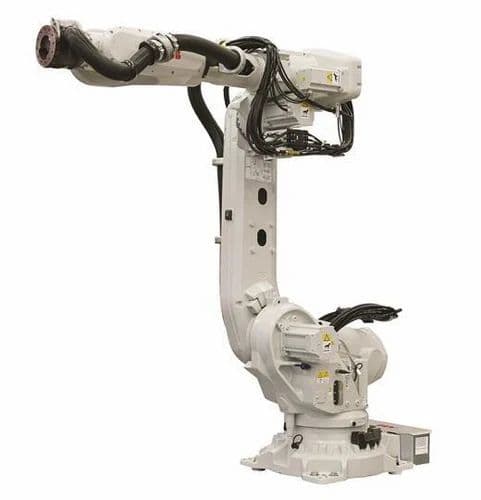
ABB IRB 6700 Spot Welding System
The ABB IRB 6700 Spot Welding System is built around a heavy-duty robot platform and energy-efficient welding power electronics that excel on large, high-torque assemblies and long-reach applications. While its initial capital outlay can be higher than more compact systems, customers benefit from lower energy and maintenance costs over time and superior payload/reach compared with smaller-footprint competitors like the Motoman SP100B.
KUKA KR QUANTEC Spot Welding Cell
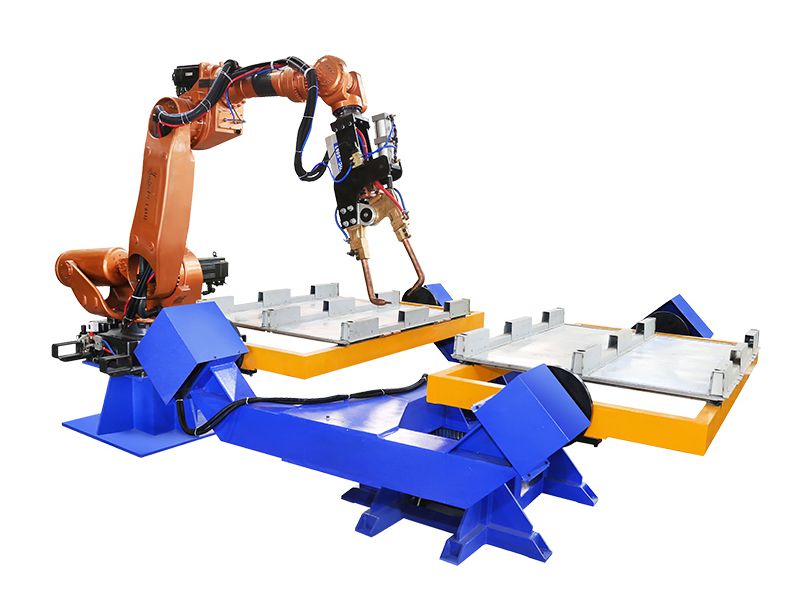
The KUKA KR QUANTEC Spot Welding Cell emphasizes modularity and flexibility, offering configurable cell layouts and sensor options that make line changes and mixed-model production financially practical. It strikes a balance between the heavy-duty capability of the ABB IRB 6700 and the compact speed of the Motoman SP100B, often delivering the best mid-market tradeoff of purchase price, reconfiguration cost and software-driven productivity.

Yaskawa Motoman SP100B Spot Welding System
The Yaskawa Motoman SP100B Spot Welding System is a compact, high-speed solution optimized for tight-line footprints and short-cycle automotive assemblies, providing strong per-spot throughput and low floor-space cost. Compared with larger cells from FANUC, ABB and KUKA it offers a lower capital entry point and faster ROI for small-to-medium volume lines, though it trades off some payload/reach capacity found in the heavier platforms.

Estimated$210,000 – $360,000
Lincoln Electric System i21 Robotic Spot Welding Cell
The Lincoln Electric System i21 Robotic Spot Welding Cell combines Lincoln's industry-leading welding power sources and process controls with integrated robotics to maximize weld quality and first-pass yield. Its strength lies in superior welding metallurgy, consumables support and process monitoring—delivering reduced rework costs and strong ROI versus robot-centric offerings—but it typically requires close coordination with robot suppliers to match mechanical flexibility offered directly by brands like KUKA or FANUC.
Research and evidence: why robotic spot welding cells work
Academic studies, industry white papers, and welding institute reports consistently show that automated resistance spot welding with closed-loop control delivers improved joint consistency, lower defect rates, and higher first-pass yield compared with manual methods. Key research supports the role of precise squeeze force control, adaptive current shaping, and real-time monitoring in reducing expulsion, minimizing electrode wear, and maintaining weld nugget size across high-volume cycles. Connectivity and data capture enable traceability and trend analysis that drive predictive maintenance programs and reduce unplanned downtime. The combined effect is better product quality, lower total cost of ownership, and stronger compliance with quality standards used by automotive and appliance manufacturers.
Closed-loop electrode force and current control improves repeatability and reduces weld variability in high-volume production.
Adaptive current profiles and servo squeeze systems reduce expulsion and electrode wear, maintaining consistent weld nugget geometry.
Integrated cooling and thermal management extend tooling life and reduce cycle-related quality drift over long production runs.
Data capture and traceability support quality audits and enable predictive maintenance, which lowers unplanned downtime.
Peer-reviewed and industry literature from welding institutes and manufacturing journals validate improvements in first-pass yield, process stability, and lifecycle cost reduction.
Frequently Asked Questions
Which robotic resistance spot welding cell fits high-volume lines best?
Choose the FANUC R-2000iC Spot Welding Cell for high-volume welding lines, since it pairs the FANUC R-2000iC robot with integrated spot-welding power modules and has an average rating of 4.6.
What capability does the ABB IRB 6700 spot welding system provide?
The ABB IRB 6700 Spot Welding System offers a high-payload, long-reach platform suited for heavy-gauge automotive spot welding, with an average rating of 4.5.
How does FANUC R-2000iC value compare to ABB IRB 6700 pricing?
The provided data doesn’t include any prices for the FANUC R-2000iC Spot Welding Cell or the ABB IRB 6700 Spot Welding System, so I can’t compare value by cost.
Is KUKA KR QUANTEC spot welding cell flexible for mixed-model production?
Yes—KUKA KR QUANTEC Spot Welding Cell supports configurable layouts and sensor options for mixed-model production, with an average rating of 4.4.
Conclusion
In Canada, robotic resistance spot welding cells are a proven route to higher throughput, consistent quality, and stronger traceability for automotive, appliance, and general fabrication lines. The five leading systems to consider here are the FANUC R-2000iC Spot Welding Cell, ABB IRB 6700 Spot Welding System, KUKA KR QUANTEC Spot Welding Cell, Yaskawa Motoman SP100B Spot Welding System, and Lincoln Electric System i21 Robotic Spot Welding Cell. For most Canadian operations seeking a balance of reliability, broad aftermarket support, and proven integration options, the FANUC R-2000iC Spot Welding Cell stands out as the best choice among the products listed. I hope you found what you were looking for; you can refine or expand your search using the site search or filters to compare specifications, service plans, and local support options.