

Top 5 Vision Guided Welding Systems in Canada — 2026
Vision guided welding systems combine integrated 2D/3D imaging, laser seam tracking, AI image processing, and sensor fusion to enable adaptive path correction, gap compensation, and reliable weld seam detection in variable-fixture environments. In Canada for 2026, these systems appeal to fabricators, automotive and EV suppliers, aerospace shops, and job shops because they increase first-pass yield, lower rework costs, and allow higher throughput with smaller, more skilled operator teams. Buyers prioritize systems that offer proven accuracy, easy integration with existing robot controllers, local service and parts availability, repeatable performance across mixed production runs, and measurable return on investment. Regional factors such as strong manufacturing clusters in Ontario and Quebec, growing EV supply chains, and incentives for automation continue to accelerate adoption across both large manufacturers and mid-sized shops.
Inception's AI took the time to understand this market in Canada · · How we pickWe may earn a commission on purchases. It never affects our rankings.
Top Picks Summary
FANUC iRVision 3DL Vision System
FANUC's iRVision 3DL is positioned as a market-leading choice for vision guided welding systems because it offers tightly integrated 3D scanning and robot control that minimizes integration time and risk on industrial welding lines. Compared with the other products in this list it carries a premium but delivers the financial advantage of reduced engineering hours and a global service network, making it the go-to when uptime and seamless robot/vision coordination are the priority.

Estimated$60,000 – $120,000
Keyence XG-X Series Vision System
The Keyence XG-X series is best-in-class for high-speed, high-reliability inspection and seam sensing in vision guided welding applications, prized for compact hardware and fast setup that lowers per-unit inspection cost on high-throughput lines. Against the other systems here it typically offers a lower total cost of ownership for pure sensing and inspection tasks, although it relies on third-party robot integration where FANUC provides deeper native control.

Meta Vision SmartLaser Plus
Meta Vision's SmartLaser Plus focuses on laser-based seam tracking tailored for welding retrofit projects, offering precise triangulation and a favorable price-to-performance ratio for budget-conscious integrators. Compared to the broader, robot-centric platforms in this list it is often the most economical way to add reliable seam tracking to existing equipment, albeit with a smaller ecosystem and fewer native robot control features than the largest vendors.

Estimated$25,000 – $65,000
Servo-Robot POWER-TRAC Laser Vision System
Servo-Robot's Power-Trac is a specialized laser vision seam-tracking system designed for robust production welding and laser welding processes, notable for advanced tracking algorithms and industrialized hardware that reduce scrap and rework. Relative to the other options, it offers a strong balance of adaptability and field-proven tracking performance—often preferred in European manufacturing—but can be more expensive than simpler retrofit lasers like the SmartLaser Plus while providing broader process robustness than basic seam sensors.
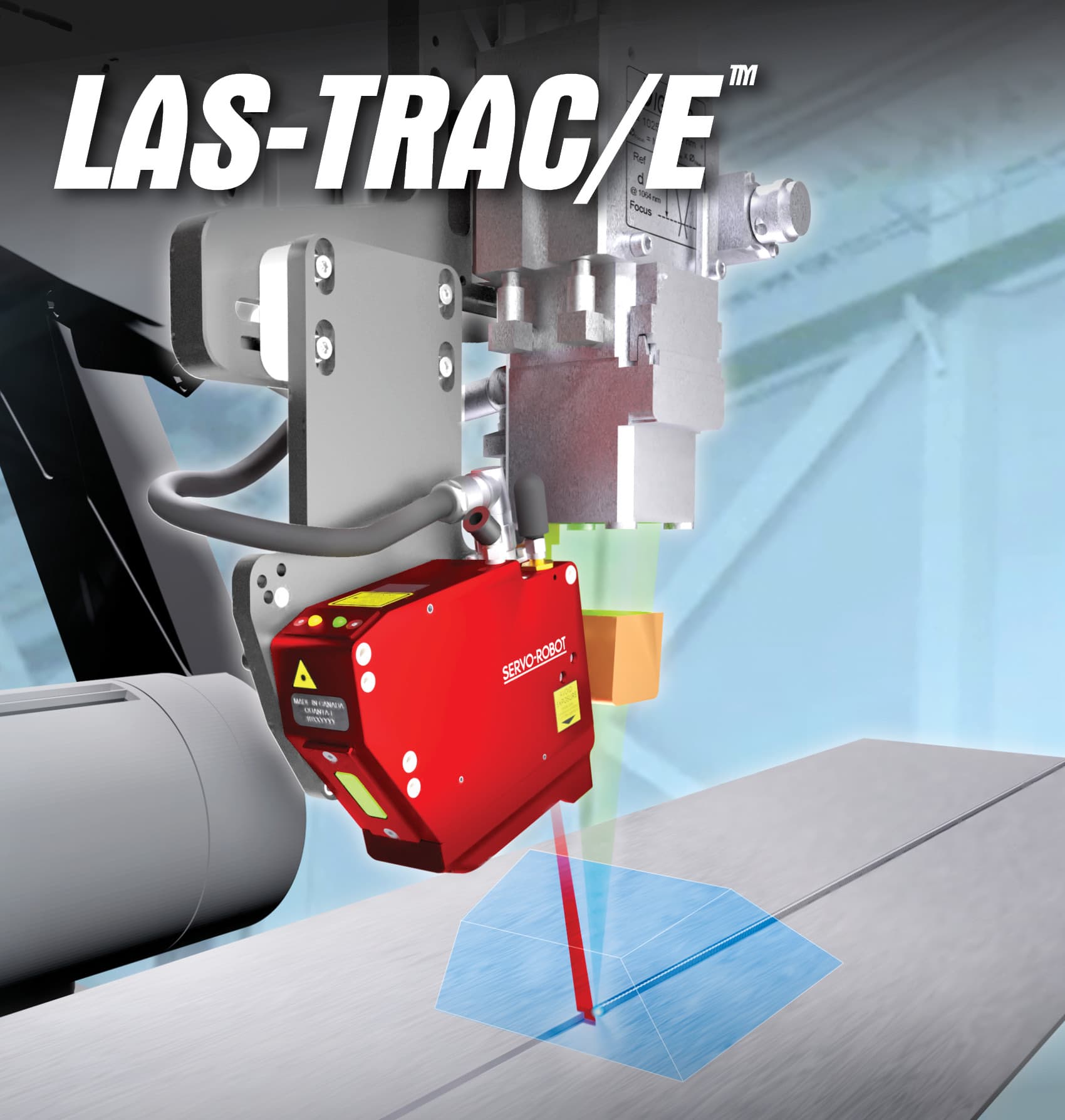
Estimated$30,000 – $80,000
Lincoln Electric Seam Tracking System
Lincoln Electric's seam tracking solution is built by a welding-first company and is optimized for arc welding process integration, delivering practical weld-focused features and easier pairing with Lincoln power sources that can lower overall project cost for welding shops. Compared with the general-purpose vision leaders listed above, Lincoln's offering brings deeper welding process know-how and reduced commissioning time for arc welding applications, though it may lack some of the advanced multi-purpose vision inspection capabilities of Keyence or FANUC.

How vision guided welding improves quality and productivity
Multiple industry reviews, white papers, and vendor case studies show that combining machine vision, laser seam tracking, and closed-loop feedback delivers more consistent welds and reduces manual rework. The technical advantages are accessible to non-specialists: vision systems precisely locate seams and gaps, AI-based image processing tolerates glare and spatter, and sensor fusion stabilizes guidance in noisy environments. Together these features make welding processes more predictable and reduce dependence on fixturing precision.
2D and 3D imaging: 2D systems provide fast pattern recognition; 3D or structured light captures depth for gap and fit-up measurement, enabling adaptive path planning.
Laser seam tracking: a dedicated laser sensor follows seam geometry in real time, maintaining torch-to-work alignment during travel and compensation.
AI image processing: trained algorithms improve detection under variable lighting, reflections, or spatter compared with basic thresholding.
Sensor fusion and closed-loop control: combining camera, laser, and robot encoder data reduces false positives and drives immediate corrective commands to the robot.
Proven outcomes: manufacturer case studies and industry reports document consistent reductions in scrap and rework and faster set-up times, especially for mixed-batch production and complex joints.
Evaluation tips: prioritize systems with clear integration documentation, local support in Canada, field-updatable models, and the ability to log diagnostics for process improvement.
Frequently Asked Questions
Which vision system is best for FANUC welding setups?
FANUC iRVision 3DL Vision System fits FANUC robot welding setups because it has integrated 3D vision tailored for FANUC robots, with high-accuracy seam localization and real-time feedback; it’s rated 4.6.
What exact capability does Keyence XG-X Series provide?
Keyence XG-X Series provides high-speed image processing with advanced inspection and pattern-matching algorithms, plus a modular camera and lighting lineup and a user-friendly GUI; it’s rated 4.6.
Is Meta Vision SmartLaser Plus cheaper than Keyence XG-X?
The provided data does not include any prices for Meta Vision SmartLaser Plus or Keyence XG-X Series, so I can’t compare cost; both ratings are 4.4 (Meta) and 4.6 (Keyence).
Does SmartLaser Plus support reflective welding surfaces?
Meta Vision SmartLaser Plus is described as having robust performance on reflective and variable-surface materials common in welding, using dedicated laser-based seam tracking optimized for high-speed applications; it’s rated 4.4.
Conclusion
This 2026 lineup highlights practical choices across common welding needs in Canada. The FANUC iRVision 3DL Vision System is the strongest all-round option for shops that need proven industrial robustness and broad integrator support. The Keyence XG-X Series Vision System excels when inspection speed and compact integration matter. The Meta Vision SmartLaser Plus is focused on high-precision laser seam tracking and adaptive gap compensation. The Servo-Robot Power-Trac Laser Vision System is a solid choice for high-speed production lines that need reliable laser guidance. The Lincoln Electric Seam Tracking System provides tight weld-focused integration and is appealing for shops already using Lincoln welding equipment. I hope you found what you were looking for; use the search to refine by industry, welding process, integration requirements, or expand to compare support and local availability across Canadian provinces.