

Best Ultrasonic Weld Testing Systems in Canada 2026: Top 5 Phased Array, TOFD, and UT Solutions
Ultrasonic Weld Testing Systems for weld monitoring use phased array, time-of-flight diffraction (TOFD), and conventional ultrasonic testing (UT) to deliver volumetric detection of internal flaws such as cracks, lack of fusion, and porosity in welds and base materials. In Canada the category is especially relevant across oil and gas, pipeline, fabrication shops, power generation, and infrastructure inspection, where regulatory compliance, safety, and traceability are critical. Buyers increasingly prefer portable phased array scanners for field inspections, automated raster scanning for repeatable coverage, and systems that integrate reporting and traceability into digital asset workflows. Customers value devices that combine high defect sensitivity, clear imaging and sizing, rugged portability for on-site use, and software ecosystems that simplify reporting to meet Canadian standards and client specifications.
Inception's AI took the time to understand this market in Canada · · How we pickWe may earn a commission on purchases. It never affects our rankings.
Top Picks Summary
Olympus OmniScan X3
The Olympus OmniScan X3 is an industry-leading phased-array ultrasonic platform that combines PA and TOFD workflows with advanced reconstruction and connectivity for continuous weld monitoring. It earns its market-leader position through high throughput, a mature software ecosystem and broad service availability, which reduce total inspection time and lifecycle cost compared with niche high-resolution imagers like Eddyfi or lower-cost testers such as Proceq.

Estimated$45,000 – $85,000
Eddyfi Mantis
The Eddyfi Mantis is a high-performance phased-array ultrasonic instrument optimized for maximum imaging resolution and sensitivity, well suited for critical weld monitoring and inspections of complex geometries. Its technical advantage is superior signal processing and dense channel capability that often reveals smaller, repeatable indications than compact systems like the Sonatest Veo+ or budget-focused units like the Proceq, though it typically carries a premium price for laboratories requiring top-end detectability.
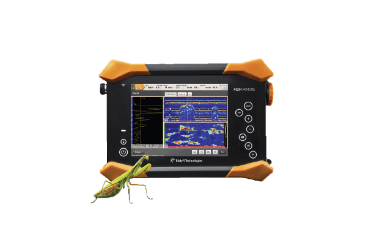
Estimated$60,000 – $120,000
Sonatest Veo+
The Sonatest Veo+ delivers a rugged, portable phased-array and TOFD solution that balances performance and cost for field weld monitoring and routine quality assurance. While it does not match the channel density or imaging finesse of OmniScan X3 or Eddyfi Mantis, its lower total cost of ownership, intuitive interface and tough hardware make it a strong value choice for contractors and in-service inspections.

Proceq UT8000
The Proceq UT8000 is a compact, user-friendly ultrasonic tester aimed at cost-sensitive weld monitoring tasks, offering reliable pulse-echo thickness measurements and straightforward reporting. It provides a financially efficient screening tool for large-scale or frequent inspections, trading advanced phased-array imaging found in systems like Phasor XS or OmniScan X3 for affordability, simplicity and long battery life.
Estimated$3,000 – $8,000
GE Phasor XS
The GE Phasor XS is an enterprise-grade phased-array ultrasonic platform engineered for industrial weld monitoring with integrated automation, diagnostics and extensive service support tailored to asset-intensive operators. It competes with the OmniScan X3 on scalability and lifecycle service offerings, and is often chosen by organizations that prioritize vendor support and standardized fleet management over the absolute imaging resolution delivered by specialist instruments such as the Eddyfi Mantis.

Estimated$40,000 – $90,000
Research-Backed Benefits of Ultrasonic Weld Testing
Scientific and industry research supports phased array, TOFD, and conventional UT as reliable methods for volumetric flaw detection and sizing. Studies published in peer-reviewed NDT journals and technical reports from national research organizations validate the advantages of combined techniques, automated scanning, and modern signal processing for improving detection rates, reducing false positives, and increasing inspection throughput.
Phased array ultrasound improves defect visualization and focusing compared with single-element UT, giving finer spatial resolution and multi-angle views in a single scan.
TOFD is widely documented for accurate crack height sizing and reliable detection of planar defects when used together with phased array for complementary data.
Combined phased array and TOFD workflows reduce false calls and improve sizing accuracy; multiple studies in NDT and materials journals show measurable gains in probability of detection for typical weld flaws.
Automated raster scanning and encoded scanners increase repeatability and coverage while reducing operator variation and inspection time in field conditions.
Integrated reporting and traceability systems support compliance with inspection standards and client quality systems, and research shows they reduce administrative errors and speed decision making.
Portable hardware advances and improved signal processing allow many systems to achieve sub-millimeter resolution in practical inspection setups, suitable for critical welds in Canadian infrastructure projects.
National and university research programs, including reports from technical societies and the National Research Council Canada, support deployment recommendations and best practices for phased array and TOFD in high-consequence inspections.
Frequently Asked Questions
Which ultrasonic weld testing system fits continuous monitoring best?
For continuous weld monitoring, choose the Olympus OmniScan X3 because it combines phased-array and TOFD workflows with advanced reconstruction and connectivity, and it has an average rating of 4.7.
Does Eddyfi Mantis support FMC or TFM imaging workflows?
Yes—Eddyfi Mantis supports FMC/TFM imaging workflows, and its key features include high-dynamic-range electronics plus advanced imaging modes for fine defect characterization (average rating 4.6).
What value do I get with Sonatest Veo+ price versus features?
The provided data doesn’t list a price for Sonatest Veo+, so I can’t compare value; what’s stated is that Veo+ is battery-operated with a small, lightweight phased-array unit and an average rating of 4.5.
How is Sonatest Veo+ different for routine QA vs complex welds?
Sonatest Veo+ is a rugged, portable phased-array and TOFD solution for field weld monitoring and routine quality assurance, while Olympus OmniScan X3 and Eddyfi Mantis are positioned for higher imaging finesse (Veo+ rating: 4.6).
Conclusion
In Canada, ultrasonic weld testing remains a leading choice for volumetric weld inspection because it delivers reliable internal flaw detection, clear sizing, and modern reporting capabilities. The five systems featured on this page — Olympus OmniScan X3, Eddyfi Mantis, Sonatest Veo+, Proceq UT8000, and GE Phasor XS — cover the full spectrum from advanced portable phased array and TOFD to rugged conventional UT. For most Canadian users seeking a proven balance of features, software ecosystem, service network and phased array/TOFD capability, the Olympus OmniScan X3 stands out as the best choice. We hope you found what you were looking for; you can refine or expand your search using the site search to compare specs, pricing, or local support options.