

Top 7 Industrial Weld Monitoring and Quality Inspection Systems in Canada for 2026
Industrial weld monitoring and quality inspection systems are critical components in modern automotive and heavy industrial manufacturing. These advanced setups include inline sensors, arc monitoring tools, vision inspection cameras, and non-destructive testing systems designed to verify weld integrity and support full traceability. In the Canadian market, where automotive manufacturing and aerospace sectors demand strict adherence to safety and regulatory standards, these systems have become indispensable. Plant managers and quality assurance engineers prefer solutions that offer real-time process monitoring and AI-assisted defect detection, as they drastically reduce scrap rates and prevent costly recalls. By integrating seamless data logging, these systems not only ensure compliance with stringent Canadian industrial codes but also empower facilities to optimize their welding parameters for peak efficiency and reliability.
Inception's AI took the time to understand this market in Canada · · How we pickWe may earn a commission on purchases. It never affects our rankings.
Top Picks Summary
XIRIS XVC-1000 Weld Camera System
The XVC-1000 is a high-dynamic-range weld camera optimized for weld pool and arc visibility, making it an excellent complement to inline seam trackers by adding process insight and quality monitoring to positional data. Technically, it does not replace laser seam sensors for positional control but often provides the best value-added monitoring per dollar when paired with trackers like the STS-200 or POWER-TRAC, helping reduce scrap and improve first-pass yield.
Show More Inline Seam Tracking Sensors for Weld Monitoring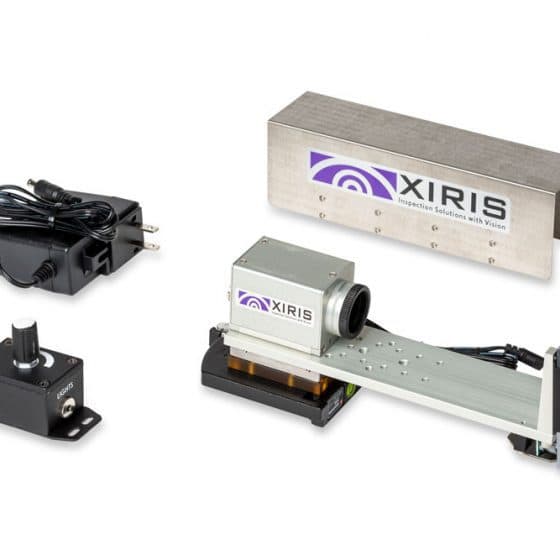
Estimated$5,000 – $9,000
Fronius WeldCube Premium
Fronius WeldCube Premium delivers enterprise-grade arc process and stability monitoring with high-resolution waveform capture, advanced analytics and robust IoT connectivity for traceability and centralized quality control. It often outperforms competitors on software flexibility and multi-brand compatibility for AMT environments, though its premium pricing reflects the advanced analytics and cloud/IT integration capabilities not present in simpler shop-floor systems.
Show More Arc Process and Stability Monitoring Equipment for Weld Monitoring
Servo-Robot WeldROVER Laser Vision System
Servo-Robot's WeldROVER laser vision system is engineered specifically for robotic welding, combining robust laser triangulation with weld-tailored tracking algorithms to handle complex geometries and spatter-heavy environments. It differentiates from broader vision platforms by offering weld-focused software, ruggedized hardware and integration tools that reduce rework and maintenance costs, delivering strong ROI in high-volume welding cells.
Show More Vision Inspection Camera Systems for Weld Monitoring
We may earn a commission on purchases. It never affects our rankings.
Estimated$20,000 – $55,000
The Eddyfi Mantis is a high-performance phased-array ultrasonic instrument optimized for maximum imaging resolution and sensitivity, well suited for critical weld monitoring and inspections of complex geometries. Its technical advantage is superior signal processing and dense channel capability that often reveals smaller, repeatable indications than compact systems like the Sonatest Veo+ or budget-focused units like the Proceq, though it typically carries a premium price for laboratories requiring top-end detectability.
Show More Ultrasonic Weld Testing Systems for Weld Monitoring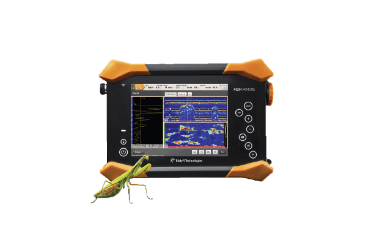
Estimated$60,000 – $120,000
The YXLON FF35 CT is positioned as a best-in-class micro‑CT solution for weld monitoring, offering volumetric inspection and high-contrast, sub-100 µm resolution that reveals root defects, porosity and lack-of-fusion invisible to 2D radiography. Compared with 2D systems on this list it delivers far greater diagnostic confidence for complex, multi-material welds and, although its capital expense is higher, its ability to reduce costly rework and enable automated pass/fail metrology improves long‑term inspection economics for high-value parts. For production environments that require true internal geometry characterization rather than only projected images, the FF35 CT is the technical leader.
Show More Radiographic and X Ray Inspection Systems for Weld Monitoring
Estimated$600,000 – $1,200,000
Eddyfi Ectane 3
The Eddyfi Ectane 3 is a market-leading, high-channel-count phased-array eddy current instrument engineered for complex weld inspection and volumetric electromagnetic imaging, offering multi-frequency excitation and advanced algorithms that reveal subsurface flaws that simpler ECT units can miss. Technically more capable than single-channel handhelds like the NORTEC 600 or Reddy and more focused on electromagnetic imaging than the OmniScan's hybrid ultrasonic/ECA approach, it commands a premium price but delivers superior defect characterization and faster coverage on critical welded assets.
Show More Eddy Current and Electromagnetic Inspection Systems for Weld Monitoring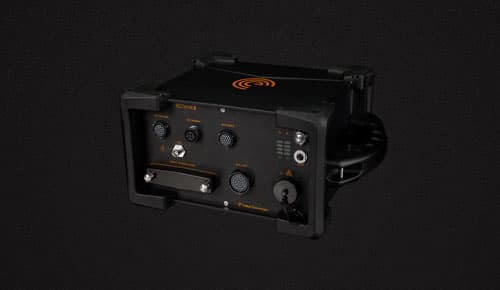
We may earn a commission on purchases. It never affects our rankings.
Estimated$90,000 – $160,000
Infratec VarioCAM HD
The Infratec VarioCAM HD positions itself between basic uncooled cameras and high-end cooled systems by offering very high pixel counts, versatile optics and comprehensive software for detailed weld seam imaging and documentation. It provides a cost-effective route to near-lab image quality for production quality assurance, delivering superior spatial resolution compared with compact units like the PI 640i and greater affordability than cooled ImageIR systems. For users who need fine spatial detail across welds without the premium of a cooled sensor, the VarioCAM HD is a technically balanced choice.
Show More Thermographic Infrared Inspection Systems for Weld Monitoring
Estimated$25,000 – $40,000
How to Choose the Right Weld Monitoring System
When evaluating weld inspection technology, the two most critical axes are integration capability with your existing robotics and the latency of the defect detection software. A system that cannot communicate seamlessly with your current PLC or welding power source will create data silos, while high-latency processing defeats the purpose of real-time inline correction.
Look for systems with native EtherNet/IP or PROFINET compatibility to ensure seamless handshakes with your existing robotic welding cells and programmable logic controllers.
Ignore marketing claims about infinite data storage and instead focus on the sampling rate; a minimum of 10 kHz is required for accurate high-speed arc monitoring to catch micro-spatter and voltage drops.
If your facility handles complex geometries or reflective materials like aluminum, prioritize 3D laser triangulation sensors over standard 2D vision cameras to avoid false defect flags caused by glare.
Verify that the AI defect detection software allows for localized, on-premise model training rather than relying solely on cloud processing, which can introduce unacceptable latency on the production floor.
Frequently Asked Questions
Which weld monitoring system is best for robotic arc welding?
The Servo-Robot WeldROVER Laser Vision System is best for robotic arc welding because its laser triangulation and weld-tailored tracking algorithms handle complex geometries and spatter-heavy environments with a 4.3 average rating.
What resolution does the XIRIS XVC-1000 Weld Camera System provide?
The XIRIS XVC-1000 Weld Camera System provides high-resolution imaging and high-dynamic-range video output to reduce arc glare, holding a 4.7 average rating for clear weld-pool visibility.
What features are included in the Fronius WeldCube software?
The Fronius WeldCube includes high-resolution arc waveform logging, advanced signal analysis for stability trends, and comprehensive reporting tools, backed by a 4.6 average rating.
How does the Servo-Robot WeldROVER handle harsh welding conditions?
The Servo-Robot WeldROVER uses active compensation for arc glare and spatter, combining laser triangulation and dedicated tracking algorithms for deployment in demanding environments.
Conclusion
Upgrading your quality assurance infrastructure is a vital step for any Canadian manufacturing facility looking to maintain a competitive edge in the global automotive and industrial sectors. We hope this guide has helped you identify the ideal weld monitoring and inspection technology to safeguard your production lines and meet strict regulatory standards. If you need to explore different specifications or look for specific brand integrations, please use the search function to refine or expand your results.