

Top 5 Automatic Trailer Restraint Systems for Dock Loading Bays in Canada 2026
Automatic trailer restraint systems for dock loading bays are fully automated safety devices that detect, engage, and release trailer restraints without operator input to streamline dock workflows and improve throughput. In Canada, demand for these systems is driven by rising automation, labour shortages, stricter safety expectations, and the need to integrate dock operations with yard management and warehouse management systems. These solutions reduce dwell time by automating securement and release, minimize human error, and improve compliance with OSHA, ANSI, and Canadian safety guidance such as CSA recommendations. Buyers increasingly prefer systems that offer IoT connectivity, predictive maintenance, clear LED communication with drivers, low lifecycle costs, and straightforward integration with dock levelers, seals, and vehicle tracking. For 2026, fleet-heavy operations, third party logistics providers, food and beverage manufacturers, and cold storage facilities in Canada prioritize reliability, vendor support across provinces, and proven ROI when selecting an automatic trailer restraint.
Inception's AI took the time to understand this market in Canada · · How we pickWe may earn a commission on purchases. It never affects our rankings.
Top Picks Summary
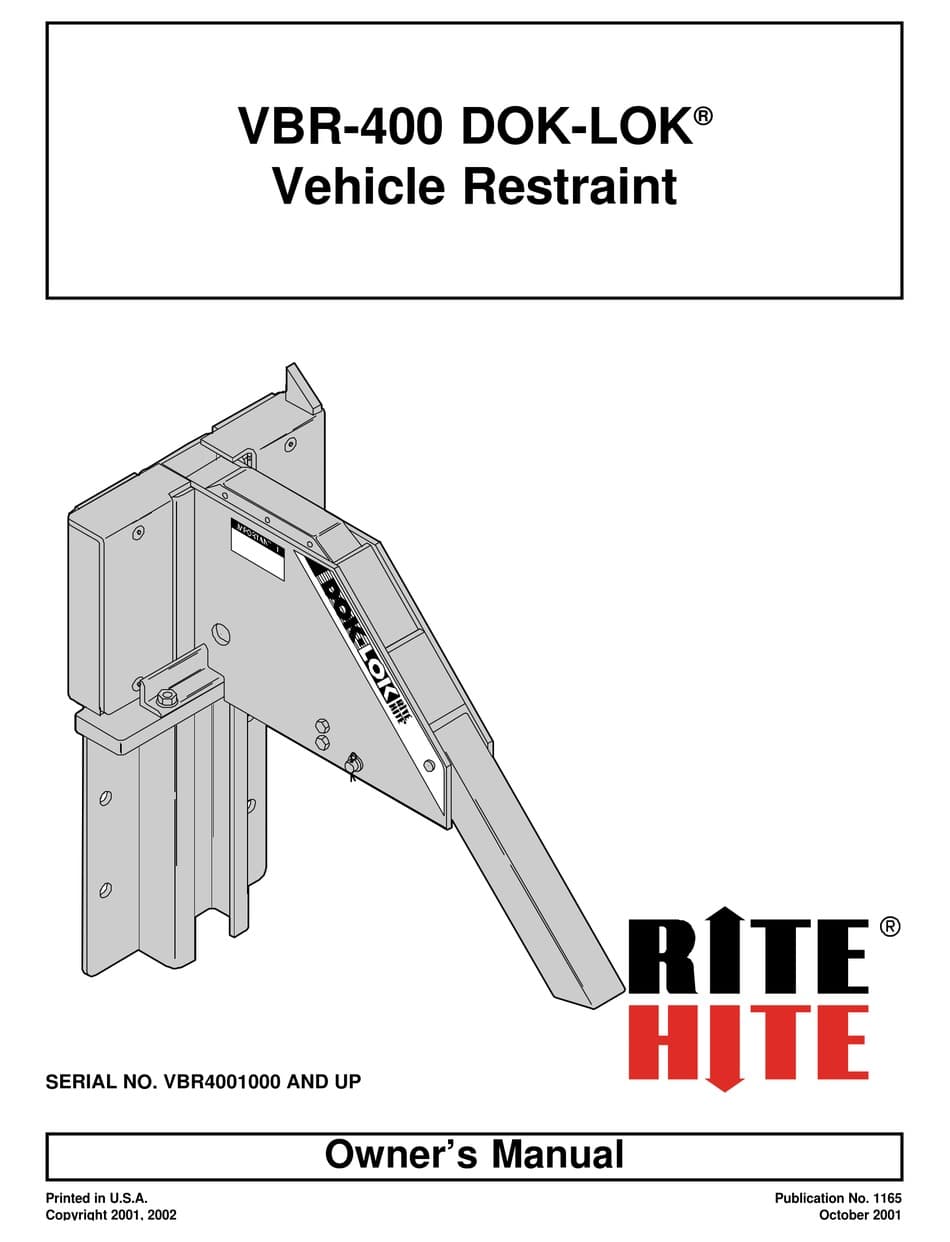
Rite-Hite DOK-LOK VR2000
The Rite-Hite DOK-LOK VR2000 is positioned as the market-leading automatic trailer restraint for dock loading bays due to its proven reliability, integrated communication with dock levelers and doors, and strong manufacturer support. It typically commands a premium price but delivers lower lifecycle costs through reduced cargo damage and fewer emergency service calls compared with lower-cost alternatives in this list. For operations prioritizing uptime and full-system integration, VR2000 is the technical benchmark against which the others are compared.
Estimated$6,000 – $9,000
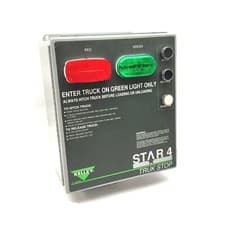
Kelley TRUK-STOP TSR
The Kelley TRUK-STOP TSR is a budget-conscious automatic restraint that focuses on mechanical simplicity and straightforward installation, making it attractive for facilities that need dependable protection without the higher upfront capital of premium systems. While it may lack some of the advanced dock integration features of the VR2000, its lower purchase and maintenance costs can deliver faster payback for smaller or cost-sensitive operations. Kelley’s design competes primarily on total cost of ownership and ease of service relative to the other products listed.
Estimated$4,000 – $7,000
Blue Giant Auto-Lok ATR
Blue Giant’s Auto-Lok ATR offers a balanced mix of mid-range pricing, simple controls, and strong safety features, positioning it as a versatile choice for many dock loading bay applications. It often undercuts the highest-priced systems while providing more automation and integration than basic mechanical units, making it a practical compromise between the Rite-Hite leader and economy options like Kelley. The Auto-Lok is especially compelling for fleets seeking good performance with predictable capital expenditure.
Estimated$4,500 – $7,500
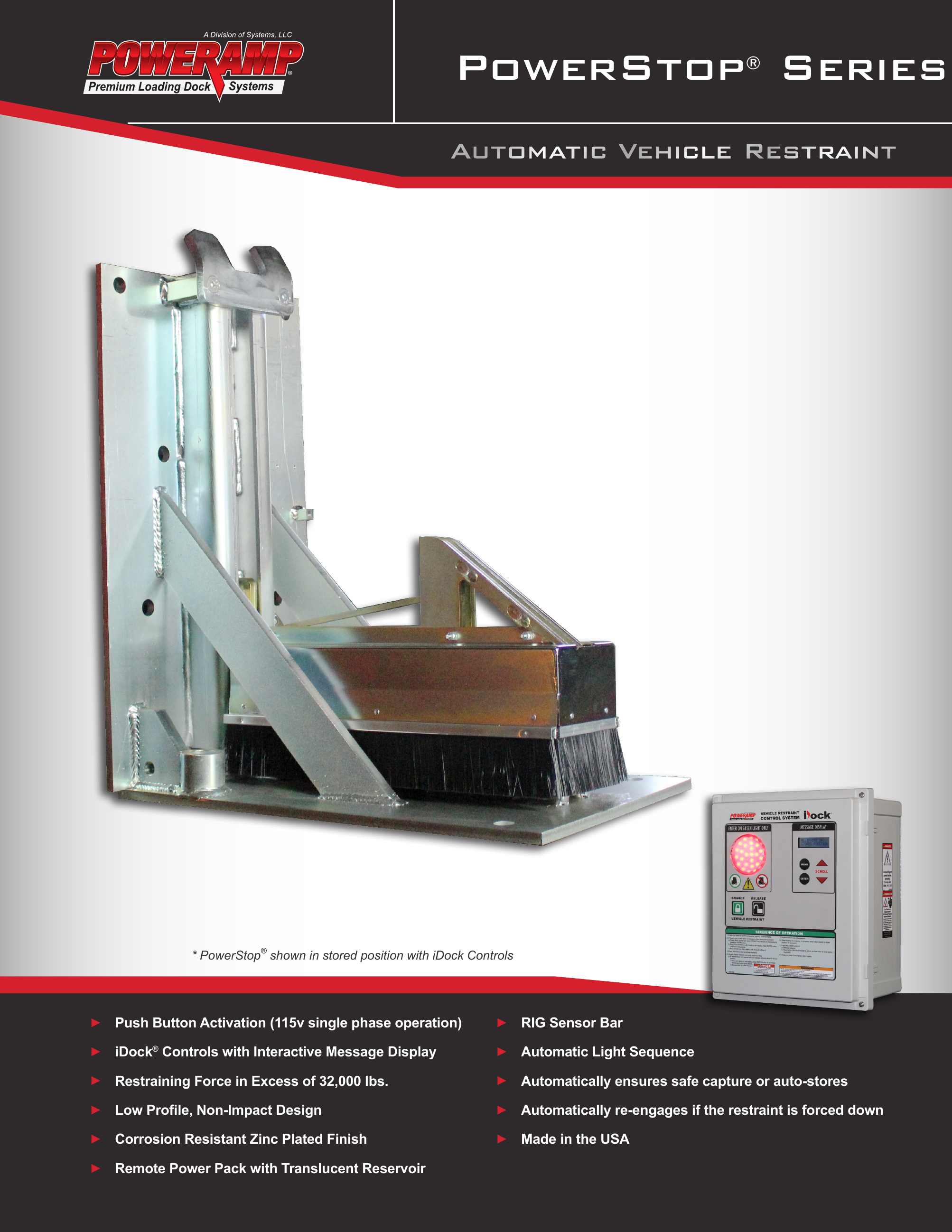
Poweramp PAR Automatic Restraint
The Poweramp PAR Automatic Restraint emphasizes rugged construction and low-maintenance operation, delivering long service life and steady performance in heavy-use dock environments. Financially, its moderate acquisition cost combined with energy-efficient electronics and simplified replacement parts can lower operating expenses versus some premium integrated systems. Technically it stands out for durability and straightforward retrofit capability when compared with the more feature-rich but costlier market leader.
Estimated$3,500 – $6,500
Nova Technology PowerChock 9000
The Nova Technology PowerChock 9000 is a distinctive automatic wheel-chock solution that removes the need for dock-mounted barriers, offering fast hands-free chocking and reduced risk of trailer bed damage at many loading bays. Though its unit cost can be higher than simple restraints, PowerChock often reduces installation complexity and is an attractive financial choice where minimal dock modification is desired; it also complements or replaces traditional hook-style restraints used by the other manufacturers. For operations valuing non-intrusive, wheel-based restraint technology, the PowerChock provides a technical alternative to plate or hook systems.
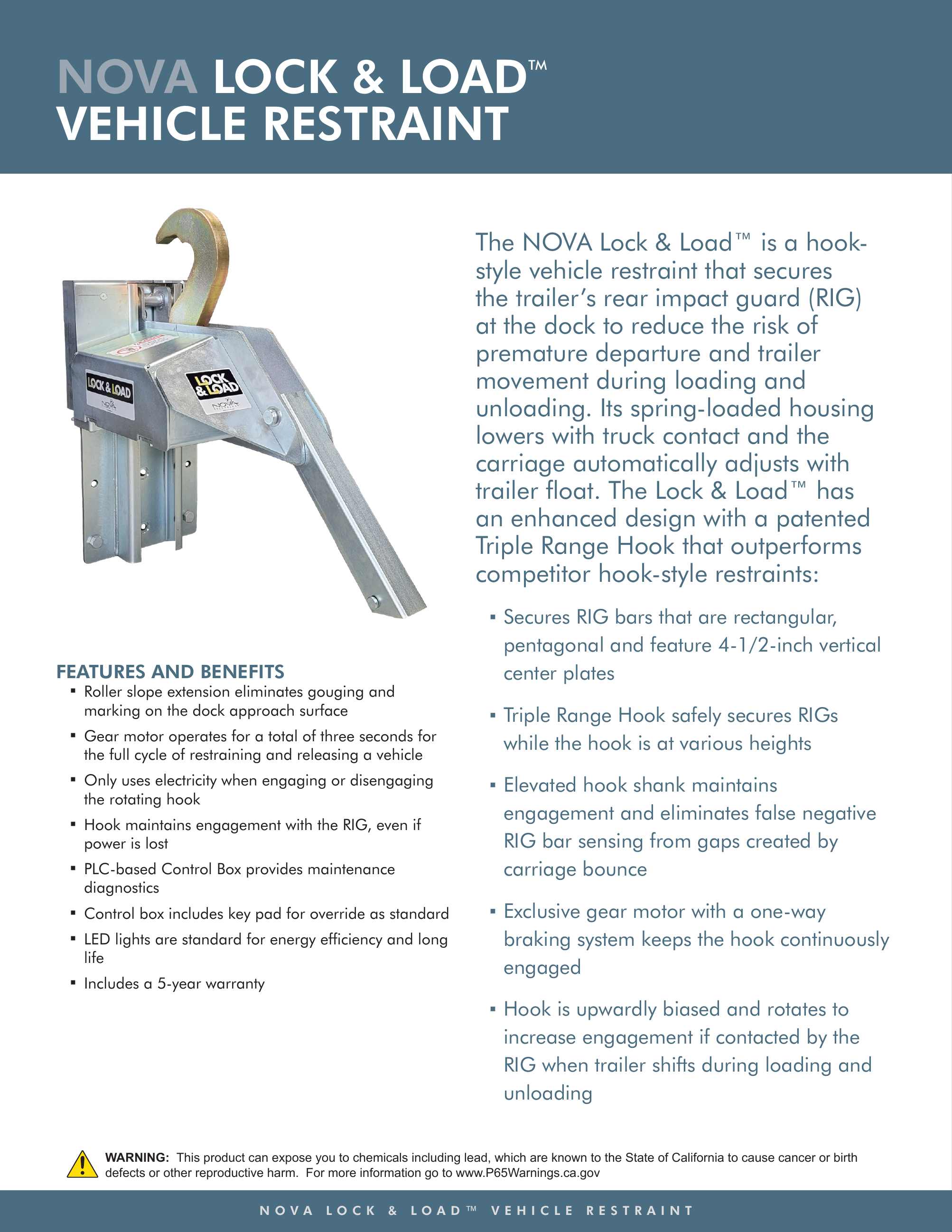
Estimated$7,000 – $12,000
Why Automatic Restraints Work: Research and Evidence
Multiple industry studies and safety agency reports show that automating trailer restraint functions reduces dock accidents, limits trailer separation incidents, lowers product damage from accidental trailer movement, and improves operational throughput. Research from workplace safety agencies and logistics industry white papers consistently reports stronger safety outcomes and faster dock cycles when restraints are automated and integrated into broader dock control systems. For newcomers, the safety gains arise from removing manual hook or wheel chock steps that can be missed, while operational gains stem from synchronized communications between yard systems, dock lights, and restraint hardware.
Workplace safety reviews by agencies such as NIOSH and CCOHS emphasize that mechanical restraint and communication systems lower the risk of trailer creep and unexpected movement during loading.
Operational analyses by logistics consultancies find that automated restraints, when integrated with yard management systems, can reduce average dock dwell time and increase throughput by enabling faster and safer trailer turnover.
Equipment lifecycle and ROI studies show that the reduced accident rates, lower insurance claims, and fewer product damages often pay back the initial investment through lower downtime and reduced labor costs.
Field trials report that IoT-enabled restraints improve preventative maintenance scheduling, reducing unplanned outages and maintaining uptime for high-volume docks.
Frequently Asked Questions
Which automatic dock trailer restraint suits busy Canadian docks best?
Rite-Hite DOK-LOK VR2000 is the best fit for busy Canadian docks because it has an integrated control module that interlocks with dock leveler and door systems and includes status lights, plus a motorized hook designed to resist push-off forces; rating 4.7.
What does the Rite-Hite DOK-LOK VR2000 lock onto?
Rite-Hite DOK-LOK VR2000 uses a motorized hook designed to capture the ICC bar and resist push-off forces for high-security restraint; it also has an integrated control module that interlocks with dock leveler and door systems and provides status lights; rating 4.7.
How do Kelley TRUK-STOP TSR and Blue Giant Auto-Lok ATR price compare?
The provided info doesn’t list exact prices for Kelley TRUK-STOP TSR or Blue Giant Auto-Lok ATR, so I can’t compare cost; I can confirm Kelley TRUK-STOP TSR is described as budget-conscious, while Blue Giant Auto-Lok ATR is described as mid-range.
Which system offers non-contact sensing for tricky trailer positions?
Blue Giant Auto-Lok ATR offers non-contact sensing for proper restraint via electronic sensing confirmation, plus seamless integration options for dock levelers, doors, and facility management systems; rating 4.5.
Conclusion
In Canada, automatic trailer restraint systems bring measurable safety and productivity gains to modern dock loading bays. The top five systems covered here are Rite-Hite DOK-LOK VR2000, Kelley TRUK-STOP TSR, Blue Giant Auto-Lok ATR, Poweramp PAR Automatic Restraint, and Nova Technology PowerChock 9000. Each offers strong features for 2026 dock automation needs, with the Rite-Hite DOK-LOK VR2000 standing out as the best overall pick for combined reliability, integration capability, and nationwide support. We hope you found the comparison useful. If you want to narrow results by industry, province, or integration needs, or expand your search to related dock equipment, use the search to refine or broaden your options.