

Top 5 Hook Restraint Systems for Dock Loading Bays in Canada - 2026 Picks
Heavy-duty vehicle hook restraints latch onto trailer rear impact guards to secure trailers and prevent separation during dock operations. In Canada, hook restraint systems for dock loading bays are valued for their proven ability to reduce trailer creep, prevent accidents, and protect workers and equipment during loading and unloading. The latest models offer automatic engagement, vehicle detection, and remote monitoring to reduce human error and damage, while supporting winter-ready operation and compatibility with a variety of trailer types. Canadian buyers prioritize reliability, compliance with occupational safety guidance from provincial regulators and national bodies like CCOHS, straightforward retrofit installation, and low total cost of ownership. Trends across distribution centers, grocery and cold chain operations, and third-party logistics providers show growing adoption of automated restraints with IoT-enabled alerts, centralized reporting, and preventive maintenance features that improve uptime and measurable safety outcomes.
Inception's AI took the time to understand this market in Canada · · How we pick
Top Picks Summary
Rite-Hite DOK-LOK VR

Rite-Hite's DOK-LOK VR holds a best-in-class position by combining a heavy-duty mechanical restraint with advanced vehicle recognition and integrated controls, delivering one of the most reliable, lowest-failure options for high-throughput dock bays. While its upfront cost is typically higher than simpler hook systems, the DOK-LOK VR pays back through reduced downtime, stronger safety performance and tighter integration with dock-leveler and door systems compared with more basic competitors on this list.
Blue Giant Auto-Lok

Blue Giant's Auto-Lok offers an automated hook restraint that balances strong security with a lower capital outlay, positioning it as the market leader for mid-size operations seeking a cost-effective automated solution. It is easier to retrofit and deploy than some of the larger integrated systems like the Rite-Hite, and typically delivers competitive lifecycle costs through simplified mechanics and fewer custom controls.
Kelley TRUK-STOP
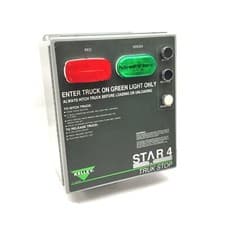
The Kelley TRUK-STOP is a durable, workhorse hook restraint favored for its simplicity, low purchase price and minimal maintenance requirements, making it the practical market leader for budget-conscious fleets and aftermarket retrofits. Compared to the more feature-rich units in this lineup, TRUK-STOP sacrifices some advanced integration and automated diagnostics but gains in reliability and predictable operating costs, a clear advantage where ease of service and low total cost of ownership are priorities.
Serco EntraPro EH

Serco's EntraPro EH is positioned for customers who want modular integration and electronic/hydraulic actuation, delivering fast cycle times and fine control over restraining force with built-in safety interlocks. Technically, it sits between the high-end Rite-Hite system and simpler hooks like Kelley, offering superior integration options at a lower capital threshold than some premium systems, which can reduce project engineering costs for complex dock control setups.
Nova Technology PowerHook

The Nova Technology PowerHook targets modern facilities that want a powered hook restraint with remote diagnostics and fast actuation at a competitive price, giving it a niche as a technically forward but cost-conscious option. Compared with traditional mechanical designs on this list, PowerHook emphasizes connectivity and quick serviceability, reducing hidden maintenance expenses and allowing predictive servicing that can lower long-term operating costs.
Why Hook Restraints Work: Evidence and Practical Benefits
Independent safety agencies and industry reports consistently identify vehicle restraints as a key control to prevent dock-related injuries and property damage. Research summaries from bodies such as CCOHS and guidance from NIOSH and OSHA describe how positive mechanical engagement of trailers reduces the risk of separation and unintended movement during loading. Field case studies from warehouse operators and restraint manufacturers document fewer dock incidents, lower repair costs for dock equipment and trailers, and faster loading cycles when automatic restraints and vehicle detection systems are used.
Regulatory and safety guidance: CCOHS and provincial occupational health authorities recommend physical vehicle retention to prevent trailer separation incidents during dock operations.
Injury and damage reduction: Industry case studies report significant decreases in trailer pull-away and dock-related injuries after installing positive-lock restraints and vehicle detection systems.
Operational efficiency: Data from logistics operators show improved dock throughput and fewer work interruptions when automatic restraints eliminate manual anchoring steps.
Preventive maintenance and remote monitoring: IoT-enabled restraints provide diagnostics and alarms that reduce unplanned downtime and allow condition-based service scheduling.
Return on investment: Facilities typically recover restraint system costs through reduced damage claims, lower repair bills, and decreased lost productivity, especially in high-volume operations.
Frequently Asked Questions
Which dock bay hook restraint fits high-throughput operations best?
Rite-Hite DOK-LOK VR is the best fit for high-throughput dock bays, with an automatic hook that engages the trailer ICC bar for positive, fail-safe restraint and an average rating of 4.6.
What specific feature does Blue Giant Auto-Lok use?
Blue Giant Auto-Lok uses fast automatic engagement with adjustable reach to suit varied trailer heights and ICC bar positions, plus integration with dock levelers, doors, and control panels.
How does Kelley TRUK-STOP pricing value compare to automated models?
Kelley TRUK-STOP is positioned for low purchase price and minimal maintenance, with an average rating of 4.4; it’s available in manual or semi-automatic configurations for lower upfront cost versus fully automated options.
Is Rite-Hite DOK-LOK VR manual or automatic hook restraint?
Rite-Hite DOK-LOK VR has an automatic hook that engages the trailer ICC bar for positive, fail-safe restraint, and its design includes integrated visual signaling and control interlocks for operator safety.
Our take
This selection of top hook restraint systems for Canadian dock loading bays highlights leading options for 2026: Rite-Hite DOK-LOK VR, Blue Giant Auto-Lok, Kelley TRUK-STOP, Serco EntraPro EH, and Nova Technology PowerHook. Each model delivers heavy-duty retention, automatic engagement, and modern vehicle-detection features; among them, the Rite-Hite DOK-LOK VR stands out as the best choice for most Canadian operations because of its proven performance, extensive service network across Canada, and strong integration with remote monitoring platforms. We hope you found what you were looking for. You can refine or expand your search using the site search to compare specifications, request quotes, or explore installation and maintenance options.
Not quite right?
Tell Inception what to change