

Canada's Top 5 Biodegradable Electrical Insulating Oils - 2026
Biodegradable dielectric fluids and insulating oils for transformers and switchgear deliver high dielectric strength, effective thermal conductivity, and improved fire safety while minimizing environmental persistence. In Canada these fluids are gaining traction across utilities, industrial plants, municipalities, and renewable energy projects because they lower spill risk, simplify regulatory compliance, and reduce long-term environmental liability. Buyers in Canadian markets favor products that combine proven electrical performance, cold-climate pour point behavior, compatibility with existing equipment, and recognized biodegradability and low toxicity. Cost of ownership, supplier support for retrofits, and OEM approvals also strongly influence purchasing decisions, making biodegradable esters and engineered synthetic fluids an appealing choice for operators focused on safety, sustainability, and resilient performance in 2026.
Inception's AI took the time to understand this market in Canada · · How we pickWe may earn a commission on purchases. It never affects our rankings.
Top Picks Summary
Cargill Envirotemp FR3
Envirotemp FR3 is positioned as the market leader for industrial biodegradable electrical insulating oils thanks to a long field track record and broad OEM and utility acceptance; its natural-ester formulation delivers proven fire-safety, high dielectric strength and strong biodegradability that reduce overall operational and insurance costs. Compared with specialty esters and bio-based hydrocarbon substitutes on this list, FR3’s mature supply chain and retrofit experience make it the go-to option where predictable long-term performance and minimized conversion risk matter most.
Estimated$350 – $450
MIDEL 7131
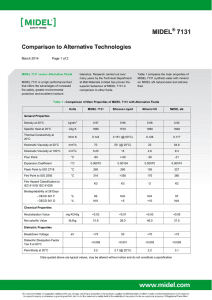
MIDEL 7131 is regarded as a best-in-class ester-based insulating oil for industrial biodegradable applications because it prioritizes oxidation stability and long in-service life, helping to extend transformer maintenance intervals and total asset life. Technically oriented buyers will favor 7131 over commodity bio-oils for its formulation-driven longevity and reduced degradation rates, giving it a financial edge where lifecycle costs and reduced downtime outweigh a higher initial fluid cost.
Estimated$420 – $600
MIDEL eN 1204
MIDEL eN 1204 targets industrial biodegradable insulating applications that require a balance of cost, safety and retrofit compatibility; it offers many of the performance benefits of MIDEL’s higher-end esters while being formulated for easier conversion and improved low-temperature handling. Compared with MIDEL 7131 it is a more cost-effective, versatile choice for projects that need reliable ester performance without the premium price of top-tier formulations.
Estimated$320 – $480
Nynas NYTRO BIO 300X
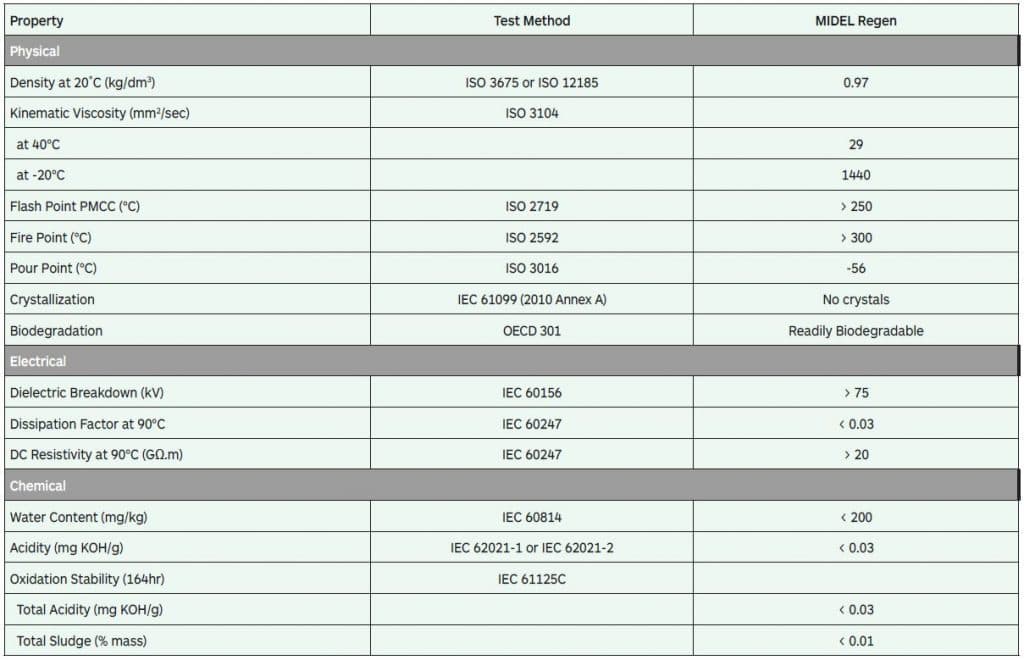
NYTRO BIO 300X is Nynas’s bio-based insulating oil positioned for industrial applications that prioritize environmental compliance and straightforward compatibility with existing transformer hardware. Its product design emphasizes a drop-in feel and competitive pricing versus high-viscosity esters, making it an attractive option for operators who want improved biodegradability and simpler logistics compared with niche ester solutions while still retaining robust dielectric properties.

Estimated$300 – $450
Ergon BIOTEMP
Ergon BIOTEMP is offered as a regionally focused biodegradable insulating oil for industrial users, combining responsible environmental credentials with competitive North American availability and support. For buyers in that market it presents a financially sensible alternative to imported European esters, delivering acceptable dielectric performance and biodegradability with supply-chain advantages that can lower procurement and inventory costs for utilities and industrial operators.

Estimated$280 – $420
What the Research Says About Biodegradable Insulating Oils
Scientific studies and industry testing consistently show that modern biodegradable insulating oils, especially natural and synthetic esters, provide meaningful environmental and safety advantages while meeting or exceeding many electrical performance requirements for transformers and switchgear. Research addresses biodegradation rates, aquatic toxicity, fire point and flammability, dielectric strength, thermal aging of cellulose insulation, and long-term fluid stability. For newcomers, the key takeaway is that product selection should balance proven lab results, real-world retrofit data, and compatibility testing for the specific transformer design and climate conditions.
Biodegradability: Natural and synthetic esters typically show much faster biodegradation in standard OECD tests than mineral oil, reducing environmental persistence after spills.
Fire safety: Many ester-based fluids have higher flash and fire points, which lowers fire risk and can allow reduced fire-protection requirements at installations.
Dielectric performance: Controlled studies report that properly formulated esters can achieve dielectric strength comparable to mineral oil, with good corona resistance when properly maintained.
Cellulose preservation: Several peer-reviewed studies and field trials indicate ester fluids slow the aging of paper and pressboard insulation, potentially extending transformer life under certain conditions.
Thermal behavior: Esters often have favorable heat transfer and higher heat capacity, but viscosity and pour point must be checked for cold Canadian climates to ensure reliable operation.
Standards and testing: Industry guidance recommends following ASTM, IEC, and OECD test methods plus manufacturer compatibility tests and accelerated aging protocols before conversion or retrofit.
Frequently Asked Questions
Which oil should I choose for biodegradable transformer use?
Choose Cargill Envirotemp FR3 for industrial biodegradable electrical insulating oils because it’s positioned as a market leader and uses a natural ester formula with high biodegradability and low aquatic toxicity, earning a 4.6 average rating.
What specific feature does MIDEL 7131 provide?
MIDEL 7131 uses a synthetic ester base for excellent oxidation stability to support long service life, with a 4.5 average rating and strong moisture tolerance plus compatibility with common transformer materials.
How does MIDEL eN 1204 compare on price value?
The provided data doesn’t list any prices for MIDEL eN 1204, so there’s no way to compare value by cost; it is rated 4.3 and is formulated as a direct retrofit replacement.
Is MIDEL eN 1204 compatible for transformer retrofits?
Yes—MIDEL eN 1204 is formulated to be a direct retrofit replacement that helps restore or preserve insulation paper, and it’s rated 4.3 on average.
Conclusion
In Canada in 2026, biodegradable insulating oils are a practical and increasingly adopted option for utilities and industrial operators seeking improved environmental performance and fire safety without sacrificing electrical reliability. The five leading products highlighted here are Cargill Envirotemp FR3, MIDEL 7131, MIDEL eN 1204, Nynas NYTRO BIO 300X, and Ergon BIOTEMP. For broad compatibility, extensive field history, and strong supplier support in North America, Cargill Envirotemp FR3 is often the best overall choice for many Canadian use cases. We hope you found what you were looking for; you can refine or expand your search using the site search to compare specifications, OEM approvals, cold-climate data, and pricing for each product.