

Top 5 Robotic Arc Welding Cells in Canada for 2026
Integrated robotic arc welding cells combine industrial robots, purpose-built welding power sources, and modular tooling to deliver high repeatability and faster cycle times for MIG/MAG and TIG processes. Modern cells designed for Canadian manufacturing needs also offer laser hybrid and high deposition options, offline programming, modular fixturing, and Industry 4.0 connectivity for production scalability and predictive maintenance. Canadian buyers appreciate these systems for consistent weld quality, reduced rework, improved safety and ergonomics, and the ability to address skilled labour gaps. Other common preferences include strong local service and parts support, compliance with regional welding and safety standards, flexibility for low-volume high-mix production, and measurable return on investment through throughput and energy efficiencies.
Inception's AI took the time to understand this market in Canada · · How we pickWe may earn a commission on purchases. It never affects our rankings.
Top Picks Summary
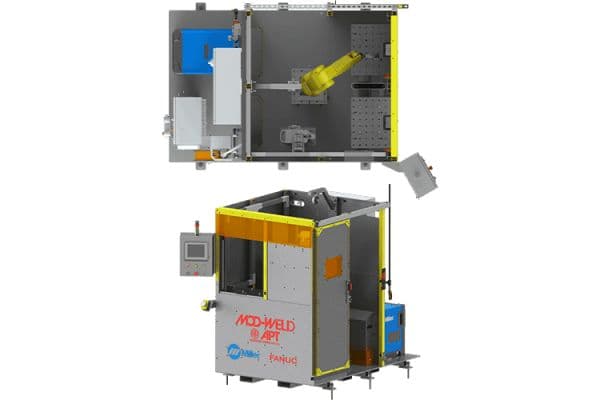
FANUC ARC Mate 100iD Welding Cell
FANUC's ARC Mate 100iD welding cell is positioned as a best-in-class solution for high-throughput, precision robotic arc welding cells due to FANUC's reputation for robot reliability, compact footprint and broad aftermarket ecosystem. Its integrated welding packages and extensive installed base reduce integration risk and predictable uptime translates to lower lifecycle costs compared with less-proven turnkey cells. Against the other entries here it stands out for robotic performance and global service network, which often reduces capital deployment risk for large-scale production programs.
Estimated$140,000 – $350,000
Lincoln Electric Vantage Arc Welding System
Lincoln Electric's Vantage arc welding system leverages the company's deep expertise in welding power sources and process control to deliver a cost-effective robotic arc welding cell optimized for weld quality and process repeatability. Financially it often offers attractive total cost of ownership through efficient power modules, consumable guidance and retrofit-friendly designs that undercut more robot-centric vendors on system-level price. Compared to robot-first offerings it excels in arc control and consumable management, making it a smart choice where weld process fidelity and operating costs are primary concerns.
Estimated$60,000 – $180,000
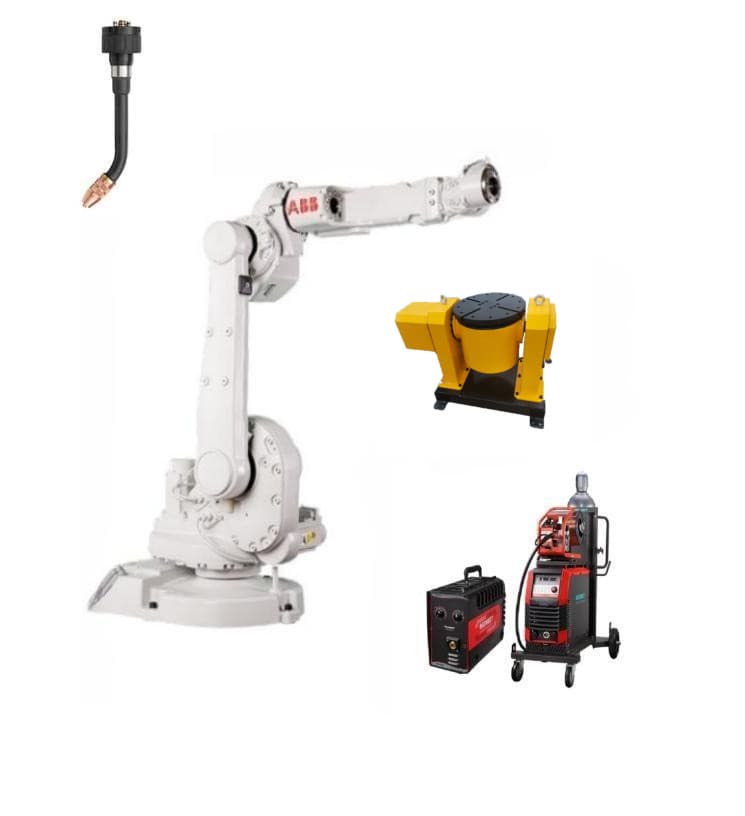
ABB IRB 1660ID Welding Cell
ABB's IRB 1660ID welding cell is a market-leading choice for compact, high-speed arc welding applications thanks to ABB's advanced motion control, digital integration and proven cell architectures that maximize throughput. The cell's emphasis on cycle-time reduction and networked production data gives operators measurable productivity gains and supports Industry 4.0 initiatives, yielding financial upside through higher parts-per-hour and better traceability than simpler cells. Versus competitors it is notable for strong software-driven optimization and cell-level automation features that suit high-volume manufacturers seeking scalable digital workflows.
We may earn a commission on purchases. It never affects our rankings.
Estimated$160,000 – $360,000
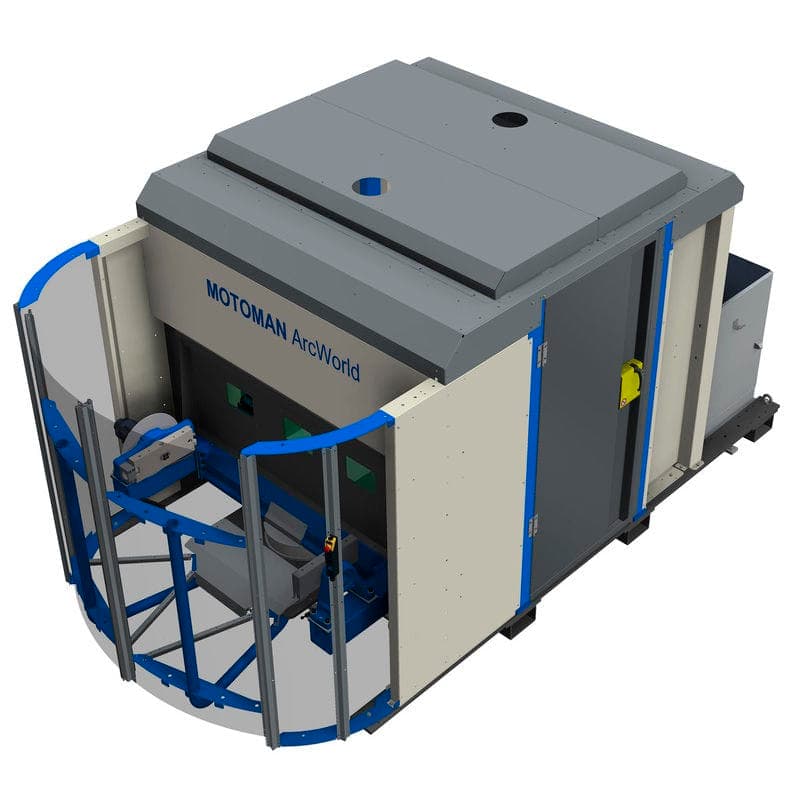
Yaskawa Motoman ArcWorld Series
Yaskawa Motoman's ArcWorld series is designed as a flexible, modular family of robotic arc welding cells that balances competitive capital cost with rapid reconfiguration for mixed-model production. Its strength is in adaptability and controller compatibility, which lowers integration time and makes incremental expansion financially attractive for growing shops compared to larger, more rigid turnkey systems. When compared to FANUC and ABB, ArcWorld is often chosen for mid-volume lines where flexibility and lower upfront investment are prioritized over absolute top-end speed.
Estimated$120,000 – $300,000
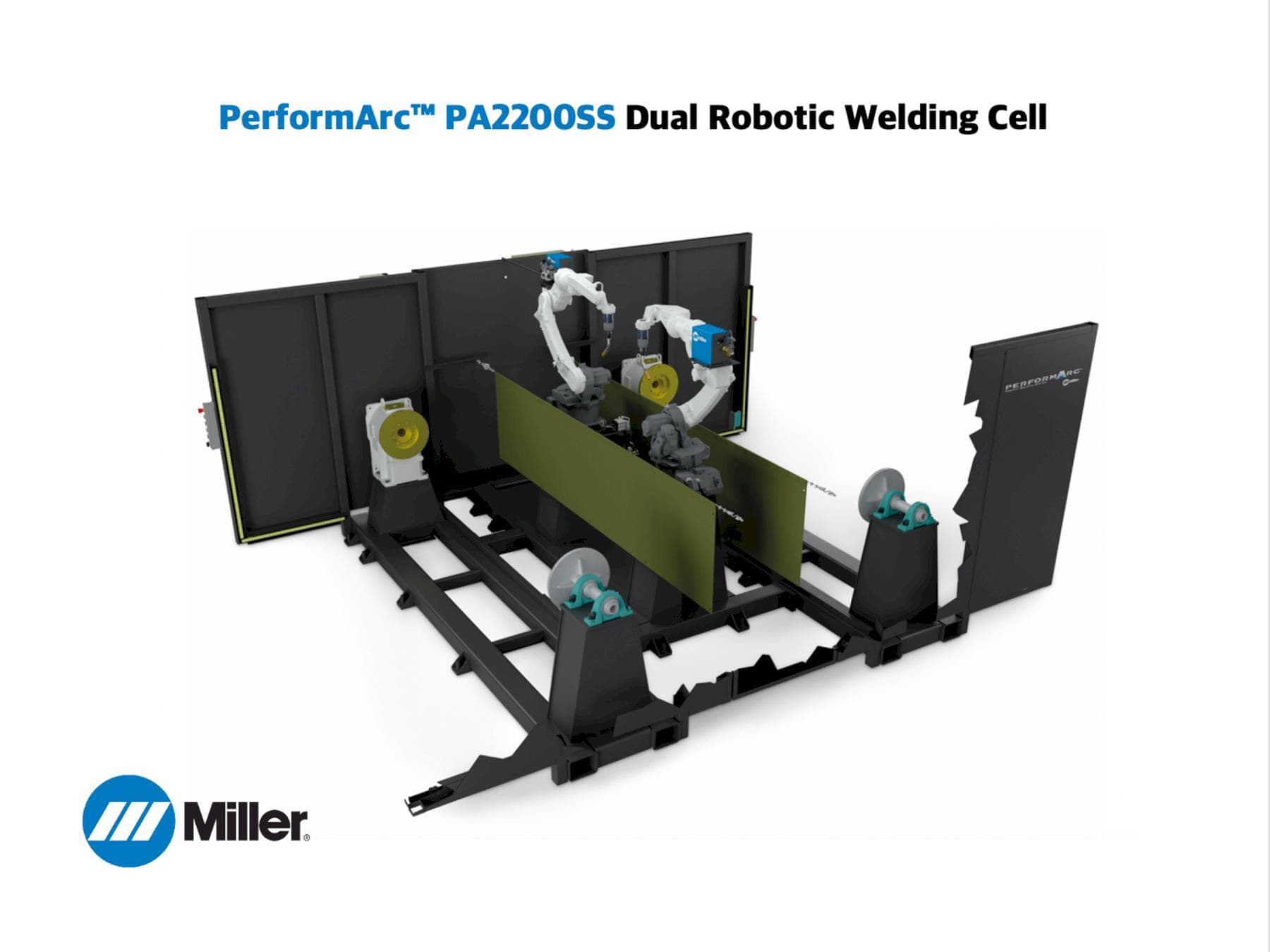
Miller PerformArc Robotic Welding System
Miller's PerformArc robotic welding system emphasizes user-friendly setup, advanced arc control and tight integration between power source and cell controls, making it well suited for small-to-medium manufacturers moving into automated welding. The system frequently delivers lower total cost of ownership through simplified commissioning, strong local support and consumable efficiency, offering a budget-favorable alternative to higher-capex robot-dominated cells. Compared with Lincoln and the major robot OEMs it trades off extreme throughput for ease of deployment and reduced operational complexity, which can be the best financial decision for many job shops.
Estimated$90,000 – $240,000
What research and industry evidence say
A growing body of industry reports, peer-reviewed studies, and case studies supports the key benefits of robotic arc welding cells. Research covers areas such as weld quality consistency, deposition rates, cycle time reduction, operator safety, and the effectiveness of predictive maintenance enabled by connected equipment. Findings are presented in beginner-friendly terms so manufacturers can evaluate trade-offs and plan investments.
Repeatability and quality: Studies and field reports consistently show robotic welding reduces variation and defect rates versus manual welding, improving first-pass yield and lowering rework.
Productivity and deposition: Automated arc systems enable higher average deposition rates and shorter cycle times through optimized tool paths, multi-process setups, and hybrid laser-arc options.
Safety and ergonomics: Automation reduces operator exposure to fumes, heat, and repetitive strain, contributing to lower injury rates and improved shop-floor ergonomics.
Predictive maintenance and uptime: Industry 4.0 connectivity that streams process and equipment data lets teams detect trends and perform maintenance before failures cause extended downtime.
Economic impact and ROI: Case studies from fabricators report payback periods that vary by application, with many facilities seeing measurable returns through reduced labor cost per weld, less scrap, and higher throughput.
Standards and traceability: Digital traceability and programmable weld recipes support quality systems and certifications, which is important for aerospace, automotive, and energy sector customers in Canada.
Frequently Asked Questions
Which robotic arc welding cell should I buy for production?
For production weld speed and compact layouts, consider the ABB IRB 1660ID Welding Cell, rated 4.6, with precise smooth arc motion in a compact footprint and options for positioners and seam sensing.
What spec does the ABB IRB 1660ID emphasize most?
The ABB IRB 1660ID Welding Cell is designed to deliver precise, smooth arc motion in a compact footprint, with an emphasis on cycle-time reduction for faster throughput.
How does the FANUC ARC Mate 100iD compare on price?
The provided data doesn’t include pricing for the FANUC ARC Mate 100iD Welding Cell, only an average rating of 4.7 and features like a compact footprint and optimized welding cycle speed.
What compatibility and warranty are listed for Lincoln Vantage?
The provided data lists integration as plug-and-play with common industrial robots and robotic cell controllers for the Lincoln Electric Vantage Arc Welding System, but it doesn’t mention any warranty duration.
Conclusion
This page highlights five leading options for Canadian manufacturers: FANUC ARC Mate 100iD Welding Cell, Lincoln Electric Vantage Arc Welding System, ABB IRB 1660ID Welding Cell, Yaskawa Motoman ArcWorld Series, and Miller PerformArc Robotic Welding System. Each platform addresses different priorities: Lincoln Electric Vantage is strong for high-deposition and heavy fabrication, ABB IRB 1660ID is compact and high-performance for tight cells, Yaskawa Motoman ArcWorld offers cost-effective integrated solutions, and Miller PerformArc emphasizes user-friendly controls and service. For most Canadian shops that need a balance of reliability, installer network, and long-term support, the FANUC ARC Mate 100iD Welding Cell is the best overall choice on this list. We hope you found what you were looking for; use the search to refine by process (MIG, MAG, TIG), deposition capability, cell footprint, or Industry 4.0 features to expand or narrow your options.