

Top 8 Welding Automation & Robotic Cells in Canada for 2026
Welding automation and robotic cells in Canada cover robotic welding cells, automated weld feeders, positioners, and programmable controllers designed for high-volume and precision applications. The category now includes collaborative robots and integrated sensor systems that enable adaptive weld control, while solutions focus on cycle time reduction, repeatability, and quick job changeovers for fabrication lines. Canadian buyers from automotive suppliers, aerospace, oil and gas fabrication, shipbuilding, structural steel and general metal fabrication prefer these systems because they increase throughput, stabilize weld quality, reduce dependence on scarce skilled welders, and improve worker safety by cutting exposure to fumes and repetitive tasks. Adoption is accelerated by Industry 4.0 connectivity for remote monitoring and predictive maintenance, provincial and federal incentives for advanced manufacturing, and a growing market demand for flexible cells that let small and medium enterprises scale production cost-effectively. Local integrators, regional service networks and training programs—particularly in Ontario, Quebec and Alberta—also shape buying decisions by shortening deployment time and ensuring compliance with CSA and ISO welding standards.
Inception's AI took the time to understand this market in Canada · · How we pickWe may earn a commission on purchases. It never affects our rankings.
Top Picks Summary
FANUC's ARC Mate 100iD welding cell is positioned as a best-in-class solution for high-throughput, precision robotic arc welding cells due to FANUC's reputation for robot reliability, compact footprint and broad aftermarket ecosystem. Its integrated welding packages and extensive installed base reduce integration risk and predictable uptime translates to lower lifecycle costs compared with less-proven turnkey cells. Against the other entries here it stands out for robotic performance and global service network, which often reduces capital deployment risk for large-scale production programs.
Show More Robotic Arc Welding Cells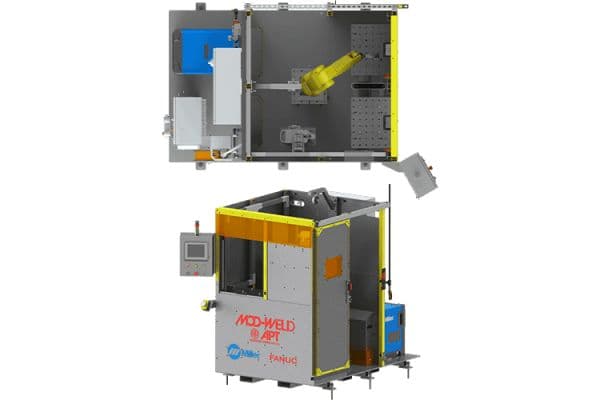
Estimated$140,000 – $350,000
Lincoln Electric System 20 Robotic Spot Welding Cell
The Lincoln Electric System 20 Robotic Spot Welding Cell is a turnkey package that pairs proven Lincoln welding power sources with robotic manipulators for tight control of weld schedules and easy commissioning. Its main financial and technical advantage versus stand-alone robot platforms is the bundled, single-source integration and service—reducing integration risk and aftermarket costs—making it a strong choice for shops that want a fully engineered welding solution rather than assembling components from multiple vendors.
Show More Robotic Spot Welding Cells
Universal Robots UR10e Welding Cell
The UR10e Welding Cell is best-in-class for small-to-medium manufacturers seeking fast, low-risk deployment of collaborative welding automation; its lightweight, highly programmable UR10e arm and modular cell components minimize integration time and lower initial capital outlay compared with heavier industrial cobots. It stands out for ease of use, broad ecosystem of tooling and third-party fixtures that reduce engineering hours and total cost of ownership relative to more rigid, high‑throughput solutions in this list.
Show More Collaborative Welding Robot Cells
Estimated$80,000 – $150,000
The Robacta Drive CMT stands out for its Cold Metal Transfer (CMT) technology and precision wire feed, delivering very low heat input and minimal spatter for robotic welding of thin materials and aluminum. Compared with the other torches on this list it commands a premium upfront price but reduces rework, consumable use and cycle-time costs in high-mix, high-precision cells thanks to its proprietary drive and tight integration with Fronius power sources.
Show More Robot Welding Torches And End Effectors
Estimated$6,000 – $12,000
Yaskawa YRC1000 Controller
The Yaskawa YRC1000 offers a compact, cost-effective controller that balances precise motion with intuitive programming — a strong value proposition for small-to-mid-size welding shops. Its lower capital and installation costs provide attractive financial advantages for shops upgrading from manual or legacy systems, while delivering competitive path accuracy and standard welding packages. Compared to the higher-end offerings from FANUC, ABB, and KUKA, Yaskawa trades some ecosystem breadth for simpler deployment and quicker ROI.
Show More Welding Robot Controllers And Programming Software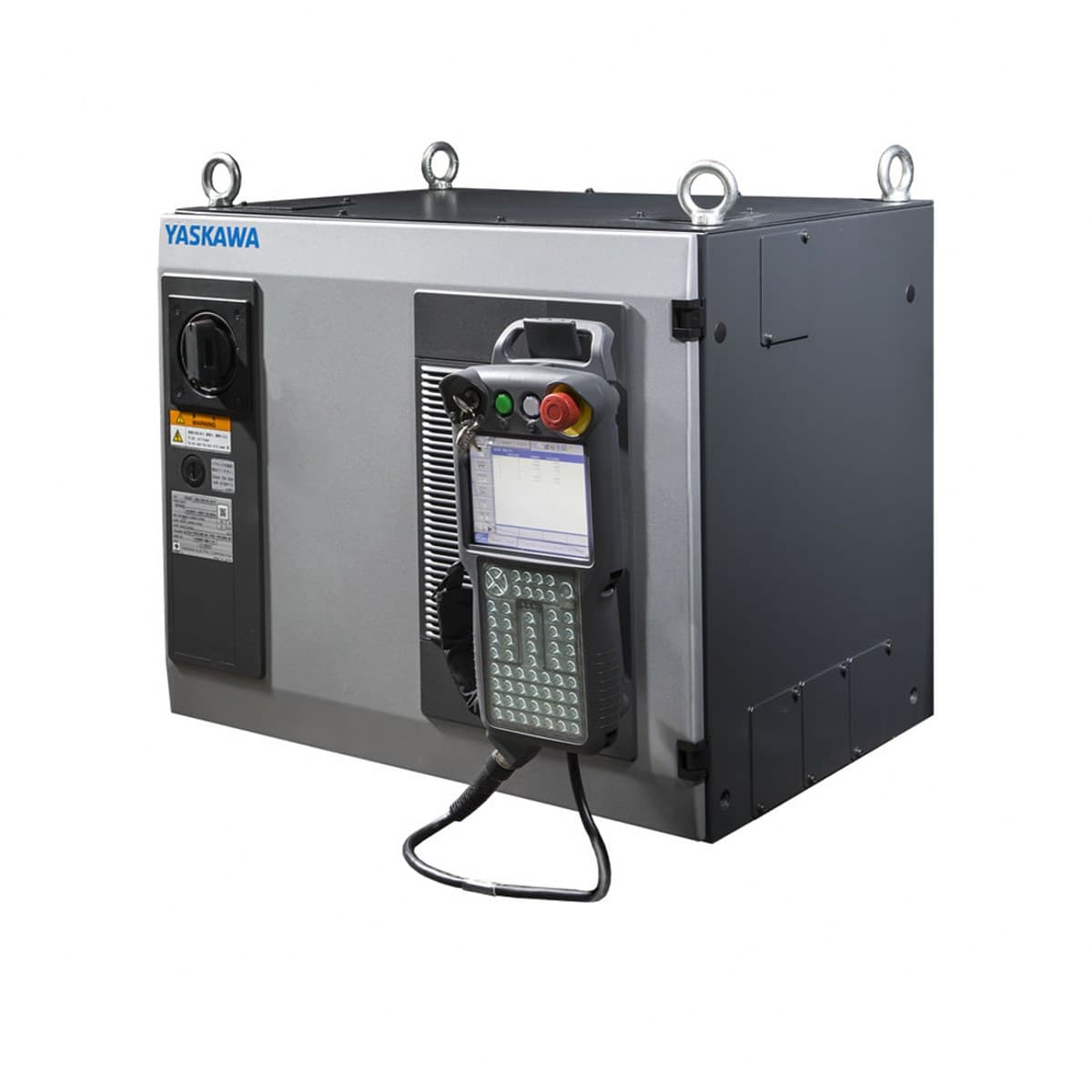
Estimated$30,000 – $65,000
The XVC-1000 is a high-dynamic-range weld camera designed specifically for clear arc and weld-pool imaging, making it the market leader for applications that require visual monitoring, operator supervision, or machine-vision algorithms that rely on image-based features. While it does not provide the same profile data as laser scanners like Keyence, its HDR imaging outperforms simpler seam trackers under bright-arc conditions and reduces rework by improving visual inspection and remote troubleshooting; financially, it can lower labor and quality costs by enabling faster fault diagnosis and better process documentation. Technically, the XVC-1000’s ability to see through arc glare complements laser and servo solutions, forming a robust multi-sensor approach to robotic welding vision and sensor systems.
Show More Robotic Welding Vision And Sensor Systems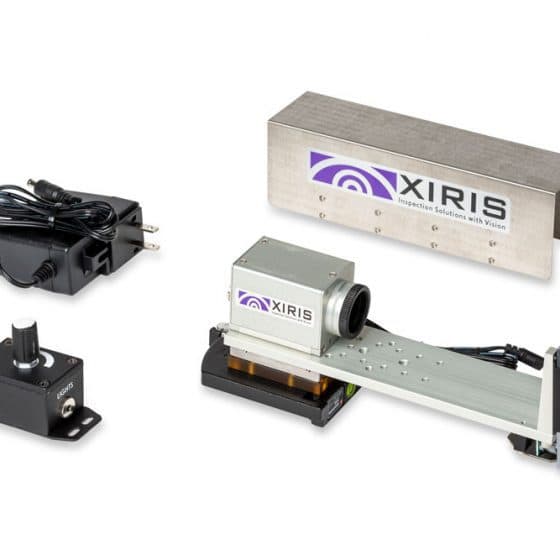
Estimated$4,000 – $8,000
Bosch Rexroth VarioFlow plus Chain Conveyor
The Bosch Rexroth VarioFlow plus Chain Conveyor brings industrial-grade chain robustness and integrated control options suited to welding cells exposed to sparks, heat and heavy fixtures; its hardened components, sealed chain options and high load capacity reduce downtime in harsh environments. While typically more capital intensive than belt or pallet modules like Dorner and mk, VarioFlow plus offers superior load-bearing and thermal resilience and provides a continuous-flow alternative to Camco's indexed pallet approach when throughput and durability are prioritized.
Show More Automated Welding Material Handling And Feed Systems
The SICK deTec4 Core safety light curtain delivers high-performance presence sensing and advanced diagnostics tailored for operator access protection at welding cells, offering fast response and flexible blanking/muting for automated welding fixtures. While typically a higher upfront investment than low-profile options, its superior detection resolution and diagnostic reporting reduce downstream validation time and integrate cleanly with safety controllers such as Rockwell Guardmaster for a robust, certified safety solution.
Show More Welding Cell Safety Enclosures And Guarding
What Research and Industry Reports Say About Welding Automation
A range of academic studies, industry reports and government research outlines measurable benefits from welding automation and robotic cells. Findings emphasize consistent weld quality from closed-loop and sensor-assisted systems, significant reductions in rework and scrap, shortened cycle times, improved operator safety, and strong payback potential when systems are matched to production volumes and part complexity. Canadian research bodies and trade organizations provide practical guidance and case studies that show automation works best when paired with process control, training, and local service support.
Quality and repeatability: Sensor-integrated robotic systems and programmable controllers consistently reduce process variation and improve first-pass weld acceptance versus manual welding.
Cycle time and throughput: Industry reports and field studies show typical cycle-time reductions that commonly range from 20 percent to 50 percent, depending on part design and cell configuration.
Rework and scrap reduction: Automated welding helps lower defect rates and rework, improving yield and lowering material waste.
Safety and ergonomics: Automation reduces worker exposure to fumes, heat and repetitive motion injuries, supporting safer shop floors and lower incident rates.
Return on investment: Case studies frequently report payback periods from several months up to a few years, depending on production volumes, labour savings and utilization rates.
Predictive maintenance and uptime: Integrated monitoring and analytics reduce unplanned downtime and support longer, more reliable production runs.
Flexibility with collaborative robots: Cobots enable lower-cost, flexible automation for small to medium runs, easing quick changeovers with simpler programming and safe human-robot interaction.
Standards and verification: Guidance from bodies such as the National Research Council of Canada, the American Welding Society and ISO helps integrators validate processes and meet regulatory or customer requirements.
Frequently Asked Questions
Which welding cell should I choose for fast integration?
Choose the Universal Robots UR10e Welding Cell if you want fast, low-risk deployment: it uses a collaborative 6-axis UR10e arm optimized for welding and a modular cell design for easier integration with torches, wire feeders and safety fencing, rated 4.6.
What exact CMT benefit does Fronius Robacta Drive CMT offer?
Fronius Robacta Drive CMT is built around Cold Metal Transfer (CMT) technology for very low heat input and minimal spatter, with an integrated compact wire feeder optimized for the Fronius CMT process, rated 4.7.
Does the FANUC ARC Mate 100iD have better value?
The provided data doesn’t list FANUC ARC Mate 100iD Welding Cell pricing, so I can’t compare value by cost; it is rated 4.7 and described as having a compact footprint with turnkey integration and robust safety enclosure options.
Is the UR10e cell suitable for human-robot collaboration?
Yes—the Universal Robots UR10e Welding Cell is a collaborative welding cell designed for human-robot collaboration using its collaborative 6-axis arm optimized for welding tasks, rated 4.6; the data doesn’t specify warranty duration.
Conclusion
In Canada, welding automation and robotic cells are an increasingly practical choice for fabricators seeking faster cycle times, consistent weld quality and safer workplaces. We hope you found the information you needed about the top options for 2026. Use the site search to refine by industry, budget, or regional support network, or expand the search to view integrators, training resources and demonstration opportunities.