

Top 5 Robotic Spot Welding Cells in Canada for 2026
Robotic spot welding cells are automated systems optimized for automotive and sheet metal joining, combining multi-robot configurations, adaptive force control, and advanced electrode management systems. In Canada, demand for these cells has grown because manufacturers need consistent high-volume weld quality, faster model changeovers, and integrated quality tracking to meet strict automotive and industrial standards. Buyers prefer systems that offer integrated quality monitoring, electrode life tracking, flexible tooling, and simple HMI for quick setup. Key benefits for Canadian operations include improved consistency across shifts, reduced rework, better operator safety, and measurable return on investment through reduced cycle times and lower consumable costs.
Inception's AI took the time to understand this market in Canada · · How we pickWe may earn a commission on purchases. It never affects our rankings.
Top Picks Summary
FANUC R-2000iC Spot Welding Cell
The FANUC R-2000iC Spot Welding Cell is positioned as a high-speed, reliable workhorse with industry-leading cycle rates and tight path repeatability, making it ideal for high-volume automotive applications. Compared with ABB and KUKA alternatives it often delivers lower total cost of ownership through proven reliability and a large global service network, while still offering higher throughput than more compact systems like the Yaskawa SP100B.
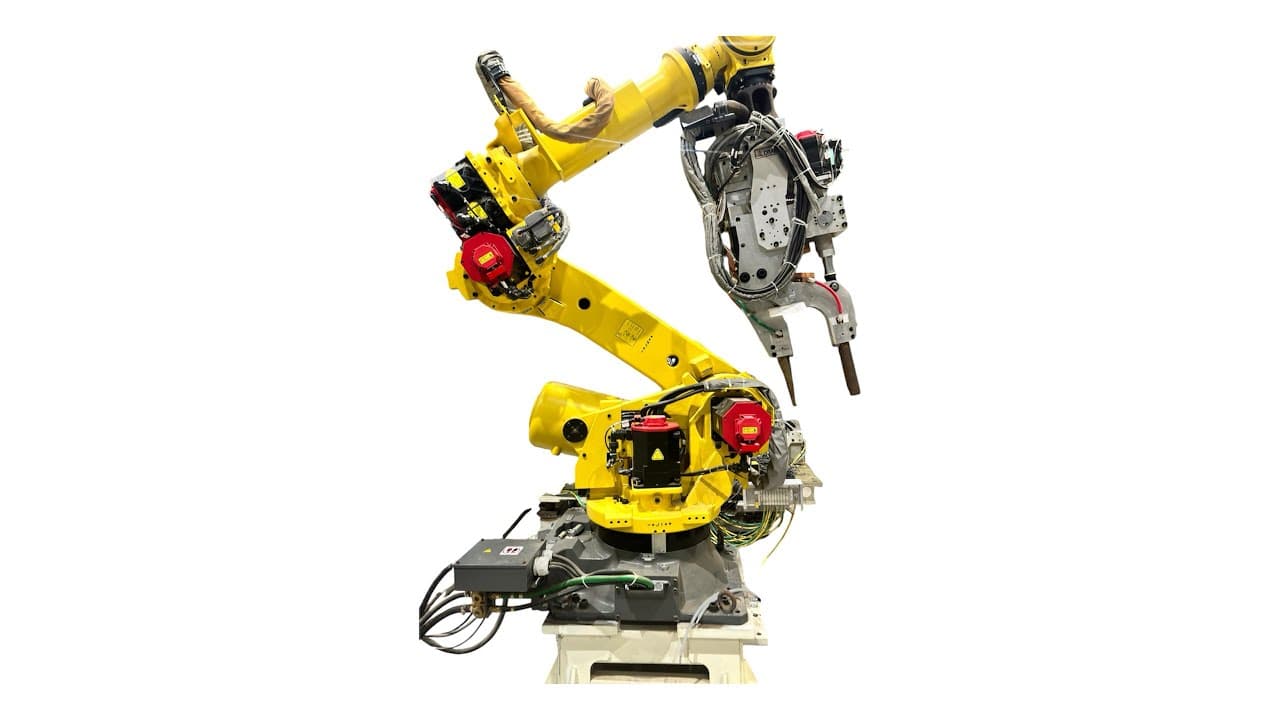
Estimated$180,000 – $320,000
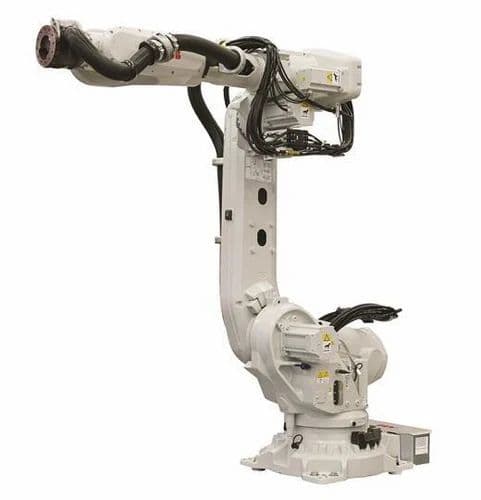
ABB IRB 6700 Spot Welding System
The ABB IRB 6700 Spot Welding System is a heavy-duty, high-payload platform optimized for precision and long reach, offering integrated motion and welding controls that reduce installation complexity. It competes against FANUC on throughput but distinguishes itself by handling larger fixtures and heavier tooling with lower maintenance intervals, and often delivers energy efficiency and process-consistency advantages over lighter or lower-cost cells.
KUKA KR QUANTEC Spot Welding Cell
The KUKA KR QUANTEC Spot Welding Cell combines flexible cell configuration and advanced path control to handle complex geometries and multi-station layouts with competitive upfront capital costs. Compared to ABB and FANUC it is often chosen for applications that require quick reconfiguration or integration with third-party tooling, delivering a favorable balance between precision, payload, and price for mid- to high-volume production.

Yaskawa Motoman SP100B Spot Welding System
The Yaskawa Motoman SP100B Spot Welding System is a compact, cost-efficient solution tailored to small-to-medium production lines that need a space-saving footprint and fast commissioning. While it may not match the heavy payload or absolute cycle rates of the IRB 6700 or R-2000iC, its lower capital expense and simple integration make it attractive for suppliers and job shops that prioritize quick ROI over maximum throughput.

Estimated$150,000 – $300,000
Lincoln Electric System 20 Robotic Spot Welding Cell
The Lincoln Electric System 20 Robotic Spot Welding Cell is a turnkey package that pairs proven Lincoln welding power sources with robotic manipulators for tight control of weld schedules and easy commissioning. Its main financial and technical advantage versus stand-alone robot platforms is the bundled, single-source integration and service—reducing integration risk and aftermarket costs—making it a strong choice for shops that want a fully engineered welding solution rather than assembling components from multiple vendors.

What research says: evidence-based benefits of robotic spot welding
Scientific studies and industry reports show that robotic spot welding, when combined with adaptive control and electrode management, improves weld consistency, reduces defects, lowers total cost of ownership, and enhances safety. Research from welding institutes and robotics conferences has documented measurable improvements in joint repeatability and reductions in rework and scrap. Industry case studies also show that integrated data collection and predictive maintenance shorten downtime and extend electrode life.
Joint consistency and quality: peer-reviewed and industry studies report that automated force control and repeatable robot motion reduce weld variability compared with manual welding, improving first-pass yield.
Consumable life and cost savings: electrode management and adaptive welding strategies have been shown to extend electrode life and reduce consumable spend by minimizing overstrikes and optimizing electrode dressing cycles.
Integrated quality monitoring: sensor fusion and inline inspection lower defect escape rates by enabling real-time weld monitoring and automatic rejection or rework triggers.
Productivity and ROI: case studies from automotive plants indicate that multi-robot cells and quick-change tooling reduce cycle times and setup time, delivering positive ROI within typical investment windows for midsize and large manufacturers.
Health and safety: automation reduces operator exposure to heat, fumes and repetitive strain, aligning with Canadian workplace safety priorities and regulatory expectations.
Frequently Asked Questions
Which robotic spot welding cell should I buy for automotive volume?
Choose the FANUC R-2000iC Spot Welding Cell for high-volume automotive spot welding because it’s described as a high-speed workhorse with “blazing cycle-times” and a 4.6 average rating.
What exact feature helps the ABB IRB 6700 weld consistently?
The ABB IRB 6700 Spot Welding System lists advanced welding software plus force/position control to support consistent nugget formation, and it has a 4.5 average rating.
Is the KUKA KR QUANTEC worth it versus ABB or FANUC?
The provided data doesn’t include any prices or exact cost, so you can’t compare value by dollars; it only says the KUKA KR QUANTEC can have competitive upfront capital costs and a 4.4 average rating.
Is the FANUC R-2000iC compatible with multi-tool welding setups?
Yes—its key features say “multi-tool support,” and the FANUC R-2000iC Spot Welding Cell also highlights integrated adaptive current for repeatable modulation; the data lists a 4.6 average rating.
Conclusion
This selection highlights the leading robotic spot welding cells available in Canada for 2026: FANUC R-2000iC Spot Welding Cell, ABB IRB 6700 Spot Welding System, KUKA KR QUANTEC Spot Welding Cell, Yaskawa Motoman SP100B Spot Welding System, and Lincoln Electric System 20 Robotic Spot Welding Cell. Each model is tuned for automotive and sheet metal joining with multi-robot options, adaptive force control, and electrode management. For most Canadian shops looking for balanced performance, reliability, and local support, the FANUC R-2000iC Spot Welding Cell is the best overall choice on this page, while ABB IRB 6700 is a strong alternative for high-payload or heavy-duty applications. I hope you found what you were looking for; you can refine or expand your search using the search function to compare specifications, local integrators, and financing options.